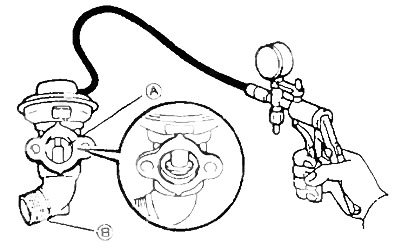
Apply vacuum to the upper chamber of the valve and check for recirculation between A and B.
Meaning:
- less than 100 mm Hg - no
- more than 200 mm Hg - yes
2. Checking the vacuum control solenoid valve.
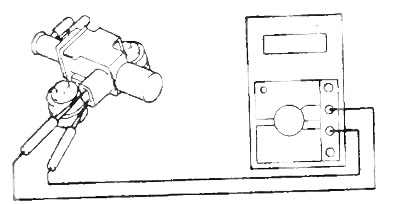
a) Check the resistance between the valve terminals.
- Resistance (at 20°C) - 10-12 Ohm at 20°C
b) Apply vacuum to the valve as shown in the figure.
Vacuum 350 mm Hg and above. If the vacuum decreases, but the arrow remains at 350 mm Hg and above, the valve is working properly.
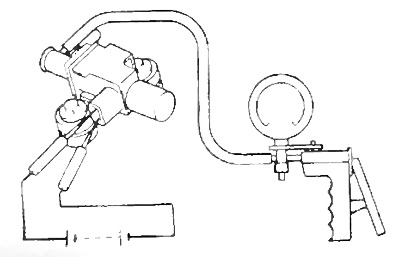
c) Checking the work.
Apply 6V to the valve terminals.
Apply vacuum as shown in the figure above.
The vacuum should not increase.
3. Checking the control lever position sensor.
a) Measure the resistance between terminals "VC" and "E2".
- Resistance 1.84 - 3.42 Ohm
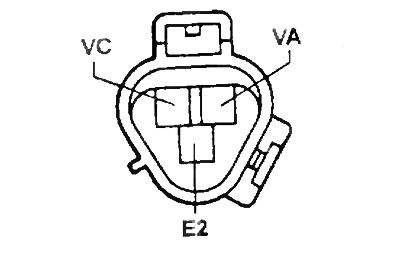
Check the resistance difference between terminals "VA" and "E2" with the accelerator pedal pressed and not pressed.
When you press the accelerator pedal, the resistance decreases.
- Pedal - resistance
- Pressed - 1.38-7.57 kOhm
- Not pressed - 0.26 - 5.66 kOhm
4. Checking the absolute pressure sensor in the intake manifold.
a) Turn on the ignition.
b) Measure the voltage between the "VC" and "ET" terminals of the electronic control unit (with the connector connected).
- Voltage - 4.5-5.5 V
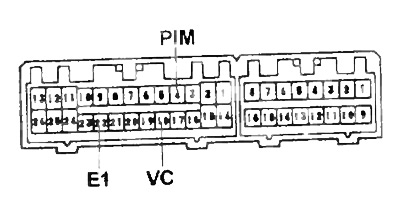
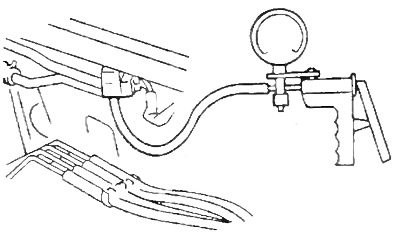
c) Apply pressure to the sensor and measure the voltage between the "PIM" and "ET" terminals of the electronic control unit.
Pressure voltage
- - 300 mm Hg - 0.2 -0.8 V
- 0 (atmospheric) — 1.3 -1.9 V
- + 0.7 bar (1275 mmHg.) — 3.2 - 3.8 V
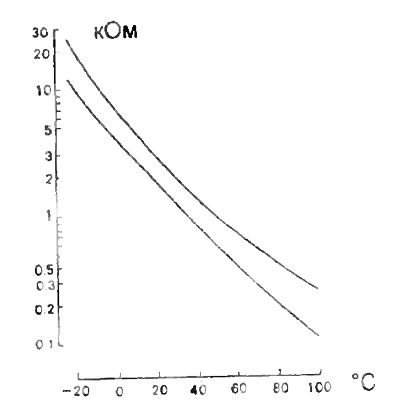
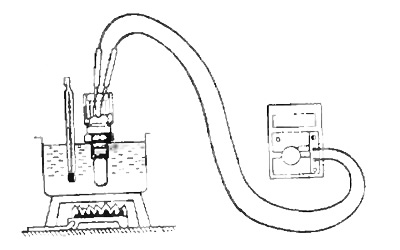
5. Coolant temperature sensor.
Measure the resistance between the sensor terminals.
Resistance
- at 20°0 — 2-3 kOhm
- at 80°0 — 0.2-0.3 kOhm
 |  |
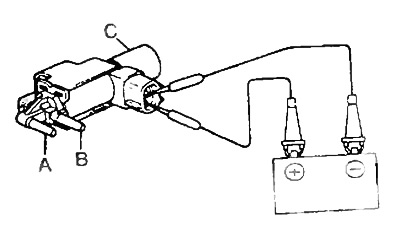
6. Checking the EGR valve and the idle speed increase valve when the air conditioner and heater are turned on.
Apply battery voltage to the valve terminals and check for air flow between the valve outlets.
There is voltage:
- A - B - air passes
- B - C - air does not pass
No voltage:
- A - B - air does not pass
- B - C - air passes
7. Checking the electronic control unit of the toxicity reduction system.
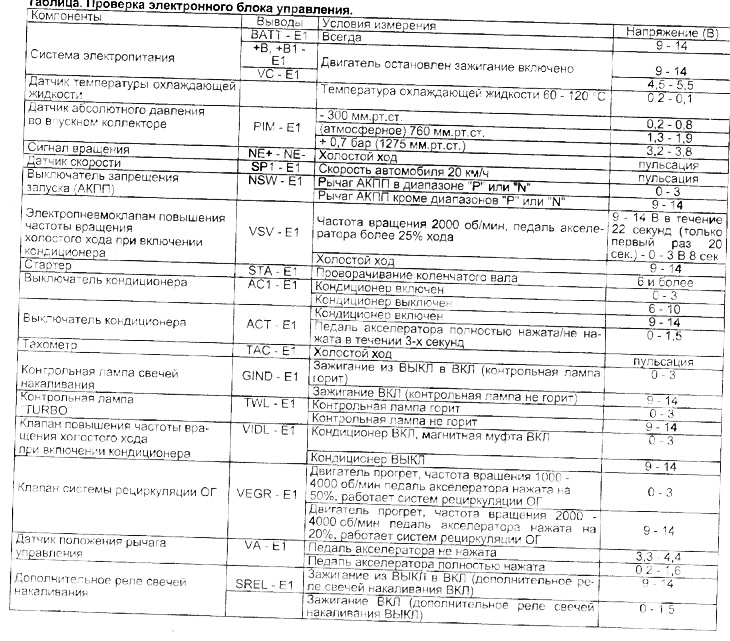
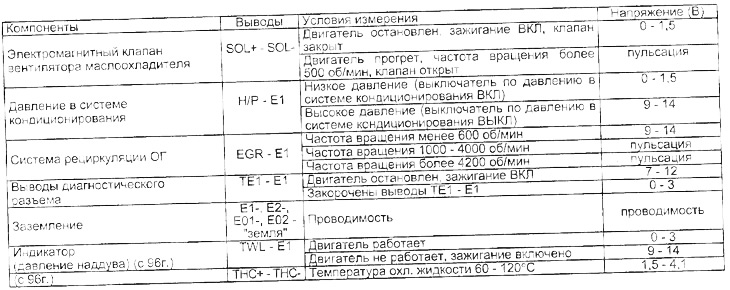
a) Measure the voltage between the terminals of the electronic control unit as specified in the table "Checking the electronic control unit".
b) Using an oscilloscope, verify that pulses occur between the terminals.
Note:
- Take the measurement from the back side of the wiring harness connector.
- Before measuring voltages, check the power supply (with ignition on 10 - 14 V) and check the grounding (with the ignition off, the "ground"-engine-housing resistance is less than 5 Ohms.
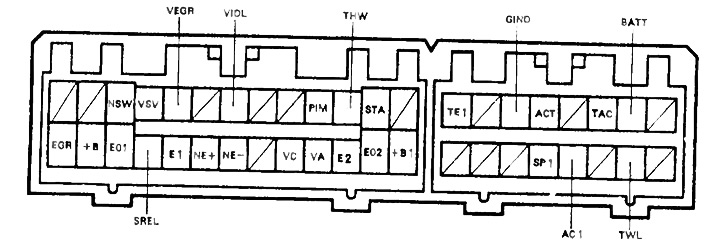
Electronic control unit outputs (until 1995.)
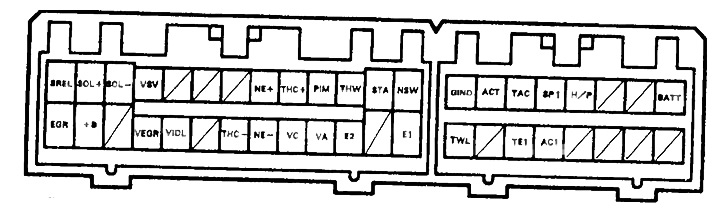
Electronic control unit outputs (since 1995)
Table. Checking the electronic control unit.