2. Checking the freewheel clutch.
a) Install the tool into the inner race of the freewheel clutch.
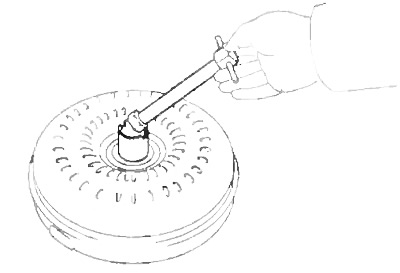
b) Position the camshaft alignment tool to align the marks on the torque converter hub and the outer race of the overrunning clutch.
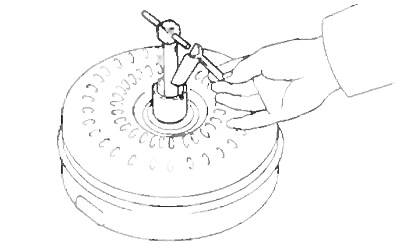
c) When the torque converter is stationary, the clutch should not rotate counterclockwise, but should rotate freely and smoothly clockwise.
d) If necessary, flush the torque converter and recheck the freewheel clutch. If the clutch is faulty, replace the torque converter.
3. Checking the toothed ring and runout of the torque converter drive plate.
a) Install a dial indicator and measure the runout of the torque converter drive plate.
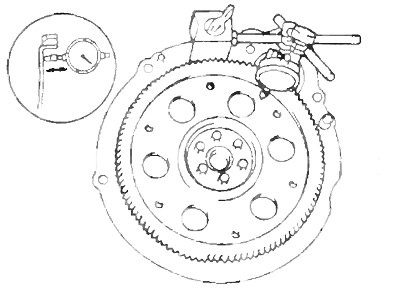
b) If the torque converter drive plate runout exceeds the nominal value, then in case of a damaged gear ring, replace the torque converter drive plate.
- Nominal runout - 0.2 mm
When installing a new plate, pay attention to the orientation of the spacer bushings. Tighten the bolts.
- Bolt tightening torque - 83 Nm
3. Checking the torque converter bushing runout.
a) Temporarily install the torque converter on the torque converter drive plate. Install a dial indicator and measure the runout.
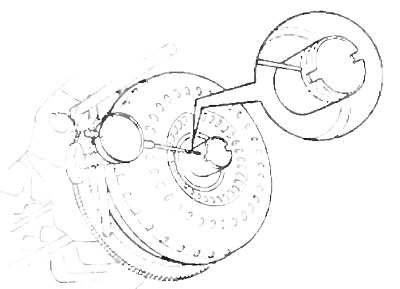
b) If the runout exceeds the nominal value, try to eliminate this defect by reorienting the torque converter. If this defect cannot be eliminated, the torque converter must be replaced.
- Nominal runout - 0.3 mm
Note: Apply alignment marks to ensure correct subsequent installation of the torque converter.
b) Remove the torque converter
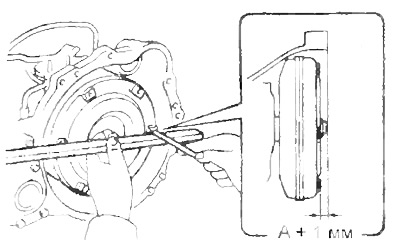
4. Check the installation of the torque converter.
a) Before installing the torque converter, measure the distance A as shown in the figure.
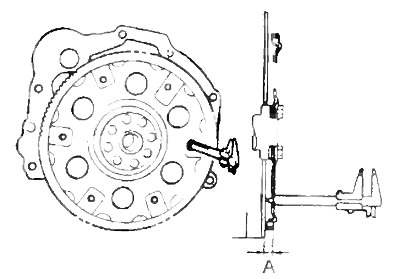
b) After installing the torque converter, using a caliper and a ruler, measure the dimensions from the torque converter bosses to the front flange of the gearbox housing.
- Nominal distance - A + 1 mm