



Examination
Before working with the battery, prepare the necessary tools and materials.
Tools and materials needed for battery maintenance
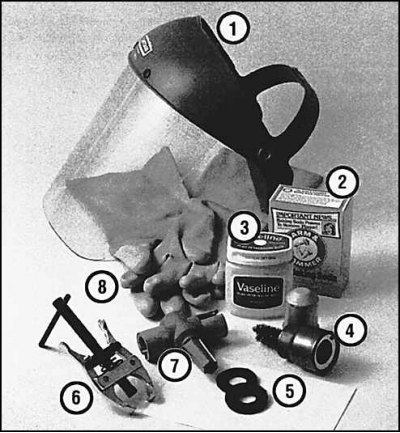
1. Protective shield/goggles; 2. Soda; 3. Technical petroleum jelly; 4. Battery terminal cleaning tool; 5. Gaskets; 6. Puller; 7. Contact cleaning tool; 8. Rubber gloves
Warning! Battery electrolyte contains sulfuric acid and produces hydrogen gas, which becomes explosive when mixed with air. Take precautions when working with the battery.
1. Inspect the battery for leaks or damage. Check that the battery is securely fastened. Check the condition of the battery terminals and the reliability of the wire contacts.
2. Check the battery charge. Some batteries have a special sensor to check the charge.
Maintenance
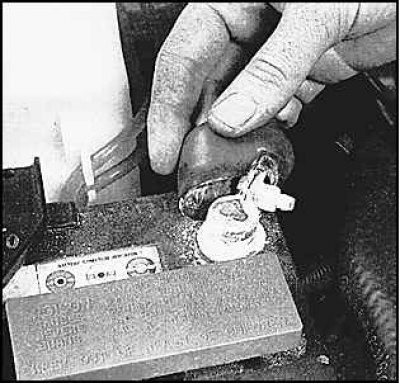
Corrosion on battery terminals usually appears as a white powder.
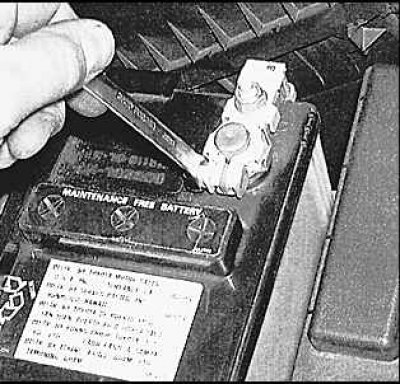
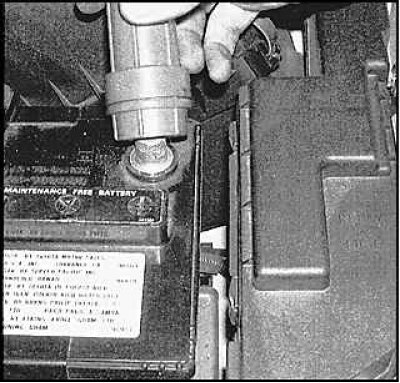
1. If there is corrosion on the battery terminals, disconnect the cables from the battery and remove the battery for cleaning.
Always disconnect the negative battery cable first.
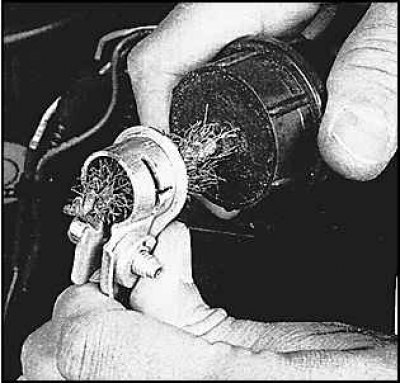 |  |
2. Thoroughly clean the wire contacts and battery terminals with a wire brush or special tool. Wash the terminals with a solution of warm water and soda.
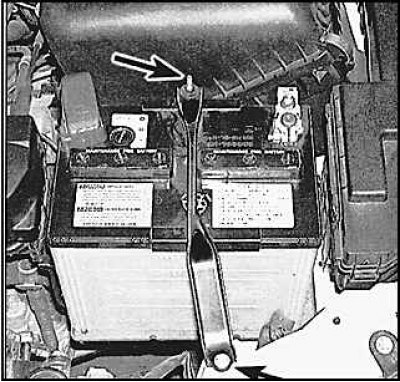
3. Clean the battery tray if necessary. Lubricate the battery terminals with petroleum jelly and connect the wires. Secure the battery to the battery tray by tightening the battery mounting nuts (indicated by arrows).
Charging the battery
To charge the battery, it is recommended to use a charger with a low charging current (1-2 Amperes). For fast charging, you can use a charger with a high charging current, however, it should not exceed 1/10 of the battery power.
It usually takes 12-16 hours to fully charge the battery with a low-current charger.