



Recommended Rotation Pattern for Non-Directional Tyres
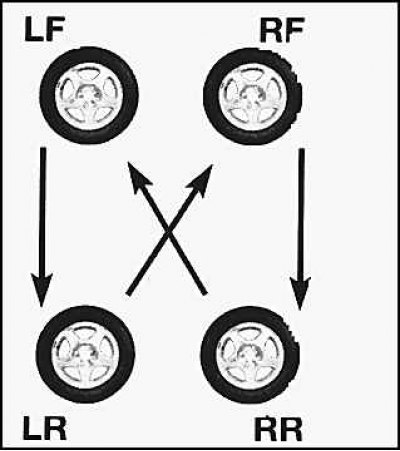
Recommended Rotation Pattern for Directional Tyres
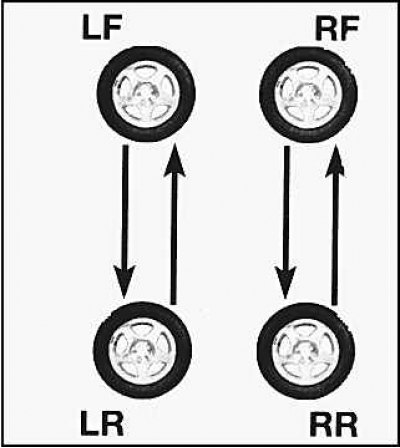
Tires with a directional tread pattern have an arrow on the side indicating the direction of rotation.
Does changing the order of the "terms" change anything?
"Some motorists do not swap wheels during the next maintenance - after 10 thousand kilometers (as required by the instructions), claiming that it does not give anything. Are they right?"
(The original version is published on the website: www.toyotaman.ru)
Both options have their advantages and disadvantages. Tires on any car wear unevenly and unevenly. This is due to its design (for example, the leading and controlled ones are loaded more), technical condition of the suspension (silent blocks, springs, shock absorbers) and other reasons.
In order for the tires (including the spare tire) to wear out simultaneously and evenly during operation, manufacturers recommend changing the wheels at each maintenance, i.e. after 10-15 thousand kilometers. However, each tire, getting into a new place, first runs in, and this does not always happen without consequences. Let's say its outer tracks are better preserved. If it takes the place of one where the same tracks are more worn out, it will quickly wear out its own, since they will initially be loaded more than the worn inner ones. Such running in of tires "eats up" a larger part of the resource (mileage), the worse the technical condition of the car, primarily the suspension.
In addition, after repairing the chassis or adjusting the wheel alignment, the wear pattern of the tire remaining in the old position will show whether anything has changed here.
Taking all this into account, experienced car enthusiasts change tires after 25-30 thousand kilometers, that is, one or two times before they fail. In this case, replace (and buy) you can not immediately the whole set of tires, which suits many. As for the overall mileage of the set, in the second option its value is usually greater.