



- the car pulls to the side when pressing the brake pedal;
- the sound of brakes creaking can be heard;
- excessive free play of the brake pedal;
- brake pedal pulsation;
- brake fluid leak, etc.
Disc brakes
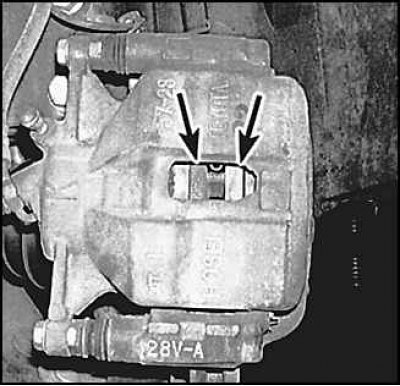
1. Check the thickness of the brake pads through the hole in the caliper (indicated by arrows).
2. To accurately check the brake pad thickness and condition, remove the brake calipers and brake pads. Clean the pads and check the thickness and condition of the friction material.
3. Measure the thickness of the brake disc with a micrometer. Inspect the disc surface for deep scratches or grooves.
4. Check all brake pipes and hoses for damage or wear. Check for secure fastenings and connections.
Rear drum brakes
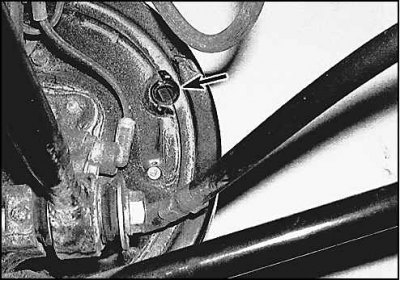
1. To check the thickness of the brake pad friction material without removing the brake drum, remove the rubber plug (indicated by the arrow) and inspect the pads.
2. For a more thorough inspection, remove the two mounting screws in the center of the brake drum and remove the drum.
3. Clean the brake mechanism with brake cleaner.
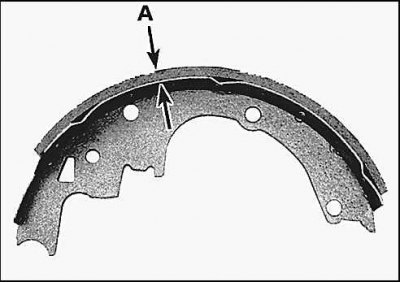
4. Measure the thickness of the brake pad friction material. If the height of the material above the rivet heads is less than 1.5 mm, the pads must be replaced.
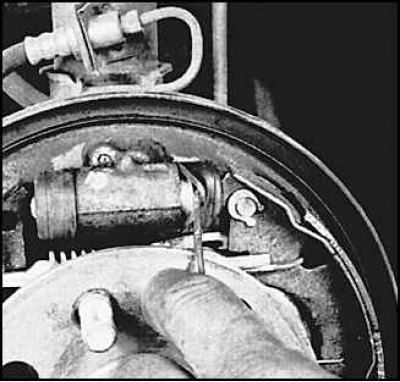
5. Check the condition of the brake mechanism springs. Inspect the wheel cylinder for signs of leakage. Check the integrity of the cylinder boots. Check the brake pipes and connections.
6. Inspect the inside surface of the brake drum for cracks, deep scratches and signs of wear.
Vacuum brake booster
1. Press the brake pedal and start the engine – the pedal should drop slightly.
2. With the engine running, press the brake pedal several times - the brake pedal travel should not change.
3. Press the brake pedal, turn off the engine and hold the pedal down for 30 seconds – the pedal should not drop.
4. Start the engine, let it run for a few minutes and turn it off. Press the brake pedal several times – the pedal travel should decrease with each press.
5. If the brake pedal behaves differently, then the vacuum booster is faulty and needs to be replaced.
Handbrake
1. Count the number of clicks required to securely set the vehicle to the handbrake. Adjust the handbrake mechanism if necessary.
2. Check that the handbrake can hold the car on a steep slope.
3. Press the brake pedal, turn off the engine and hold the pedal down for 30 seconds – the pedal should not drop.
4. Start the engine, let it run for a few minutes and turn it off. Press the brake pedal several times – the pedal travel should decrease with each press.
The article is taken from a web resource [TOYOTAMAN]
5. If the brake pedal behaves differently, then the vacuum booster is faulty and needs to be replaced.