



Contents: Precautions when servicing…↓ Precautions when working with the…↓ Precautions to take when using a…↓ Precautions when working with the…↓
Precautions when servicing electrical equipment
1. Check that the engine settings are correct (see chapter "Maintenance and general check and adjustment procedures").
2 Precautions when connecting devices.
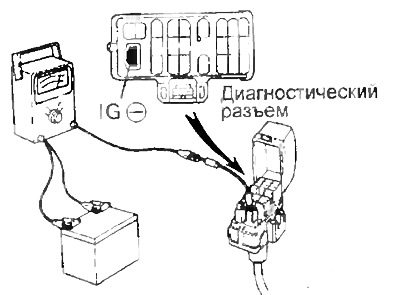
a) Use the battery as a power source for the stroboscope, tachometer, etc.
b) Connect the tachometer test lead to the "IG" (-) terminal of the diagnostic connector.
3. If the engine misfires, take the following precautions.
a) The battery terminals must be securely connected to the battery terminal posts.
b) Work carefully with high-voltage wires.
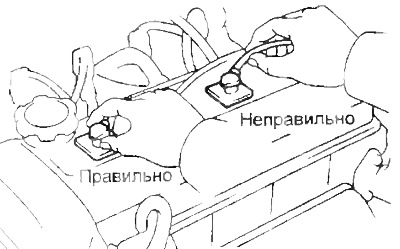
c) After completing the repair work, make sure that all ignition system wires are correctly and securely connected.
d) When cleaning the engine compartment, do not allow water to come into contact with the electronic system components.
4. When working with an oxygen sensor:
a) Do not allow the oxygen sensor to fall or be subjected to impact;
b) Do not allow water to enter the oxygen sensor.
Precautions when working with the air supply system
1. Removing the dipstick, oil filler cap, hoses, etc. from the engine may cause the engine adjustments to be out of adjustment.
2. Disconnection, loosening of fasteners or cracking of air supply system components will cause air to leak, which will lead to engine malfunction.
Precautions to take when using a mobile communication system in your vehicle
The electronic unit is designed in such a way as to exclude the influence of external electromagnetic interference.
However, if the vehicle is equipped with a CB radio, etc. (even if the output power is only 10 W), then it can in some cases affect the operation of the electronic unit, especially when the antenna and connecting (feeder) cables are laid near the electronic control unit.
Therefore, the following precautions must be taken.
1. Install the antenna as far away from the electronic unit as possible. Therefore, the antenna should be installed at the rear of the car
2. Route the antenna cable as far away from the ECU wiring as possible, at least 20 cm, and especially do not twist them together.
3. Check if the settings are correct (approvals) antenna cable and antenna.
4. Do not install a powerful radio station in your car.
Precautions when working with an electronic control system
1. Before disconnecting the electrical connectors of the electronic control unit, it is necessary to disconnect the electrical power either by using the ignition key or by removing the terminals from the battery.
Note: Be sure to read the diagnostic code before removing the battery terminals.
2. When installing the battery, do not reverse the polarity.
3. Do not subject fuel injection system components, especially the electronic control unit, to impact.
4. Be careful when troubleshooting, with a large number of transistor circuits, even a slight careless touch of the terminal contacts can lead to serious damage.
5. Do not remove the cover of the electronic control unit housing
6. When working in rainy weather, protect electronic control units from water. The same should be done when washing the engine.
7. Replacement of spare parts should be carried out only with similar ones.
8. Be careful when disconnecting and connecting electrical wiring connectors.
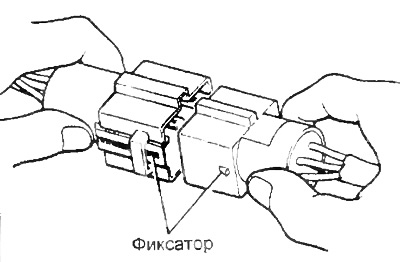
a) When disconnecting, loosen the lock by pressing on its spring and pull out the connector, holding it by the body.
b) When connecting, insert the connector fully and make sure it is locked (recorded).
9. When checking the connector with a tester.
a) If you are testing a waterproof connector, you must carefully remove the protective cover.
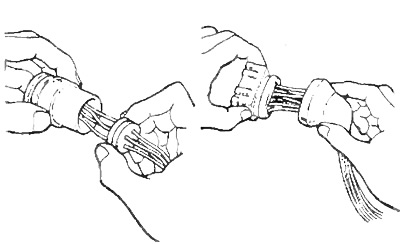
b) When checking resistance, current or voltage, always insert the tester probe from the wire side.
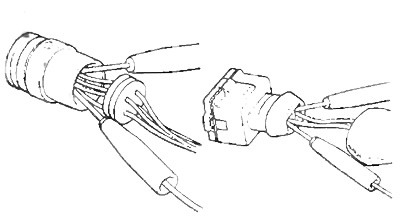
c) Do not apply excessive force.
d) After checking, firmly install the protective cover on the connector.
10. When checking the injectors, cold start injectors and their connectors, use special tools (special diagnostic cables).
Precautions when working with the fuel system
1. When disconnecting the high-pressure fuel line, a large amount of fuel will spill out. Therefore, the following steps should be taken.
a) Disconnect the fuel pump connector.
b) Start the engine. After the engine stops spontaneously, turn off the ignition.
c) Place a container under the connection.
d) Slowly loosen the connection.
d) Disconnect the connection.
e) Seal the connection with a rubber plug.
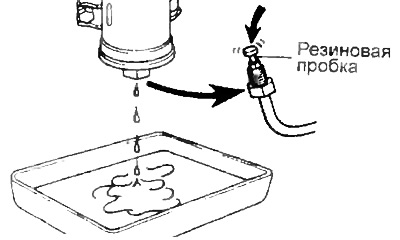
g) Reconnect the fuel pump connector.
2. Before working on the fuel system, disconnect the negative cable from the battery.
Note:
- The diagnostic code in the memory of the electronic control unit is usually erased when the negative (-) terminal of the battery is removed. Therefore, it is necessary to read the diagnostic codes before disconnecting the battery.
- Do not smoke or use open flames when working on the fuel system.
- Relieve the fuel pressure in the gas tank by opening the cap.
3. When tightening the nipple connection or the bypass bolt connection on the high-pressure fuel line, take the following steps: bypass bolt connection.
a) Always use a new gasket.
b) Tighten the bolt by hand.
c) Tighten to the required torque.
Tightening torque - 29 Nm
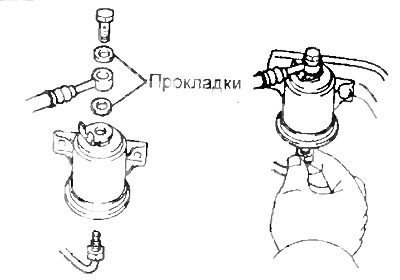
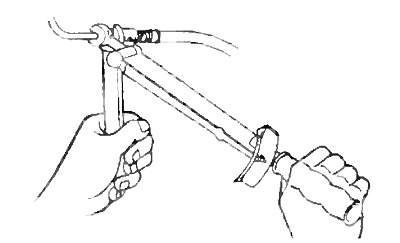
Nipple connection
a) Apply a thin layer of spindle oil to the nut and tighten the nut by hand first. Then tighten the joint with a torque wrench.
Tightening torque - 30 Nm
4. Precautions when removing and installing injectors.
a) Try not to use the old O-ring.
b) When installing the O-ring on the injector, be careful not to damage it in any way.
c) Before installation, lubricate the O-ring with spindle oil or fuel. Never use engine oil, transmission oil or brake fluid.
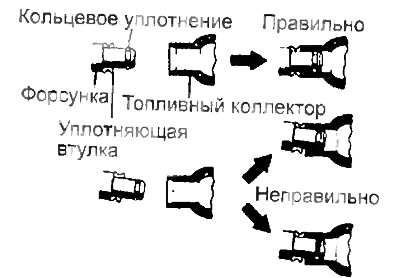
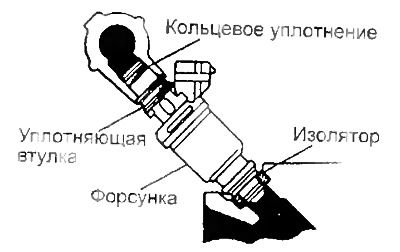
5. Connect the injector to the fuel rail and cylinder head as shown in the figure.
6. After servicing the fuel system, check for fuel leaks.
a) Turn on the ignition (do not start the engine).
b) Use the service cable to short-circuit the terminals "B" and "P" of the diagnostic connector.
c) If the fuel return line to the tank is pinched, the pressure in the high-pressure fuel line will rise to approximately 4 kg/cm² (392 kPa). Make sure there is no fuel leakage along the entire line.
Note: The fuel line must be pinched. Never bend the fuel line to avoid damage.
d) Turn off the ignition and remove the service wire from the diagnostic connector terminals.
Note: After working with the fuel system, check the engine for leaks and fuel odor for a week.