
Company Honda Company Ford Company Skoda Company Kia Company Mazda Company Mercedes Company Renault
English Русский
Български
Беларускі
Український
Српски
Hrvatski
Română
Polski
Slovenský
Magyar
Bookmark Articles Sitemap Contacts
ToyotaMan.ru


Camry Corolla Corona Carina Land Cruiser Highlander 4Runner RAV4 Others
Camry XV30 (2001-2006) Camry XV20 (1996-2001) Camry XV10 (1991-1996) Camry Vista V40 (1994-1998)

Every 400 km or weekly [Toyota Camry XV10]

  • Main
  • Camry
  • XV10 (1991-1996)
  • General information
  • Maintenance
  • Every 400 km or weekly
0
Contents: Checking the engine oil level ↓ Coolant level ↓ Windshield washer fluid ↓ Checking the battery ↓ Brake fluid level ↓ Checking tires ↓

Checking the engine oil level


Location of the engine oil dipstick
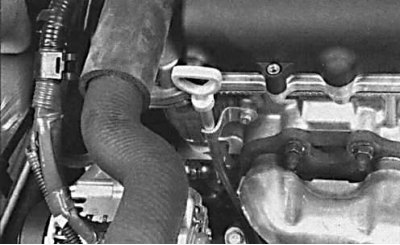


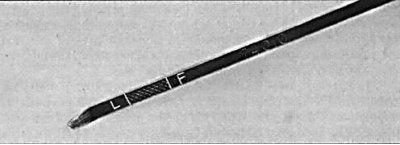
Engine oil dipstick


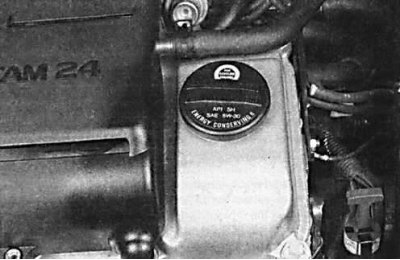
Location of the oil filler cap


1. Place the vehicle on a level, horizontal surface.


2. Check the engine oil level 15 minutes after turning off the engine.

3. Remove the engine oil dipstick.

4. Using a clean rag, wipe off any remaining oil from the dipstick. Insert the dipstick into the engine and remove it again.

5. Determine the engine oil level, which should be between the F and L marks. The amount of oil between the marks is 1 liter.

6. Remove the oil filler cap and pour the required amount of oil into the engine.

7. If dirt or metal particles are found on the dipstick when checking the oil level, the engine oil should be changed immediately.

Coolant level


Caution! Do not remove the expansion tank cap when the engine is hot, as you may be burned by hot coolant vapors.


Caution! Avoid contact of coolant with painted surfaces of the body and clothing. Otherwise, rinse the area where coolant has come into contact with plenty of water.


Expansion tank of the engine cooling system
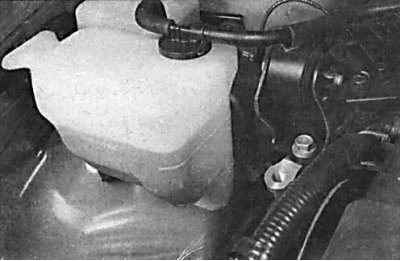


The coolant level in the expansion tank changes depending on the engine temperature. When the engine is cold, the coolant level should be slightly above the mark on the expansion tank.

Wait until the engine cools down and slowly unscrew the cap from the expansion tank.


If necessary, fill the expansion tank with a mixture of water and antifreeze up to the mark. Screw the cap onto the expansion tank.

Windshield washer fluid
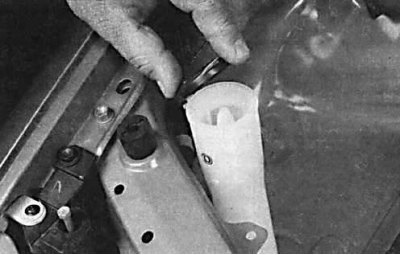


The plastic windshield washer fluid reservoir is located in the front right corner of the engine compartment.

Checking the battery


Warning: If your radio has an anti-theft code, make sure you have the connection codes before disconnecting the battery.


Caution! On models from 1993 onwards, the airbag system is disabled if the battery is disconnected for an extended period of time. If the airbag warning light comes on and remains on after the battery is reconnected, contact a specialist workshop to restore the system to working order.
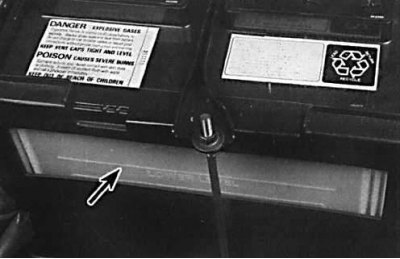


The electrolyte level in the battery should be between the two marks located on the top of the battery.


In batteries with a built-in charge level indicator, the battery status is determined by the color of the indicator. A green indicator corresponds to a full charge of the battery. A black indicator indicates the need to charge the battery. A blue indicator indicates a low electrolyte level in the battery.

Brake fluid level


Warning: Brake fluid is poisonous, so be careful not to let it come into contact with your body or your vehicle's paintwork.


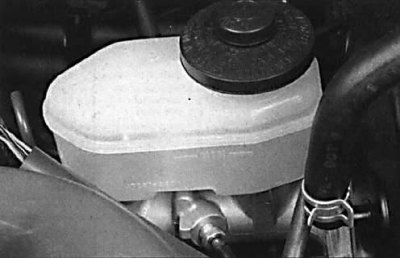
Location of the transparent brake fluid reservoir in the engine compartment


The original version is published on the website: ToyotaMan.ru

Check that the brake fluid level in the transparent reservoir is between the min and max marks.

If brake fluid needs topping up, first wipe the area around the filler cap and unscrew the cap from the brake fluid reservoir. Add brake fluid up to the max mark on the reservoir.

Checking tires


Checking the reliability of the valve screwing
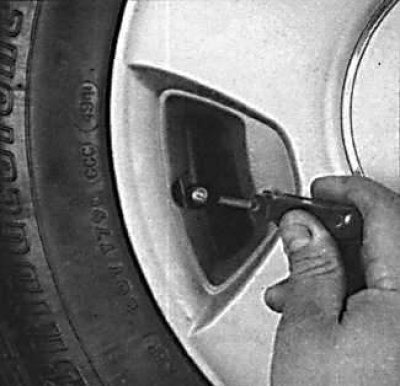


Tires are the only parts of the car that are constantly in contact with the road, and even the combined contact surface of all tires is small. Therefore, it is necessary to regularly conduct a thorough check of tires, since both your own safety and the safety of other road users largely depends on the condition of the tires.


1. Check the tread and sidewalls of the tire for breaks, cuts and bulges.
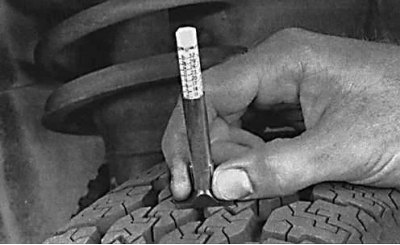


2. Check the tire tread depth.
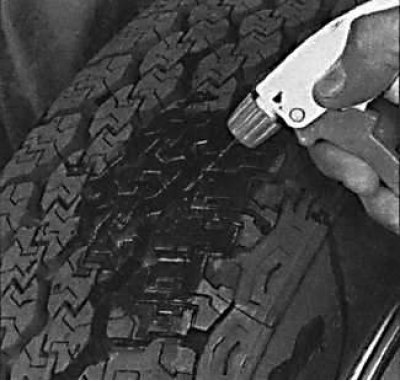


3. Air leaks from a tire can be identified using soapy foam.
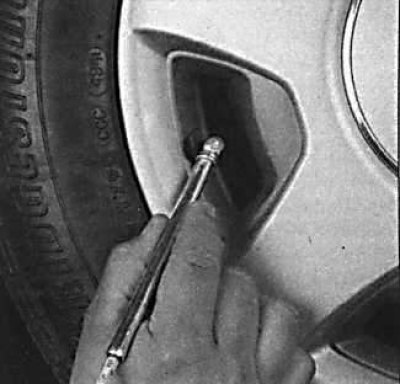


4. Check the pressure only when the tires are cold.
This article is available at: russian, bulgarian, belarusian, ukrainian, serbian, croatian, romanian, polish, slovak, hungarian
The article material has been checked: Mitrofanova Elena
Share information:
◀ Previous
Camry XV10: Maintenance
Next ▶

Maintenance intervals
Maintenance Specifications
Every 5,000 km or 3 months
Every 10,000 km or 6 months
Every 25,000 km or 12 months
Every 50,000 km or 24 months
Every 100,000 km or 48 months
Similar articles on other Toyota models

➥ Checking the level of operating fluids (every 400 km or… Toyota Highlander 1 (2000-2007, petrol)
➥ Weekly Checks — Introduction Toyota RAV 4 XA20 (2000-2005)
Link in different formats to this article
Comments and feedback from visitors
No comments yet


Add two numbers 45 + 28


Camry XV30 (2001-2006) 
  • User manual
  • Vehicle description
  • Keys, locks and alarms
  • Governing bodies
  • Salon equipment
  • Driving and operation
  • Maintenance
  • Power unit
  • 4-cylinder engine
  • Control system (I4)
  • Engine overhaul (I4)
  • 6-cylinder engine
  • Control system (V6)
  • Engine overhaul (V6)
  • Transmission
  • Clutch
  • Mechanical gearbox
  • Automatic gearbox
  • Drive mechanism
  • Chassis, running gear
  • Wheels and tires
  • Car suspension
  • Steering
  • Brake system
  • Body and interior
  • Exterior (external elements)
  • Doors, locks and windows
  • Air conditioning and heater
  • Electrical equipment
  • Equipment and devices
  • Power devices
  • Electrical circuits
Camry XV20 (1996-2001) 
  • General information
  • Controls and instruments
  • Driving and operation
  • Daily care
  • Maintenance
  • Power unit
  • 4-cylinder engine
  • 6-cylinder engine
  • Engine overhaul
  • Engine electrical equipment
  • Cooling system
  • Heating and ventilation
  • Fuel system
  • Exhaust system
  • Transmission
  • Mechanical gearbox
  • Automatic gearbox
  • Clutch
  • Chassis, running gear
  • Suspension and axle shafts
  • Steering
  • Brake system
  • Body and interior
  • Exterior (external elements)
  • Interior (internal elements)
  • Doors, locks and windows
  • Electrical equipment
  • Equipment and devices
  • Electrical circuits
Camry XV10 (1991-1996) 
  • General information
  • User manual
  • Maintenance
  • Power unit
  • 4-cylinder engine
  • 6-cylinder engine
  • Overhaul of engines
  • Cooling and heating
  • Fuel system
  • Engine electrical equipment
  • Control system
  • Transmission
  • Mechanical gearbox
  • Automatic gearbox
  • Clutch and drive shafts
  • Chassis, running gear
  • Brake system
  • Car suspension
  • Steering
  • Body and interior
  • Exterior (external elements)
  • Interior (internal elements)
  • Doors, locks and windows
  • Electrical equipment
  • Equipment and devices
  • Headlights and lighting
  • Electrical circuits
Camry Vista V40 (1994-1998) 
  • General information
  • User manual
  • Maintenance
  • Power unit
  • Petrol engines
  • Diesel engines
  • Engine overhaul
  • Cooling and lubrication system
  • Fuel system (diesel)
  • Fuel injection (petrol)
  • Engine electrical equipment
  • Transmission
  • Clutch and cardan
  • Automatic gearbox
  • Chassis, running gear
  • Front suspension
  • Rear suspension
  • Steering
  • Brake system
  • Body and interior
  • Body elements
  • Air conditioning and heater
  • SRS security system
  • Electrical equipment
  • Equipment and devices
  • Electrical circuits
ToyotaMan.ru © 2018–2026 • Mobile version • Interesting about Toyota • Administration • Sitemap: EN BG BY UA RS HR RO PL SK HU • Search system • Bookmark
Camry Vista-V40 • Camry XV10 • Camry XV20 • Camry XV30 • Corolla Verso-AR10 • Corolla E80 • Corona T190 • Carina T170 • Carina T190 • Land Cruiser J70 (diesel) • Land Cruiser J60 (petrol) • Land Cruiser J100 • Highlander XU20 (petrol) • 4Runner N120 • RAV4 XA10 • RAV4 XA20 • Duet M100 • Dyna Y50 •
We require cookies to enable some interactive features. Is that ok with you?