



Contents: Replacing the fuel filter ↓ Replacing the coolant ↓ Checking the fuel vapor recovery…↓ Checking the exhaust system ↓ Changing oil in automatic…↓ Changing oil in a manual transmission ↓ Checking the suspension mount ↓ Checking and replacing spark plugs ↓ Checking and replacing high-voltage…↓
Replacing the fuel filter
Caution: On 1993 and later models, if the battery is disconnected for an extended period of time, the airbag system will be damaged.
1. For better access, remove the air filter housing.
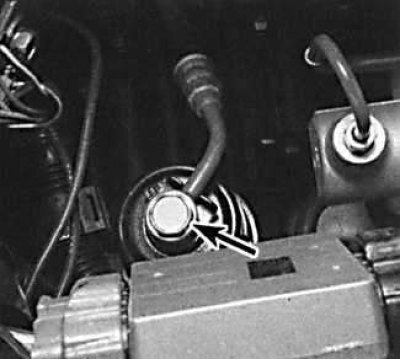
2. While holding the fuel filter from turning, unscrew the bolts securing the fuel lines to the filter.
3. Unscrew the fuel filter hanger mounting bolts and remove the fuel filter.
4. Install the new filter according to the markings on the filter housing and secure it with bolts.
5. Using new washers, secure the fuel lines with bolts.
6. Further installation is carried out in the reverse order of removal.
Replacing the coolant
Caution! Replace the coolant on a cold engine. Avoid contact of coolant with painted surfaces of the body and clothing. Otherwise, wash the area where the coolant has come into contact with plenty of water.
Draining the coolant
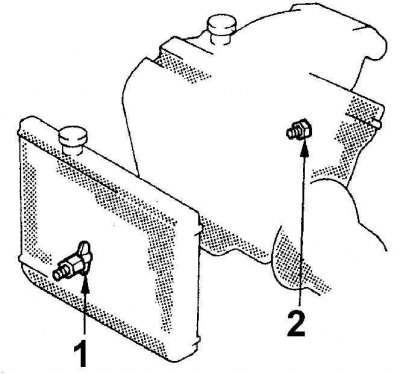
Location of coolant drain plugs on 3MZ-FEV6 engine
1 – radiator coolant drain plug;
2 – coolant drain plug from the engine cylinder block
1. Raise the front of the vehicle and support it on stands.
2. Remove the radiator cap.
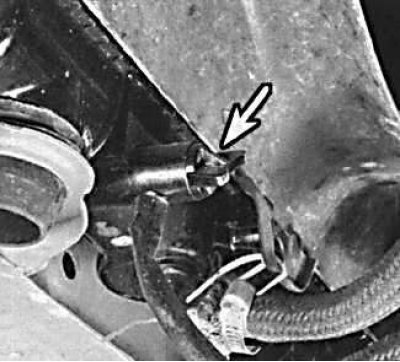 |  |
3. Place a large container under the radiator inlet. Attach a 10mm ID hose to the drain valve to direct coolant into the container, then open the drain valve.
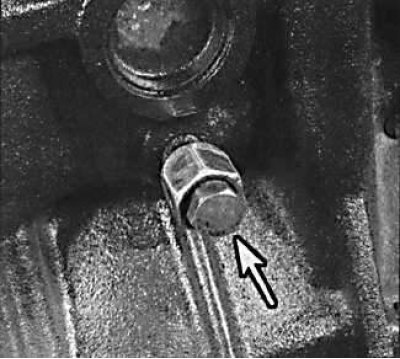
4. When the coolant flow from the radiator stops, place a container under the cylinder block drain plug. Remove the drain plug and allow the coolant to drain from the cylinder block.
Flushing the cooling system
The coolant must be changed periodically and the cooling system flushed, as rust and dirt form in the system channels.
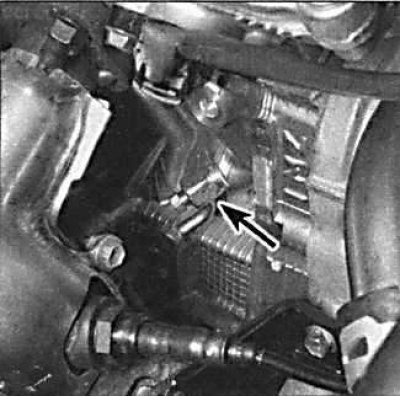
1. To flush the radiator, drain the coolant from the cooling system...
2....then disconnect the hoses from the base and upper radiator tank.
3. Insert a garden hose into the top radiator hose and run water through the radiator until clear water comes out of the hose at the base of the radiator. If you cannot flush the radiator with clear water, use detergent.
4. To flush the engine, insert a garden hose into the water outlet of the thermostat and run water through the engine until water comes out of the bottom hose clear.
5. Flush the heater radiator by first opening the heater tap and disconnecting the hoses from the heater. Connect a hose to one of the hoses and flush with a stream of clean water until the water flows out of the second hose clean.
Filling the cooling system
Before filling the cooling system, make sure all hoses and clamps are in good condition. Note that the antifreeze mixture should be used year-round to prevent corrosion. Also check that the radiator cap and the cylinder block drain plugs are in place.
1. Set the heater control knob to the maximum temperature position.
2. Slowly pour coolant into the radiator.
3. With the radiator cap open, start the engine and warm it up to operating temperature, at which point the thermostat opens and coolant begins to flow through the radiator, causing the upper radiator hose to become hot.
4. Turn off and cool the engine, check the coolant level and, if necessary, top it up to normal.
5. By squeezing the upper radiator hose, bleed the air from the engine cooling system, then add coolant to the required level. Replace the radiator cap.
6. Start the engine and warm it up to normal operating temperature and check the engine cooling system for leaks.
Checking the fuel vapor recovery system
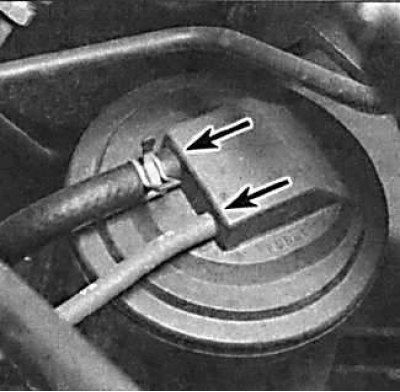
Location of the coolant drain plug from the cylinder block of the 1MZ-FE engine
The fuel vapor recovery system is designed to recover fuel vapor from the fuel system and store it in a charcoal canister and then burn it off during normal engine operation.
One sign of damage to the fuel vapor recovery system is the smell of fuel in the engine compartment. In this case, inspect the charcoal canister located on the front side of the engine compartment. Check the condition of the canister and hoses.
Checking the exhaust system
1. Check the exhaust pipes for corrosion or damage.
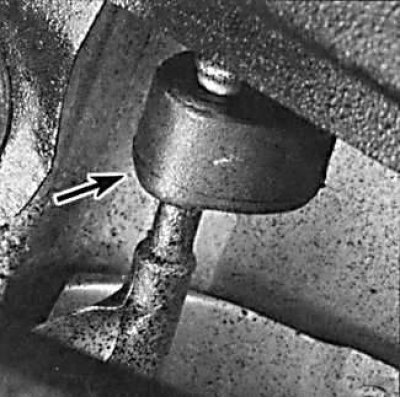
2. Check the condition of the rubber mounts of the exhaust system.
3. When moving the exhaust system of the car to the sides, make sure that it does not touch the car body, otherwise replace the rubber hangers of the exhaust system.
Changing oil in automatic transmission and final drive
Over time, gearbox oil ages. At the same time, its lubricating properties inevitably deteriorate. Therefore, it is necessary, as a rule, to change the oil at certain intervals.
When changing the oil, the car should be level, as when checking the oil level. In addition, the gearbox should be warmed up so that the oil is sufficiently liquid and foreign particles are still mixed with the oil, i.e., so that they come out with the oil. Therefore, before changing the oil, it is necessary to drive a few kilometers to warm up the gearbox. Sometimes the automatic transmission oil becomes very hot, so be especially careful if you immediately put the car in for repair after driving.
1. Position the vehicle over an inspection pit. Beware of the hot exhaust pipe when working under the vehicle.
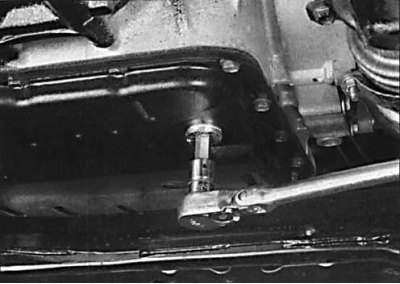
2. Place a suitable container under the automatic transmission drain plug and remove the drain plug.
3. After draining the oil from the automatic transmission, reinstall the oil drain plug.
Cleaning the mesh filter
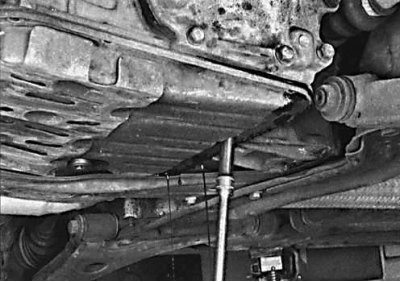 | 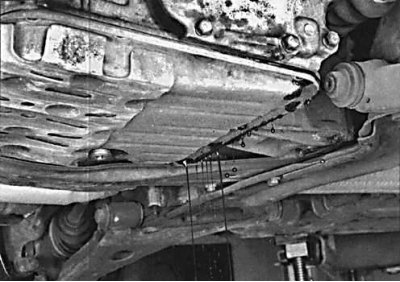 |
1. Remove the front transmission oil pan mounting bolts, then loosen the rear transmission oil pan mounting bolts.
2. Using a screwdriver, separate the oil pan from the transmission housing and drain the remaining oil from the transmission.
3. After the automatic transmission oil has been drained, remove the remaining bolts and remove the transmission oil pan.
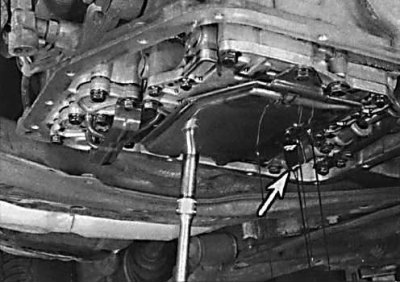
4. Unscrew the mesh filter mounting bolts and remove it.
5. Wash the mesh filter in fresh automatic transmission fluid.
6. Install the mesh filter onto the gearbox and secure with bolts.
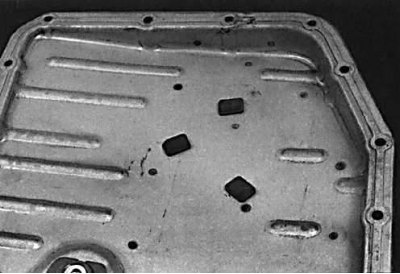
7. Clean the mating surfaces of the transmission housing and oil pan. Mark the location of the magnets in the oil pan, remove them and wash the pan in solvent and dry it with compressed air. Install the magnets on the oil pan.
8. Install the oil pan with a new gasket onto the automatic transmission and secure it with the bolts, tightening them to the specified torque.
Draining oil from the main gear
1. Place a container under the final drive drain plug.
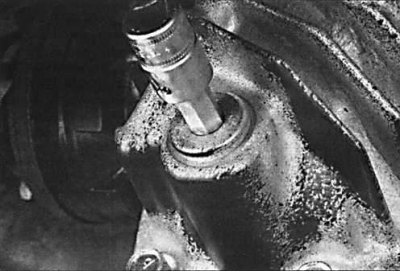
2. Remove the drain plug and drain the oil from the final drive, then reinstall the drain plug, tightening it to the specified torque.
3. Fill the final drive with fresh oil up to the bottom of the filler hole.
4. Lower the car to the ground.
Filling the gearbox with oil
1. Fill the automatic transmission with oil through the dipstick tube.
2. Start the engine and move the selector lever from position P to L, then back to position P and apply the handbrake.
3. With the engine idling, check the automatic transmission oil level.
Changing oil in a manual transmission
1. Raise the front of the vehicle and support it on stands.
2. Place a container to collect the oil under the gearbox and unscrew the drain plug.
3. Drain the oil from the gearbox. The presence of metal inclusions in the oil indicates wear of the gearbox parts.
4. Replace the plug.
5. Fill with fresh oil through the filler tube.
Checking the suspension mount
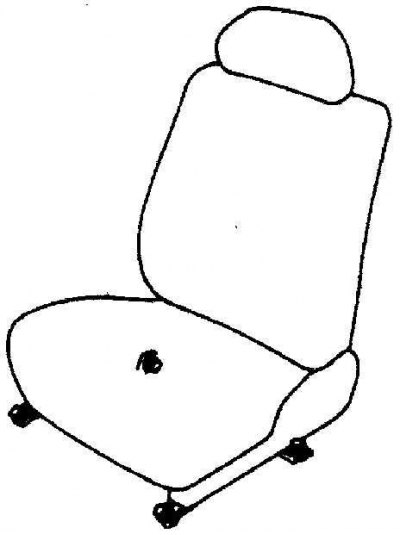
Front Seat Mounting Bolt Locations
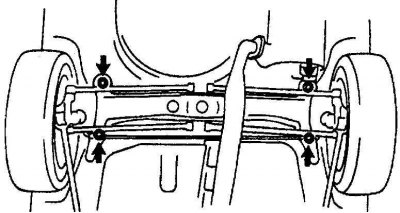
Rear suspension mounting bolt locations
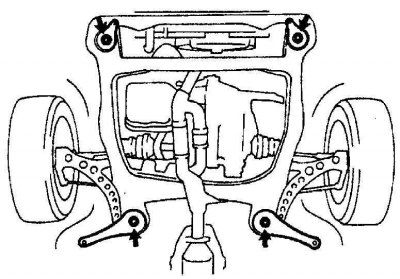
Location of front suspension mounting bolts and nuts
Check the tightening torques of the nuts and bolts:
- front seat;
- front suspension to the body;
- rear suspension to the body.
Checking and replacing spark plugs
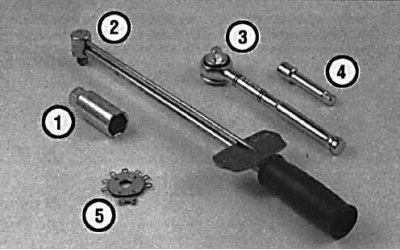
1 – key for unscrewing the spark plug;
2 – torque wrench;
3 – ratchet wrench head;
4 – extension cord;
5 – template for measuring the spark plug gap
Checking the spark plug gap using a template
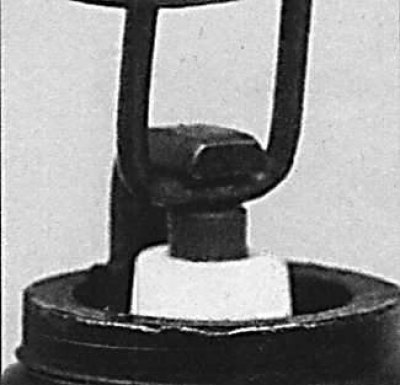
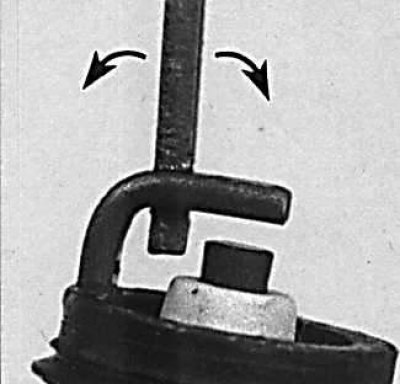
Adjusting the spark plug gap by bending the side electrode of the spark plug
To replace spark plugs, you need to use a special spark plug wrench with a rubber sealing ring that allows you to remove the unscrewed spark plug from the socket.
1. To replace spark plugs, gather all the necessary tools together.
2. Check and, if necessary, adjust the interelectrode gap in new spark plugs.
Removal
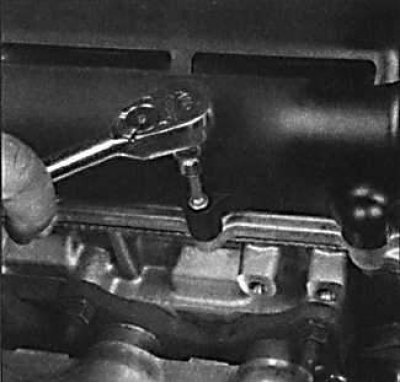 | 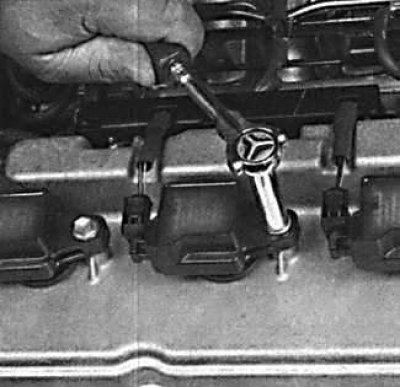 |
1. On V6 engines, remove the two spark plug cover bolts. To access the rear spark plugs on V6 engines, disconnect the hoses and move them to the side.
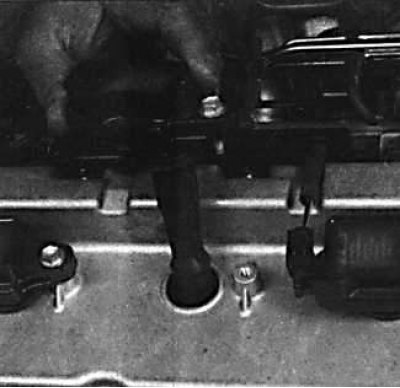
2. Unscrew the ignition coil mounting bolt with the high-voltage wire on engine 1 MZ-FE.
 | 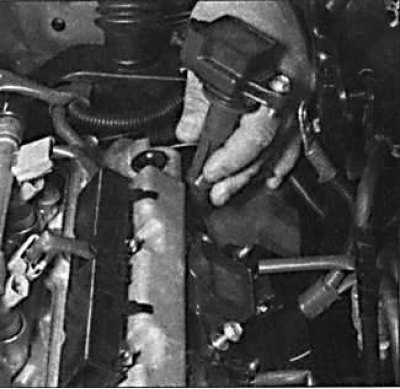 |
3. Remove the ignition coil with the high-voltage wire.
4. To access the rear spark plugs on V6 engines, remove the spark plug cover bolts and remove the cover.
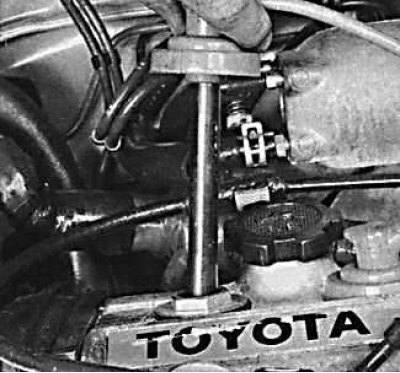
5. To avoid mixing up the high-voltage wires, replace the spark plugs one by one. When removing the high-voltage wires from the spark plugs, pull them by the protective cover, not by the wire.
6. Clean the spark plugs using a jet of compressed air to prevent dirt from entering the engine cylinders after removing the spark plugs.
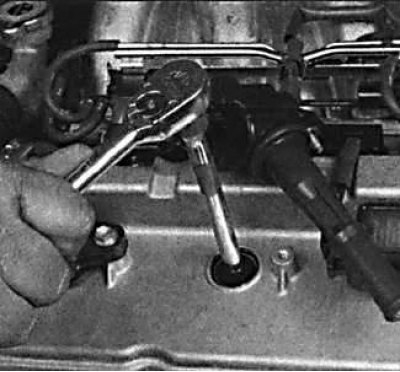
7. Remove the spark plugs using a spark plug wrench.
8. Visual inspection of the working part of the spark plugs can show the condition of the engine. If the nose of the spark plug insulator is clean and white, without any coating, this indicates that the mixture is too lean. This also indicates that the plug is too hot, i.e. the heat from the central electrode is slowly removed. If this is the case, the mixture composition must be adjusted or the plug must be replaced. If the nose of the spark plug insulator is covered with a black coating, this indicates that the mixture is too rich. If the coating is black and oily, this indicates that the engine is worn out and needs to be checked and repaired. If the nose of the insulator is covered with a light brown coating, the mixture composition is optimal and the engine is in good condition.
9. The spark plug gap is very important because if the gap is too large or too small, the spark size changes, which leads to a decrease in engine efficiency. The gap must always meet technical requirements.
Installation
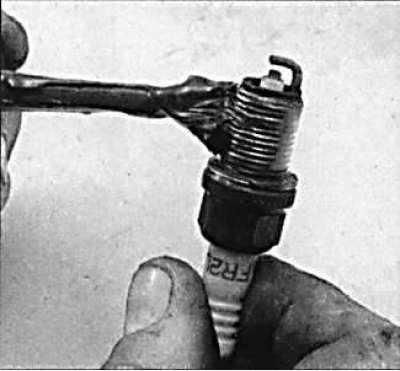
1. Before installing the spark plug in the engine, check that the threads are clean and all threads are intact. Apply a thin layer of anti-stick material to the spark plug threads.
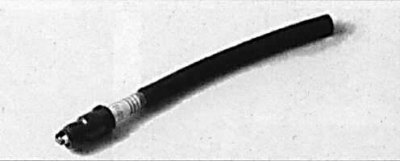
2. To screw the spark plug several turns, you can use a piece of rubber hose, insert the spark plug insulator into one end and, rotating the hose, screw the spark plug several turns, then remove the hose and screw the spark plug to the required torque.
Checking and replacing high-voltage wires and distributor parts
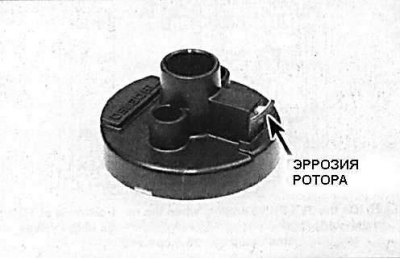
The main defect of the distributor rotor
1. Check the condition of the high-voltage wires, which should be clean and dry, and should not have any signs of electrical breakdown or oxidation.
2. Check the internal condition of the spark plug tip, which should not show signs of corrosion, which is a hard white powder.
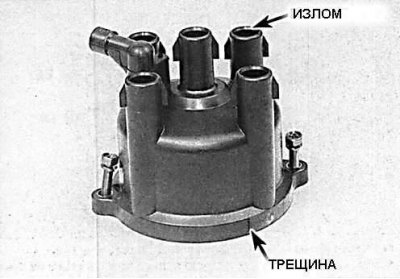
3. Unscrew the two bolts and remove the distributor cap. Wipe the cap thoroughly and check the electrodes for corrosion.
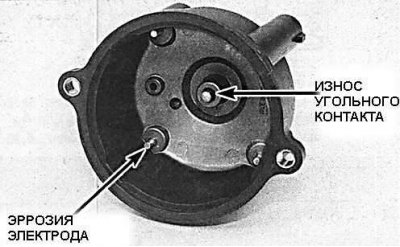
4. Also check the carbon contact in the center of the distributor cap.
5. Remove the distributor rotor and inspect it for cracks and carbon tracks.
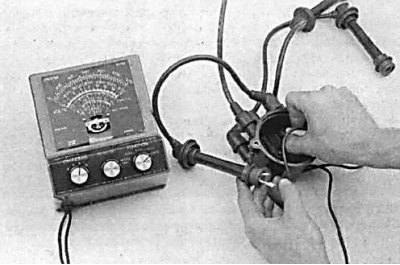
6. Install the high-tension wires to the distributor cap and check the resistance between the high-tension wire tip and the ground electrode on the distributor cap. If the resistance exceeds the permissible limits, replace the distributor cap and/or the high-tension wire.