



Four-cylinder engine emission control system
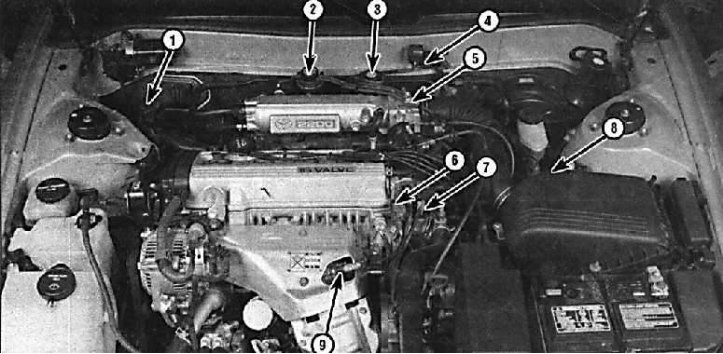
1 – diagnostic connector; 2 – EGR vacuum modulator; 3 – EGR valve; 4 – MAP sensor; 5 – TPF (behind the throttle body); 6 – coolant temperature sensor; 7 – ignition distributor; 8 – ignition unit (behind the air filter); 9 – oxygen sensor
Six-cylinder engine exhaust emission control system
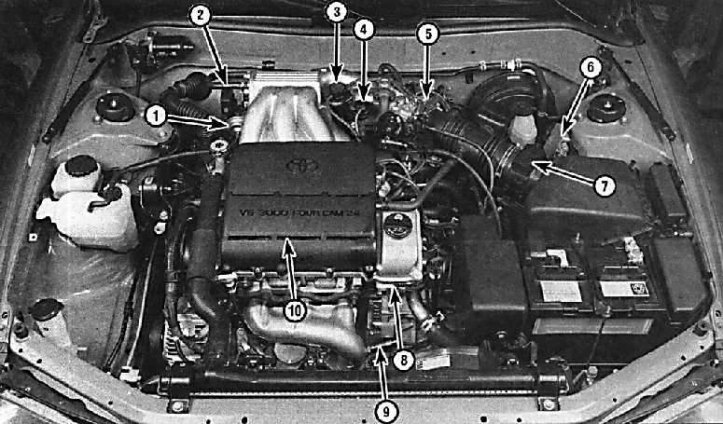
1 – air control valve; 2 – diagnostic connector; 3 – EGR vacuum modulator; 4 – EGR valve; 5 – TPS (behind the throttle body); 6 – ignition unit; 7 – NAF sensor; 8 – camshaft position sensor; 9 – oxygen sensor; 10 – ignition coils (located under the casing)
Typical diagram of vacuum hose layout on a four cylinder engine
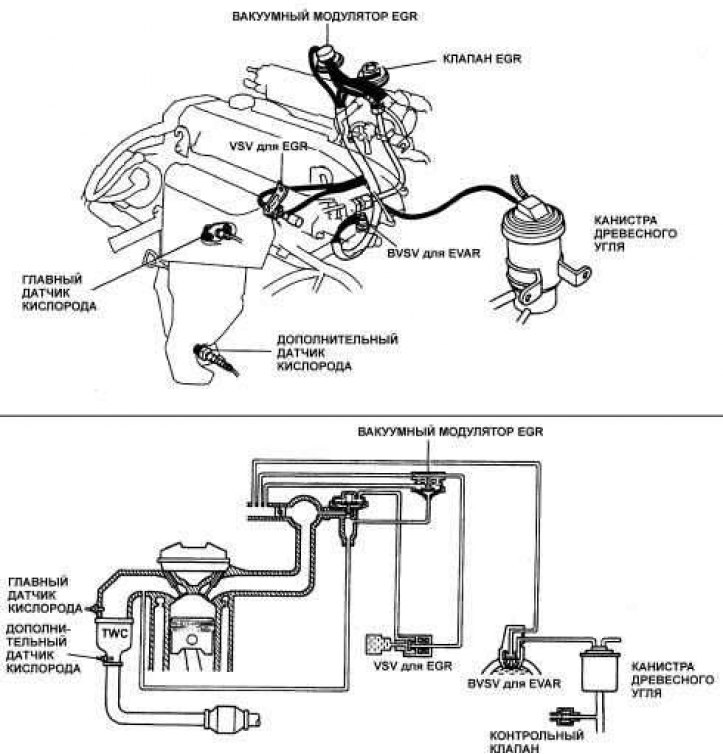
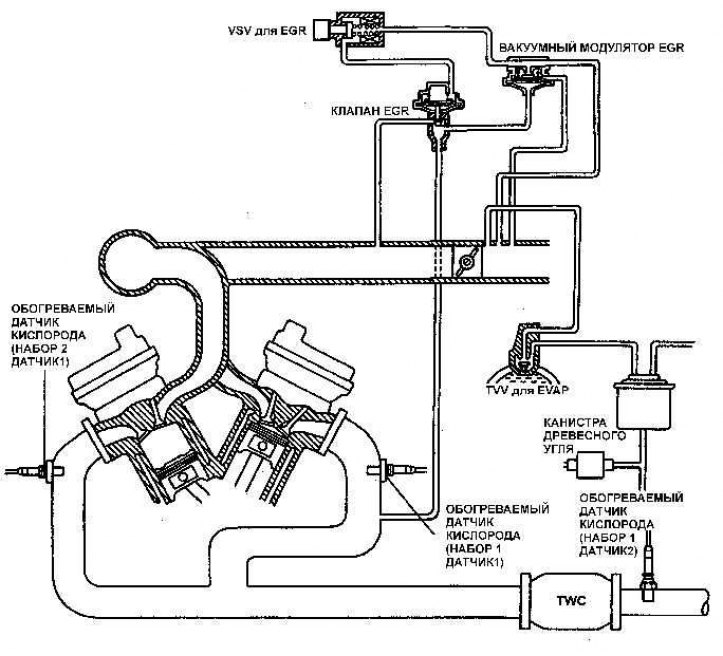
Typical vacuum hose layout diagram for a 3VZ-FE V6 engine
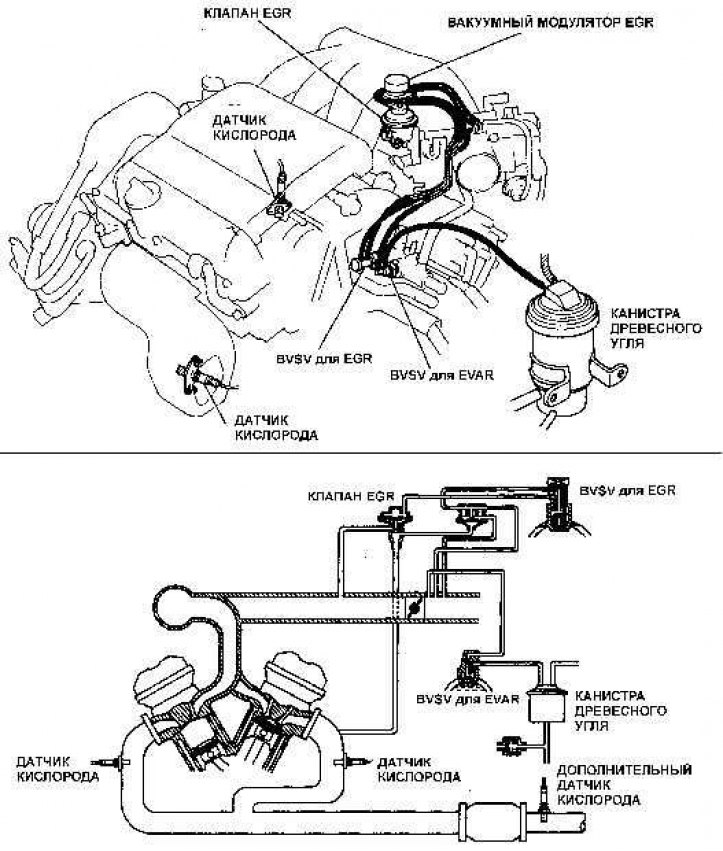
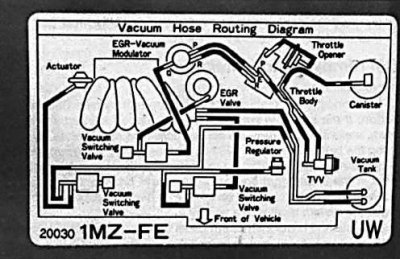
Schematic layout of vacuum hoses on the 1MZ-FE V6 engine
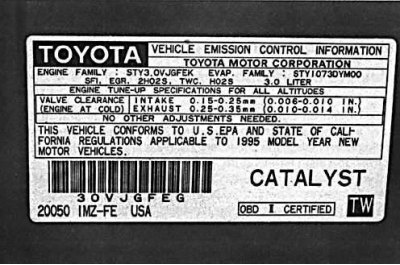
Identification plate with emission control system data, idle speed and ignition timing
Identification plate with schematic arrangement of vacuum hoses
In order to reduce atmospheric pollution from incompletely burned hydrocarbons and evaporating gases and to create optimal conditions for engine operation, the following exhaust gas toxicity reduction systems are used:
- crankcase ventilation system;
- fuel Evaporative Protection (EVAP) System;
- exhaust gas re-burning (EGR) system;
- catalyst (TWC);
- electronic Fuel Injection (EFI);
- induction air supply system.