



Contents: Examination ↓ Replacement ↓
Four-cylinder engines
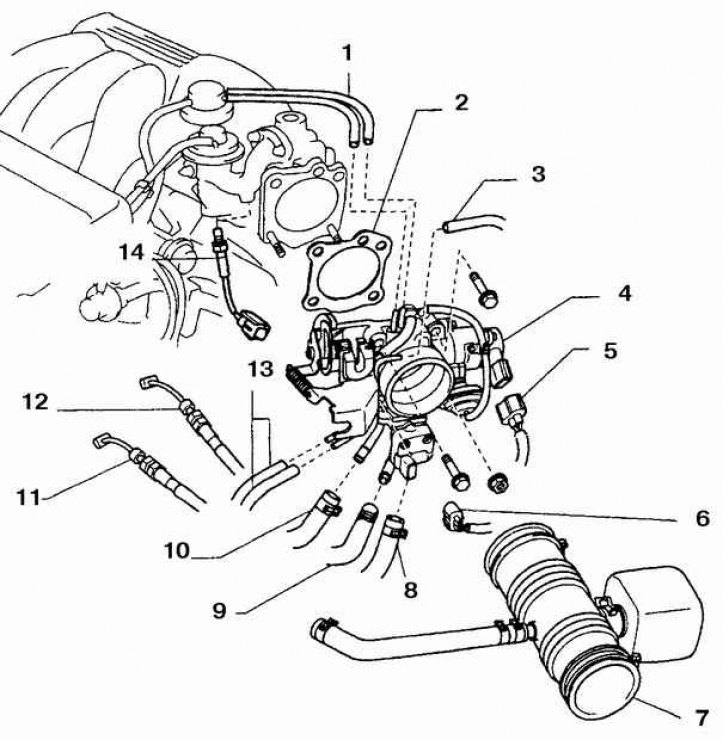
1. Vacuum hoses; 2. Gasket; 3. Fuel vapor recovery system hose; 4. Throttle body housing; 5. Throttle position sensor wire; 6. Wire; 7. Pipe connecting the throttle to the air filter; 8. Coolant bypass hose; 9. Air hose; 10. Coolant bypass hose; 11. Throttle cable; 12. Accelerator cable; 13. Fuel vapor recovery system hose; 14. Exhaust gas recirculation system temperature sensor
Throttle Port Vacuum Operation - 4 Cylinder Models
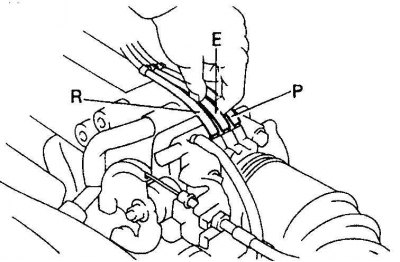
| Name of the port | At idle | Other modes |
| R | no vacuum | vacuum |
| E | no vacuum | vacuum |
| R | no vacuum | no vacuum |
Examination
1. Inspect the lever mechanism; it should operate smoothly and not stick.
2. Start the engine, disconnect the vacuum hoses from the throttle body one by one. Check for vacuum at idle and at higher rpm. Compare the test results with the data in the table Throttle Body Vacuum Port Function - 4-Cylinder Models.
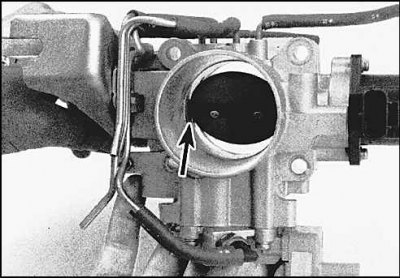 | 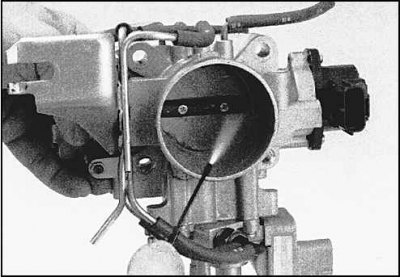 |
3. Remove the air intake pipe and check the throttle for carbon deposits and dirt. If necessary, clean the throttle with a special solution for cleaning carburetors.
Replacement
1. Disconnect the negative battery cable.
2. Remove the air intake pipe connecting the throttle body to the air filter.
3. Disconnect the accelerator cable from the throttle lever.
4. Disconnect the hoses and wires from the throttle body housing.
5. Disconnect the wire from the throttle position sensor.
View the original source on the website: ToyotaMan.ru
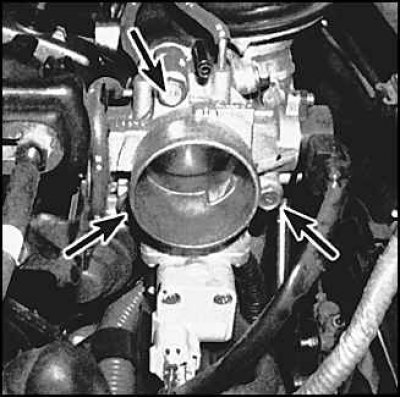
6. Remove the throttle body mounting bolts.
7. Disconnect the throttle body from the intake manifold.
8. Installation is carried out in the reverse order of removal.