



Contents: Operating principle ↓ Protection against shock loads when…↓ Automatic speed control system ↓
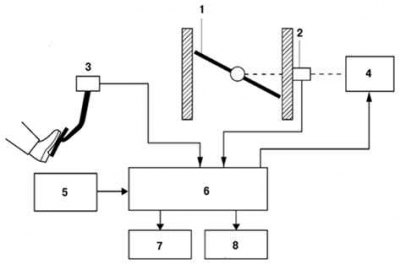
Fig. 2.48. ETCS-i system diagram: 1 – throttle valve; 2 – throttle position sensor; 3 – fuel pedal position sensor; 4 – throttle actuator electric motor; 5 – air flow sensor; 6 – electronic unit
In a conventional throttle body, the throttle opening is determined by the force applied to the accelerator pedal. In contrast, in the ETCS-i system, the engine control unit calculates the optimum throttle opening angle to suit the driving conditions and uses the throttle actuator motor to control its opening. The throttle cable and lever have been removed, and the position sensor is mounted on the accelerator pedal.
Operating principle
The engine control unit drives the throttle actuator motor by setting the target throttle opening angle according to the vehicle's driving condition. It controls the throttle valve to maintain the engine idle speed at a certain level at all times.
Protection against shock loads when shifting gears
During gear shifting, throttle control is synchronized with the operation of the ECT system (electronically controlled transmission), to reduce impact loads.
Automatic speed control system
The engine electronic control unit with integrated electronic control unit of the automatic cruise control system directly actuates the throttle valve for automatic speed control.