Contents: Removal the Windshield Wiper Control…↓ Checking the Windshield Wiper…↓ Checking the operation of the…↓ Checking operation in MIST mode ↓ Checking the windshield wiper motor ↓ Checking the rear window wiper switch ↓ Checking the rear window wiper relay ↓ Checking the rear window wiper motor ↓ Checking the windshield and rear…↓ Checking the washer motor…↓
Removal the Windshield Wiper Control Switch
1. Loosen the mounting screws and remove the upper and lower steering column covers.
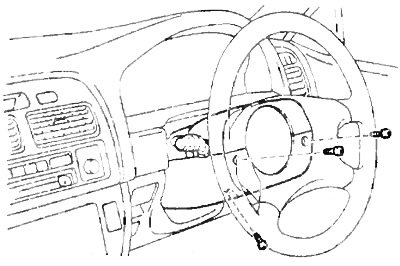
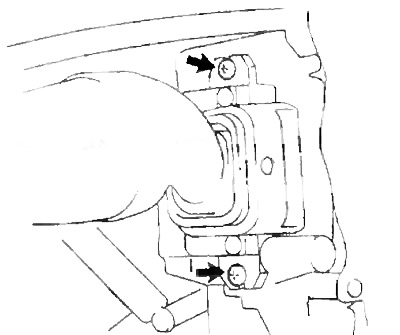
2. Loosen the mounting screws and remove the windshield wiper control switch assembly.
Checking the Windshield Wiper Control Switch
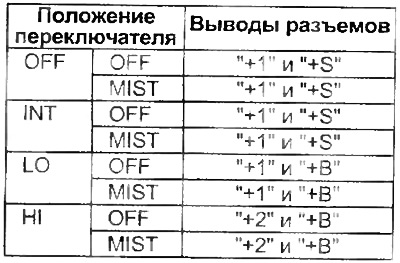
Check the conductivity between the switch terminals according to the table.
 |  |
Checking the operation of the windshield wiper
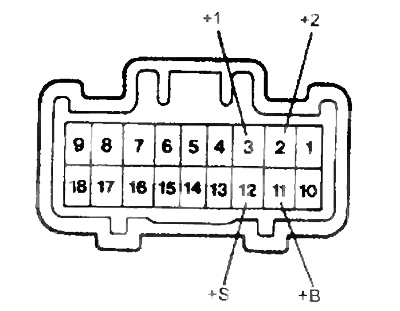
1. Connect the "+" of the voltmeter to the "+1" terminal and the voltmeter to the "EW" terminal.
2. Connect the "+" of the battery to the "+B" terminal, and to the "EW" and "+S" terminals.
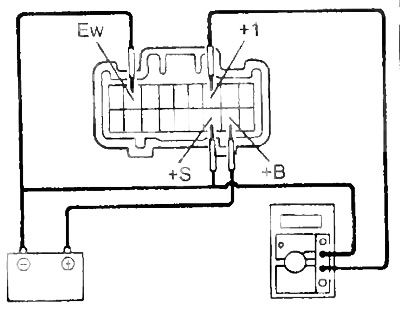
3. Switch the windshield wiper to the INT position.
4. Within 5 seconds, connect the "+" terminal of the battery to the "S+" terminal.
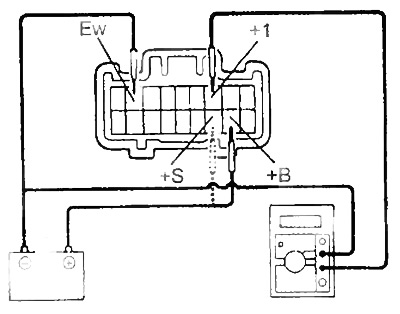
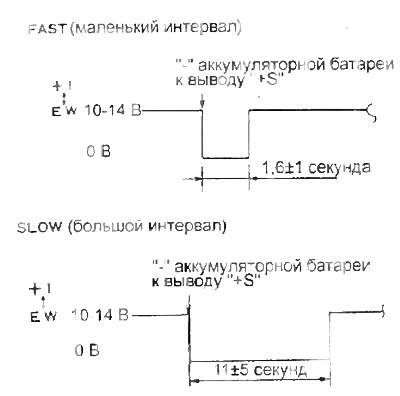
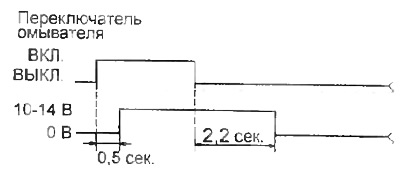
5. Connect the battery to the "+S" terminal, and check the voltage change between the "+1" and "EW" terminals when the cleaner operates at the interval adjustment.
Checking operation in MIST mode
1. Set the windshield wiper switch to the OFF or INT position.
2. Connect the battery to the "+B" terminal and to the "EW" terminal.
3. Connect the voltmeter to the "+1" terminal, and the "-" voltmeter to the "EW" terminal.
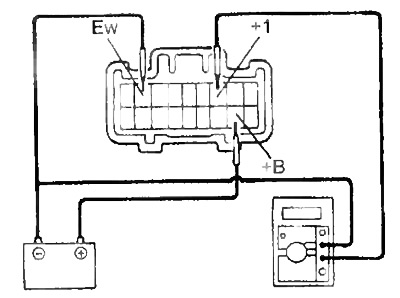
4. Check that the voltage between terminals "+1" and "EW" at the moment of switching to the MIST position increases to 10-14 V.
Checking the windshield wiper motor
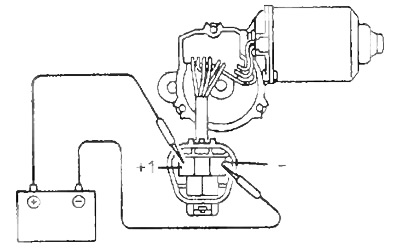
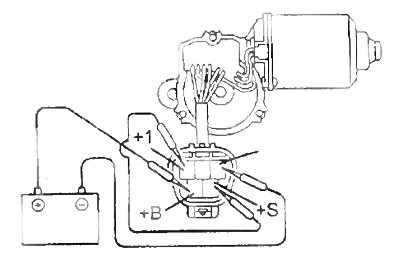
1. Checking the operation at low speed. Connect the "+" of the battery to the "+1" terminal, and the "-" of the battery to the motor housing. At this point, the windshield wiper motor should start working at low speed.
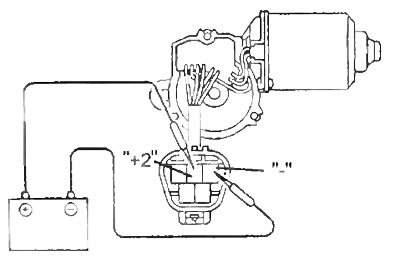
2. Checking the operation at high speed. Connect the "+" of the battery to the "+2" terminal, and the battery to the motor housing. At this point, the windshield wiper motor should start working at high speed.
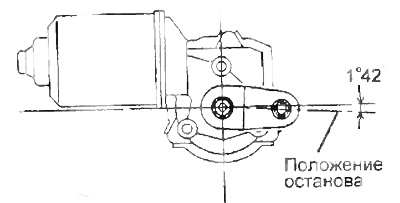
3. Checking the brush stop in the extreme position (stop position).
a) Connect the "+" of the battery to the "+1" terminal, and the "-" of the battery to the motor body. The motor will run at low speed.
b) Remove the wire from the battery from the "+1" terminal. The electric motor should stop.
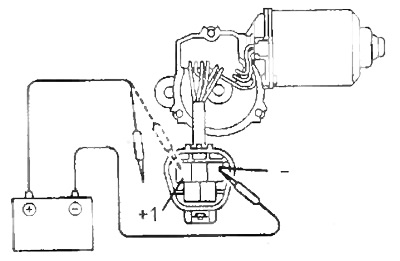
c) Close the terminals "+1" and "+S". Connect the "+" of the battery to the terminal "+B", at this time the engine should start working at low speed and then go to the stop position.
Note: The stop position is shown in the figure.
Checking the rear window wiper switch
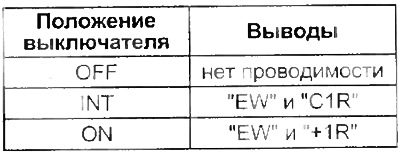
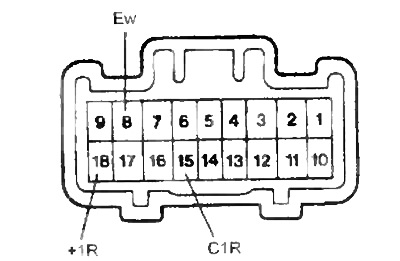
1. Check the circuits at different switch positions according to the table.
 |  |
Checking the rear window wiper relay
Colors: L - blue, Y - yellow, R - red
1. Check in OFF position.
Check that the circuit between terminals "R" and "L" is open and that the circuit between terminals "Y" and "R" is closed.
2. Check in ON position.
Connect the "+" of the battery to the terminal "+B", and the "-" of the battery to the terminal "LS". Then check that the circuit between terminals "R" and "L" is closed, and between terminals "Y" and "R" is open.
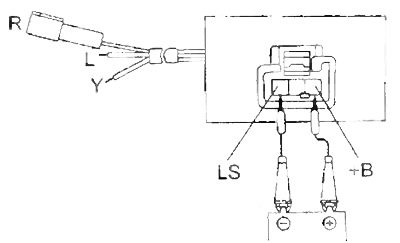
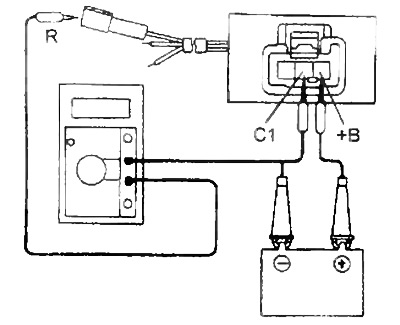
3. Checking the interval change mode (INT).
a) Set the voltmeter to the DC range (d.C). Connect the "+" of the voltmeter to the "R" terminal, and the "+" of the voltmeter to the "C1" terminal.
b) Connect the "+" of the battery to the "+B" terminal, and the battery to the "C1" terminal (the relay is "ON").
The voltage between terminals "R" and "C1" is about 12 V.
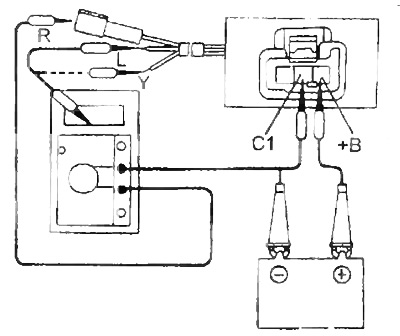
c) From the position specified in point (b), connect the terminals "Y" and "L" within 5 seconds, and the relay will switch from the "ON" position to the "OFF" position.
d) When removing the jumper from the terminals "Y" and "L", check that the voltage between the terminals "R" and "C1" changes (0 V when removing the jumper and 12 V after 9-15 seconds).
Checking the rear window wiper motor
1. In the "ON" position.
Disconnect the "R" terminal. Connect the + of the battery to the "R" terminal and the "-" of the battery to the "ground" and check that the electric motor works.
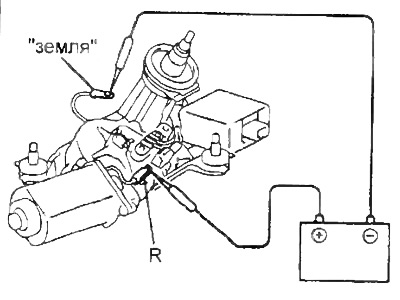
2. In the OFF position.
a) Connect the "+" of the battery to the "R" terminal, and the battery to the "ground". The electric motor should work.
b) Disconnect the "+" of the battery from the "R" terminal. The electric motor should stop.
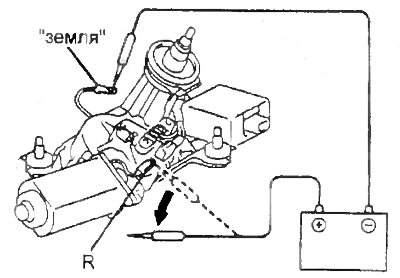
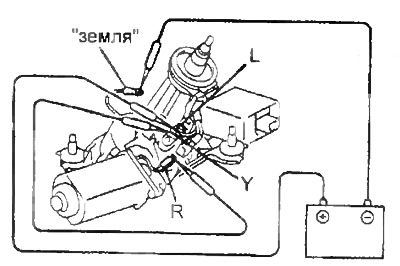
c) Close the terminals "R" and "V", connect the "+" of the battery to the terminal "L". The engine will start and stop in the automatic stop position.
Colors: L - blue, Y - yellow, R - red.
Checking the windshield and rear window washer switches
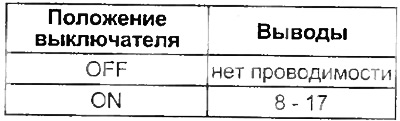
1. Check the conductivity.
Windshield washer
Rear window washer
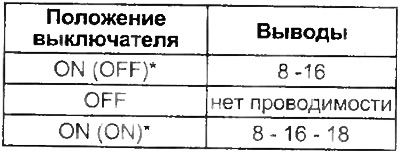
* in brackets - position of the windshield washer switch.
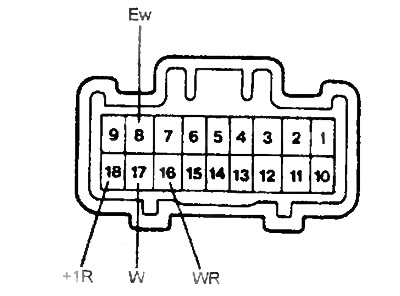
2. Checking the operation of the windshield washer.
a) Set the wiper switch to the OFF position.
b) Connect the "+" of the battery to "+B" and to the "+S" and "EW" terminals.
c) Connect the "+" of the tester to "+1" and the "-" of the tester to the "EW" terminal.
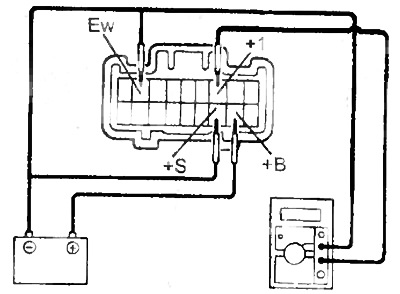
d) Make sure that there is voltage between terminals "+1" and "EW" when the wiper switch is in the ON or OFF position.
Checking the washer motor (windshield or rear window)
Without rear wiper
1. Place the washer motor in a reservoir of water.
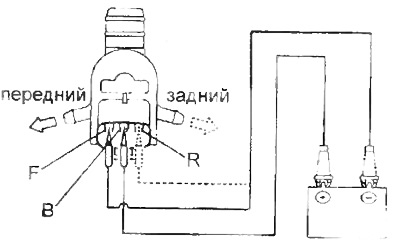
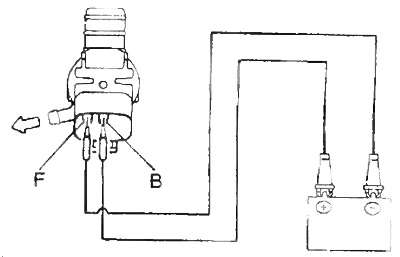
2. Connect the "+" of the battery to the "B" terminal of the electric motor, and to the "F" terminal and make sure that water comes out of the fitting.
With rear wiper
1. Place the washer motor in a reservoir of water.
2. Connect the "+" of the battery to the "B" terminal of the electric motor, and to the "F" terminal and make sure that water comes out of the nipple (in the windshield wiper).
3. Connect the "+" of the battery to the "B" terminal of the electric motor, and to the "R" terminal and make sure that water comes out of the nipple (in the rear window wiper).