
The location of the relay blocks on the car
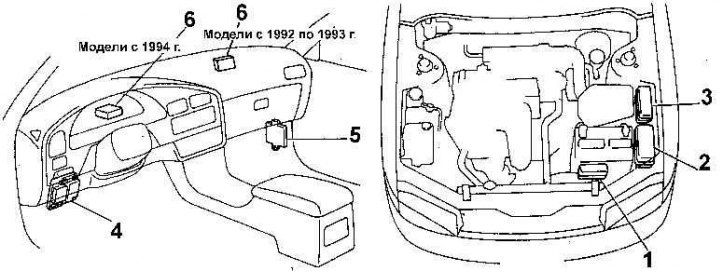
1 - relay block No. 7; 2 - connecting block No. 2; 3 - relay block No. 5; 4– connecting block No. 1; 5 - relay block No. 4; 6 - relay block No. 6
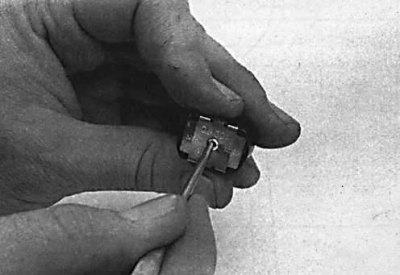
Using a steel rod to reset the overload relay
A relay is an electronically controlled switch that is typically used as follows:
- the relay can switch large currents remotely from the circuit in which this current flows, allowing the use of thinner wires and switch contacts;
- a relay can have more than one control input unlike a mechanical switch;
- the relay can perform the function of a timer, for example, set the wiper interval.
To protect some electrical circuits (power windows, door locks, headlights) overload relay is used. In case of a significant excess of the consumed current, the automatic overload relay will briefly turn off the consumer's power circuit, however, to restore operability, some overload relays must be turned on manually. To do this, remove the overload relay and, from the side of the contacts, insert a steel rod into the re-installation hole and press the lock until it clicks (see fig. Using a steel rod to reset the overload relay).
If a relay-controlled system fails and the relay is probably the cause of the problem, listen to the relay while the system is on. If the relay is working properly, you should hear a click when it turns on. If the relay is OK, then the cause of the malfunction lies in the elements or connecting wires. If the relay does not work, it means that it does not receive the main power supply or control pulse, or the relay is faulty.