



Caution! When removing air, constantly monitor the presence of brake fluid in the reservoir, not allowing its bottom to become exposed, as this will allow air to enter the system again.
Bleeding the hydraulic brake drive is necessary to remove air, which significantly reduces braking efficiency. Air can get into the hydraulic drive due to depressurization of the system during repairs, replacement of individual units or brake fluid. The presence of air in the drive is indicated by an increased travel of the brake pedal and its softness. Before removing air, check the tightness of all brake drive units and their connections.
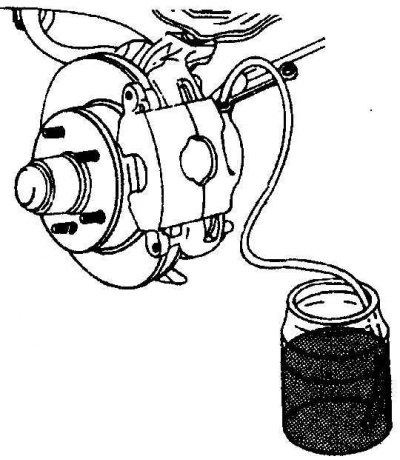
1. Remove the dust cap from the wheel cylinder bleeder nipple, clean it and attach a clean transparent hose to it, lowering the other end into a container partially filled with brake fluid.
2. Press the brake pedal sharply 3-5 times with an interval of 2-3 seconds. Unscrew the bleed nipple by half a turn with the pedal pressed. Continuing to press the pedal, force the fluid in the system together with the air through the hose into the container. After the pedal reaches the extreme forward position and the fluid stops flowing out through the hose, screw the bleed nipple all the way in. Repeat these operations until air stops flowing out of the hose.
3. While holding the pedal down, tighten the bleed screw until it stops and remove the hose.
4. Wipe the bleed nipple clean and install the protective cap.
5. Repeat these operations for the other wheels.
6. If there is no air in the brake system, the pedal should travel about half of its travel. To eliminate the influence of the vacuum booster on the pumping of the brakes, bleed the air with the engine off.