
Company Honda Company Ford Company Skoda Company Kia Company Mazda Company Mercedes Company Renault
English Русский
Български
Беларускі
Український
Српски
Hrvatski
Română
Polski
Slovenský
Magyar
Bookmark Articles Sitemap Contacts
ToyotaMan.ru


Camry Corolla Corona Carina Land Cruiser Highlander 4Runner RAV4 Others
Camry XV30 (2001-2006) Camry XV20 (1996-2001) Camry XV10 (1991-1996) Camry Vista V40 (1994-1998)

SRS front airbags [Toyota Camry XV20]

  • Main
  • Camry
  • XV20 (1996-2001)
  • General information
  • Controls and instruments
  • SRS front airbags
0


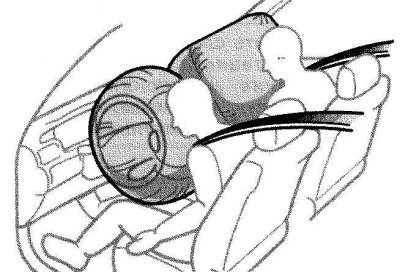
SRS airbags (additional restraint system) designed to provide the driver and front passenger with additional protection in addition to the basic protection provided by seat belts.

The passenger airbag is activated even if there is no passenger in the front seat. Make sure the seat belt is properly fastened.

Warning! A driver or passenger sitting too close to the steering wheel or instrument panel may be seriously injured or even killed when the air bag inflates. We strongly recommend the following:
  • - The driver should sit as far from the steering wheel as possible for normal control of the vehicle.
  • - The passenger sitting in front should be as far away from the instrument panel as possible.
  • - All passengers must be properly seated.
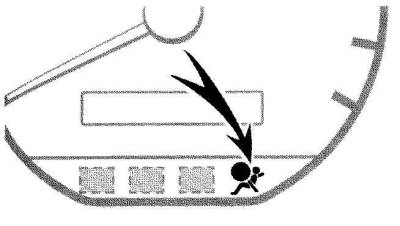


This indicator comes on when the ignition switch is turned to the "ACC" or "ON" position. It goes out after about 6 seconds. This means that the supplemental restraint system air bags are working properly.


This warning light system controls the SRS front airbag sensors, the airbag sensor device, the discharge devices, the warning light signal, the connection wire system, and the power supplies.
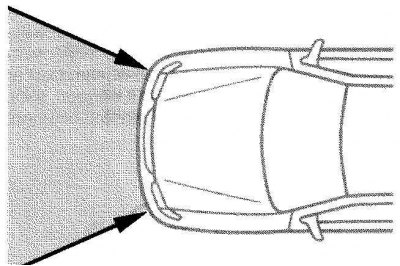


The SRS air bag is designed to deploy in response to a severe frontal impact within the shaded area between the arrows in the illustration.

There are cases where the SRS airbag will not deploy in response to such an impact, but a properly fastened seat belt will not cause serious injury to a passenger.

The SRS air bag will deploy if the magnitude of the impact exceeds a calculated limit level, comparable to approximately a direct collision with a fixed barrier that does not move or deform at a vehicle speed of 25 km/h.

If the impact magnitude is below the specified threshold level, the SRS air bag may not deploy.

However, the speed threshold will be significantly higher if the vehicle collides with an object such as a parked car or road sign that may move or deform, or in a downward collision (such as when the front of the vehicle is "caught" under the bed of a truck).

In a collision at the edge of the acceptable level for the sensitivity of the air bag system sensors, it may be that only one of them will deploy.


The SRS air bag is designed so that it will not inflate if the vehicle is struck from the side or rear, if it rolls over, or if it is involved in a low-speed frontal collision.
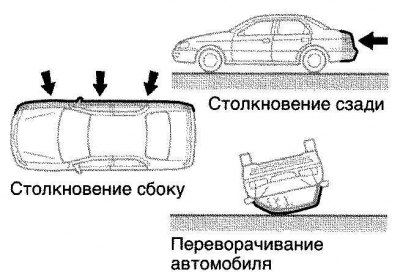


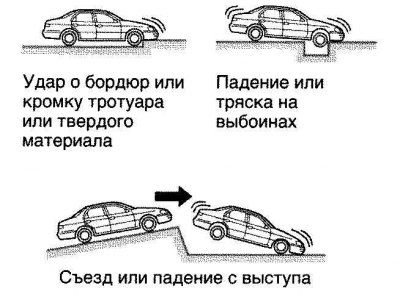
SRS air bags can deploy if there is a severe impact to the underside of the vehicle. Some examples are shown in the illustration.


Main components of the SRS airbag system
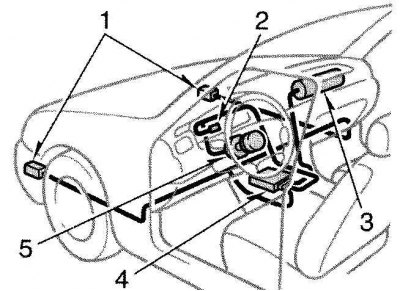


1. Front air bag sensor
2. SRS warning light
3. Passenger air bag module (air cushion and inflator)
4. The device of air cushion sensors
5. Driver air bag module (air cushion and inflator)


The air cushion sensor device consists of permissible impact sensors and air cushion activation sensors.

In response to a severe frontal impact, sensors detect deceleration and activate air bag inflation pumps. A chemical reaction in the inflation pumps then causes the air bags to instantly fill with non-toxic nitrogen gas to keep occupants from moving forward.

When the air bags inflate, there will be a loud noise and smoke with non-toxic gas will be released. This gas does not mean combustion. It is harmless, but for those with sensitive skin, it may cause minor irritation. Be sure to wash off the residue to prevent even minor skin irritation.

The deployment of the air bags occurs in a fraction of a second, as the air bag is inflated with considerable force. While the system is intended to reduce serious injuries, it can cause minor burns, abrasions.

Parts of the air cushion unit (steering wheel bushing, instrument cluster) may be hot for a few minutes, but the air spring itself will not be hot. Air springs are designed to be filled once.

In a collision severe enough to inflate the air bags, the vehicle's windshield and tie rods may be broken. In vehicles with a passenger air bag, the windshield may also be damaged.
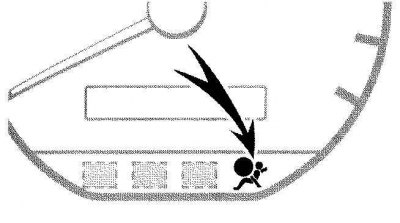


The air bag system has a service warning indicator to inform the driver of functional problems.


If any of the following occurs, it indicates a malfunction of the air bags. Contact your Toyota dealer as soon as possible to have the vehicle checked.

The indicator light does not come on when the ignition key is turned to the "ACC" or "ON" position or is left on.

The indicator light comes on while driving.
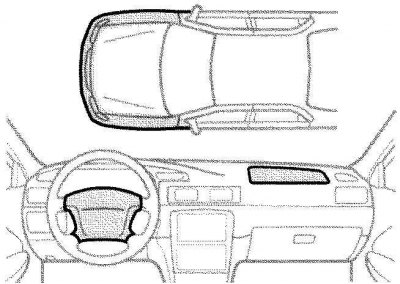


Caution: In the following cases, contact your Toyota dealer as soon as possible:
  • - SRS airbags deployed;
  • - the front of the car (shaded in the picture) was involved in an accident, but not to the extent that the supplemental restraint system air bags inflated;
  • - section of the steering wheel cushion or the front passenger air bag cover (shaded in the picture) scratched, cracked or damaged.
This article is available at: russian, bulgarian, belarusian, ukrainian, serbian, croatian, romanian, polish, slovak, hungarian
The article material has been checked: Kolokoltsev Grigory
Share information:
◀ Previous
Camry XV20: Controls and instruments
Next ▶

Front seat belt tensioners
Seat headrests — adjustment
Folding the rear seat
Front seats — adjustment
Electric sunroof
SRS side airbags
Steering wheel — adjustment
Exterior rear view mirrors
Interior rear view mirror
Sun visors
Similar articles on other Toyota models

➥ Front Seat — Front Seat Relocation Toyota Corolla E80 (1983-1990)
➥ Drive shaft seals (front wheel drive) Toyota Corona T190 (1992-1997)
➥ Front oil seal device Toyota Carina T190 (1992-1996)
➥ Front wheel hubs and bearings Toyota Cruiser 60/80 (1980-1997, petrol)
➥ Front and rear of the car Toyota Highlander 1 (2000-2007, petrol)
➥ Front seat adjustment Toyota 4Runner N120 (1989-1995)
Link in different formats to this article
Comments and feedback from visitors
No comments yet


Add two numbers 27 + 17


Camry XV30 (2001-2006) 
  • User manual
  • Vehicle description
  • Keys, locks and alarms
  • Governing bodies
  • Salon equipment
  • Driving and operation
  • Maintenance
  • Power unit
  • 4-cylinder engine
  • Control system (I4)
  • Engine overhaul (I4)
  • 6-cylinder engine
  • Control system (V6)
  • Engine overhaul (V6)
  • Transmission
  • Clutch
  • Mechanical gearbox
  • Automatic gearbox
  • Drive mechanism
  • Chassis, running gear
  • Wheels and tires
  • Car suspension
  • Steering
  • Brake system
  • Body and interior
  • Exterior (external elements)
  • Doors, locks and windows
  • Air conditioning and heater
  • Electrical equipment
  • Equipment and devices
  • Power devices
  • Electrical circuits
Camry XV20 (1996-2001) 
  • General information
  • Controls and instruments
  • Driving and operation
  • Daily care
  • Maintenance
  • Power unit
  • 4-cylinder engine
  • 6-cylinder engine
  • Engine overhaul
  • Engine electrical equipment
  • Cooling system
  • Heating and ventilation
  • Fuel system
  • Exhaust system
  • Transmission
  • Mechanical gearbox
  • Automatic gearbox
  • Clutch
  • Chassis, running gear
  • Suspension and axle shafts
  • Steering
  • Brake system
  • Body and interior
  • Exterior (external elements)
  • Interior (internal elements)
  • Doors, locks and windows
  • Electrical equipment
  • Equipment and devices
  • Electrical circuits
Camry XV10 (1991-1996) 
  • General information
  • User manual
  • Maintenance
  • Power unit
  • 4-cylinder engine
  • 6-cylinder engine
  • Overhaul of engines
  • Cooling and heating
  • Fuel system
  • Engine electrical equipment
  • Control system
  • Transmission
  • Mechanical gearbox
  • Automatic gearbox
  • Clutch and drive shafts
  • Chassis, running gear
  • Brake system
  • Car suspension
  • Steering
  • Body and interior
  • Exterior (external elements)
  • Interior (internal elements)
  • Doors, locks and windows
  • Electrical equipment
  • Equipment and devices
  • Headlights and lighting
  • Electrical circuits
Camry Vista V40 (1994-1998) 
  • General information
  • User manual
  • Maintenance
  • Power unit
  • Petrol engines
  • Diesel engines
  • Engine overhaul
  • Cooling and lubrication system
  • Fuel system (diesel)
  • Fuel injection (petrol)
  • Engine electrical equipment
  • Transmission
  • Clutch and cardan
  • Automatic gearbox
  • Chassis, running gear
  • Front suspension
  • Rear suspension
  • Steering
  • Brake system
  • Body and interior
  • Body elements
  • Air conditioning and heater
  • SRS security system
  • Electrical equipment
  • Equipment and devices
  • Electrical circuits
ToyotaMan.ru © 2018–2026 • Mobile version • Interesting about Toyota • Administration • Sitemap: EN BG BY UA RS HR RO PL SK HU • Search system • Bookmark
Camry Vista-V40 • Camry XV10 • Camry XV20 • Camry XV30 • Corolla Verso-AR10 • Corolla E80 • Corona T190 • Carina T170 • Carina T190 • Land Cruiser J70 (diesel) • Land Cruiser J60 (petrol) • Land Cruiser J100 • Highlander XU20 (petrol) • 4Runner N120 • RAV4 XA10 • RAV4 XA20 • Duet M100 • Dyna Y50 •
We require cookies to enable some interactive features. Is that ok with you?