Contents: Removal injectors ↓ Checking the injectors ↓ Installation of injectors ↓ Removal and installation the fuel…↓
Removal injectors
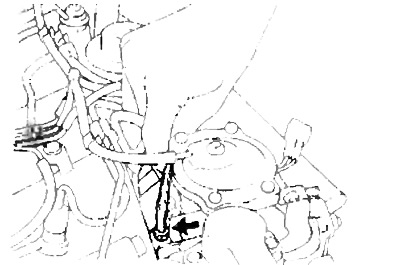
1. Loosen the nuts and remove the high pressure fuel line clamp.
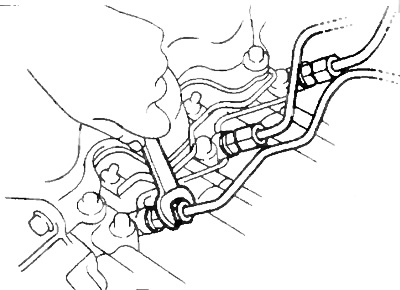
2. Remove the high pressure fuel pipes.
a) Remove the high pressure fuel pipe holders.
b) Unscrew the coupling nuts of the high-pressure fuel pipe fittings on the injectors and high-pressure fuel pump.
3. Remove the fuel return pipe.
a) Disconnect the fuel return hose from the fuel outlet pipe fitting.
b) Unscrew the nuts securing the fuel return pipe and remove it together with the sealing gaskets.
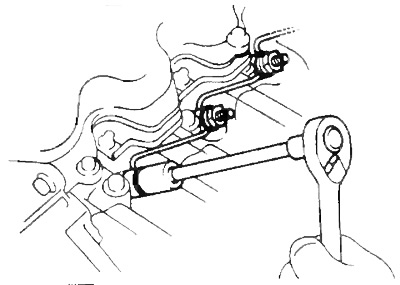
4. Remove the injectors.
a) Remove the injectors using a special tool.
b) Arrange them in the order of removal.
c) Remove the injector seats and sealing gaskets.
Checking the injectors
1. Checking the injection pressure.
a) Install the injector on the test stand.
b) Pump the fuel injection lever quickly several times to create pressure to clear the nozzle opening.
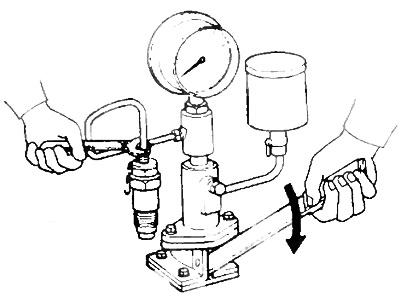
c) Slowly pump the lever and use the pressure gauge to determine the pressure at which the needle begins to rise.
Needle lift start pressure:
- used nozzle - 135-155 bar
- new nozzle 145-155 bar
Note: When the injector is working properly, a clear, distinctive cut-off sound should be heard.
If the needle lift start pressure does not correspond to the specified values, adjust it by selecting an adjusting washer of the required thickness.
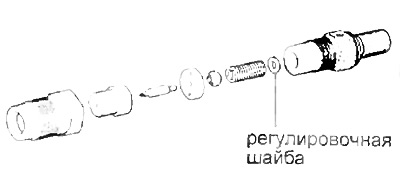
Note:
- The adjusting washers have 43 sizes (thickness values) from 0.900 mm to 1.950 mm with a step of 0.025 mm.
- Changing the thickness of the adjusting shim by 0.025 mm results in a change in injection pressure of approximately 3.5.
- Only one adjusting washer should be used.
When adjusting the injection pressure, use the data for the new injectors.
d) After injection is complete, no fuel leakage should be observed.
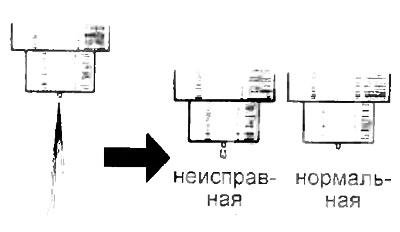
2. Check the injector needle for leaks. Create a pressure of 10-20 bar on the injector test bench until the injector needle opens. There should be no fuel leakage from the nozzle hole or around the injector coupling nut for 10 seconds.
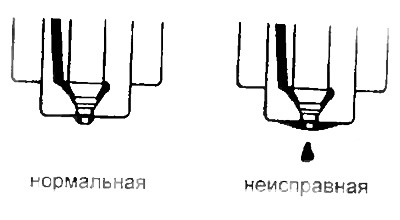
If fuel leakage is observed, replace or repair the injector.
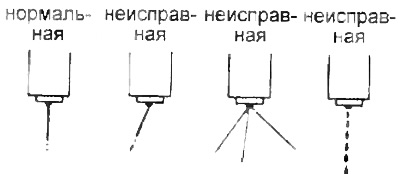
3. Checking the spray pattern.
a) Set the rotation speed of the fuel injection pump drive shaft (on the fuel stand) 15-60 rpm (used nozzles) and 30-60 rpm (new injectors).
b) Check the correct spray pattern.
Installation of injectors
1. Check the injection pressure and fuel atomization pattern.
2. Install the injectors.
a) Install new sealing gaskets and injector seats into the cylinder head socket.
b) Install the injectors and tighten them using a special tool.
- Tightening torque - 64 Nm
Warning: Overtightening of the injector body is not permitted.
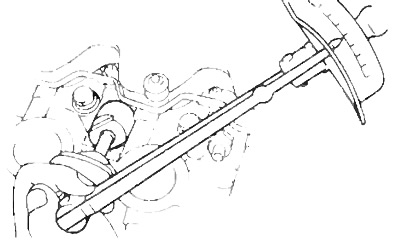
3. Installing the fuel return pipe.
a) Install 4 new seals, fuel return pipe and tighten 4 compression nuts.
- Tightening torque - 29 Nm
b) Connect the fuel return pipe to the fuel return hose.
4. Connect the high pressure fuel pipes.
a) Fit the compression nuts of the high-pressure fuel pipes onto the injector and high-pressure fuel pump fittings.
b) Install the high pressure fuel line brackets.
- Tightening torque - 29 Nm
5. Install the high pressure fuel line clamp and tighten the nuts.
6. Remove air from the injectors.
a) Loosen the compression nuts of the high-pressure fuel pipes on the injector side.
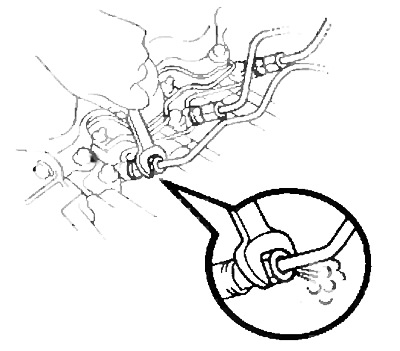
b) Turn the engine over with the starter and after removing air from the fuel pipes, tighten the nuts to the torque specified above.
7. Start the engine and check for fuel leaks.
8. Check the idle speed and maximum engine speed.
Removal and installation the fuel shut-off valve
Note: Install parts in the reverse order of removal.
1. Remove the retarder damper.
- Tightening torque - 11.5 Nm
Note: Do not turn the damper adjustment screw under any circumstances.
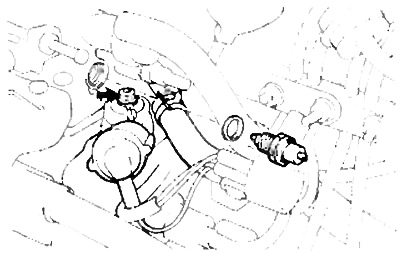
2. Remove the protective cover and disconnect the valve connector.
3. Disconnect the fuel hose.
4. Loosen the mounting bolt.
5. Unscrew the fuel shut-off solenoid valve.