
Location of the main components of the air conditioning system
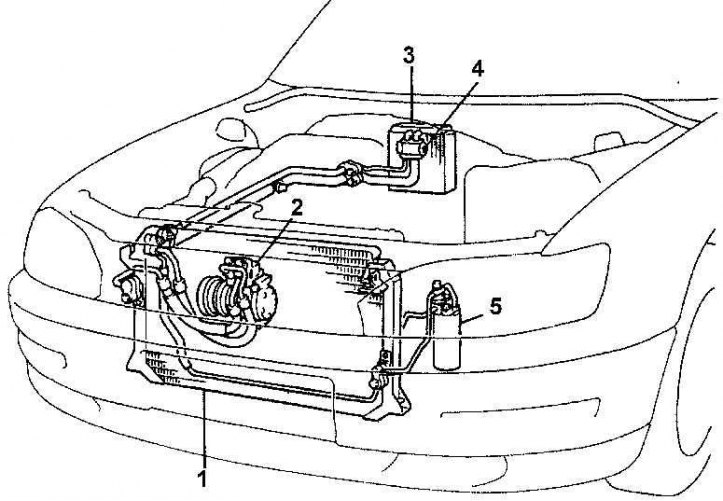
1 - capacitor; 2 - compressor; 3 - receiver; 4 - evaporator; 5 - valve
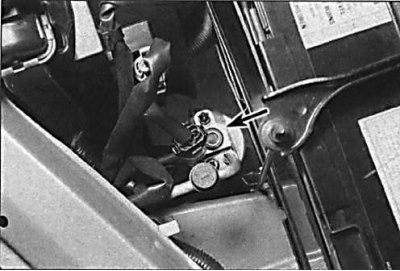
Location of the viewing window for determining the level of refrigerant in the air conditioning system
The air conditioning system consists of a condenser mounted in front of the radiator, an evaporator located near the heater, a compressor mounted on the engine and a dehydrator. The heater fan drives warm air into the car interior through the evaporator, cools it to the required temperature.
Attention! The air conditioning system is under pressure, so no connections in the air conditioning system should be loosened until the pressure is relieved. The high pressure and chemical attack of the refrigerant is a source of increased danger when the system is not properly serviced by untrained technical personnel and when using improper equipment.
Attention! The air conditioning system must only be serviced by trained technicians who are trained in safe work practices using the proper equipment, in compliance with depressurization procedures, and familiar with the methods of collecting and storing automotive refrigerant.
Attention! Avoid skin contact with refrigerant.
Attention! Wear protective goggles when working near the air conditioning system.
Attention! If refrigerant comes into contact with skin or eyes, do not rub the affected area. Rinse immediately with cold water for at least 15 minutes. Contact your doctor or healthcare facility immediately. Self-medication is not allowed.
Attention! In a new cylinder, the refrigerant is under pressure. Store at a temperature not exceeding 50°C. Take care not to drop the cylinder from a height or otherwise cause damage to the cylinder.
Attention! Work should be carried out in a well ventilated area. The refrigerant evaporates quickly, resulting in reduced oxygen supply and breathing difficulties.
Attention! The gaseous refrigerant is heavier than air and must collect relatively quickly at the bottom, such as under a car.
Warning! When the refrigerant burns, poisonous gas is produced. Keep refrigerant away from open flames. Do not smoke. Avoid breathing smoke when using flame leak detectors.
Attention! When welding near the air conditioning system, always remove the refrigerant from it. Electric welding near refrigerant piping may cause the refrigerant to decompose due to ultraviolet radiation.
Attention! Do not expose parts of the air conditioning system to high temperatures or open flames. Overheating can cause system pressure to rise and ignite.
Attention! Cleaning the condenser or evaporator with steam is not permitted. Use only cold water or compressed air.
Attention! The air conditioning system has a sight glass for a rough estimate of the level of refrigerant charged (see fig. Location of the viewing window for determining the level of refrigerant in the air conditioning system).
Attention! To check the coolant level, start the engine and turn on the air conditioner. When the compressor is running, no bubbles should be observed in the viewing window. The presence of bubbles, even for a short period of time, indicates insufficient refrigerant charge. The appearance of foam on the inside of the sight glass may indicate an almost complete absence of refrigerant. To fully restore the air conditioning system to full working capacity, the system line must be pumped out, checked for leaks and charged by trained personnel using the proper equipment.