



Examination
Location of the radiator fan switch temperature sensor in the lower radiator tank on models with four-cylinder engines
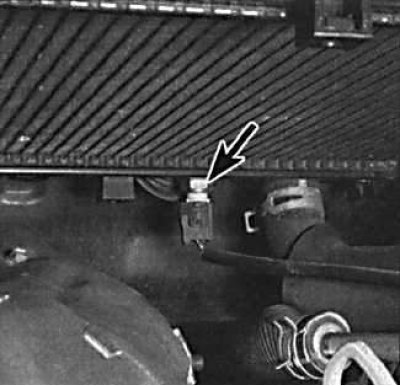
The fan is controlled by a temperature sensor installed in the radiator.
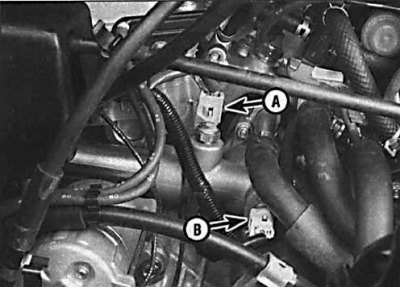
On the 1MZ-FE V6 engine, temperature sensors No.1 (A) and No.2 (B) are located on the thermostat housing.
Checking the resistance of the temperature sensors on the 1MZ-FE V6 engine
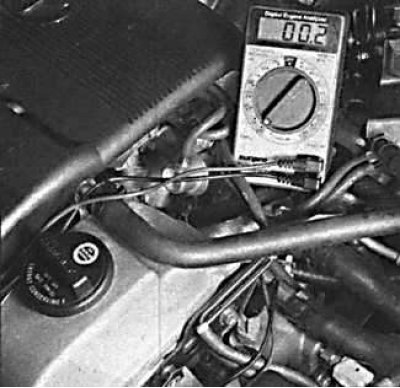
On a cold engine, the resistance of sensor No.1 should be 0.
Checking the radiator fan motor for proper operation by supplying voltage to it via additional wires from the battery
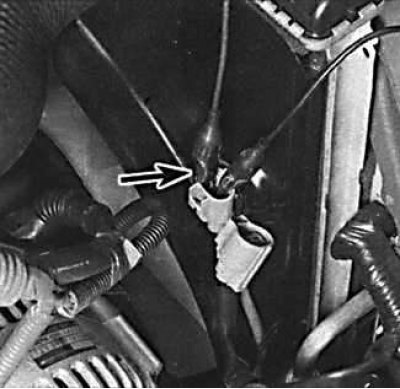
The fan should turn on when the engine operating temperature is exceeded, i.e. a few minutes before the engine temperature gauge needle enters the red sector. If the fan does not turn on, remove the wires from the temperature sensor, connect them together and turn on the ignition. If the fan starts working after this, the temperature sensor is probably faulty and needs to be replaced. If the fan still does not work, check if voltage is supplied to the temperature sensor. If there is no voltage at the temperature sensor, the wires may be damaged or the fuse may have blown. If voltage is supplied, check the reliability of the ground connection of the second sensor wire. If the temperature sensor and wiring are in good condition, the fan motor may be damaged. The motor can be checked by supplying voltage to it with additional wires from the battery.
Checking the relay
Location of the main relay block and radiator fan relay on models with 5S-FE engines
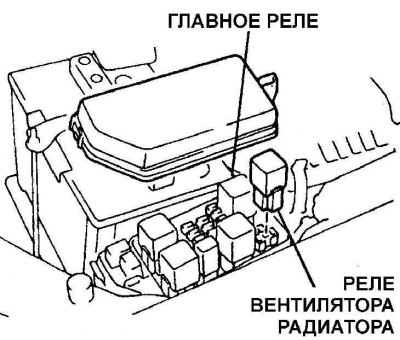
The main relay box is located in the engine compartment on the driver's side. Models with air conditioning have relay #2.
Relay location in the relay box on models with 1MZ-FE engines
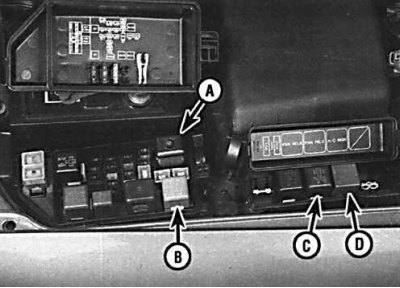
a – main engine relay;
b – radiator fan relay No.1;
c – radiator fan relay #2;
d – radiator fan relay No.3
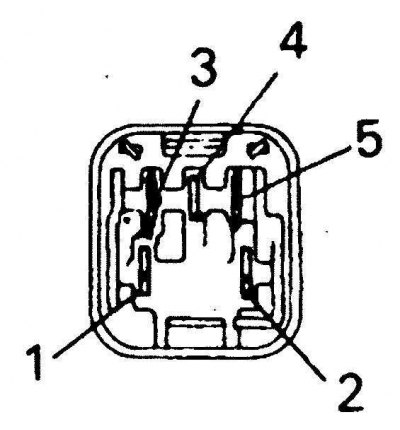
Main Engine Relay Contact Location
Checking the resistance and contact arrangement of the radiator fan relay No.1
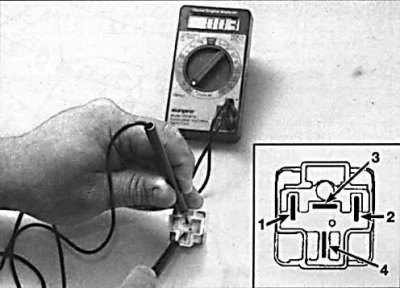
1. Remove the radiator fan relay #1 and, using an ohmmeter, check the resistance between the relay contacts (see Fig. Checking the resistance and the location of the contacts of the radiator fan relay #1). The resistance between relay contacts 1 and 2 and contacts 3 and 4 should be minimal. When applying voltage from the battery to contacts 1 and 2, the resistance between contacts 3 and 4 should be infinity.
2. If the radiator fan relay is OK, remove the main engine relay and test it (see Fig. Checking the resistance and contact locations of the radiator fan relay No.1 and Fig. Contact locations of the main engine relay). The resistance between relay contacts 3 and 5 and contacts 2 and 4 should be minimal. The resistance between contacts 1 and 2 should be infinity. When battery voltage is applied to contacts 3 and 5, the resistance between relay contacts 1 and 2 should be minimal, and the resistance between contacts 2 and 4 should be infinity.
Replacement
1. Remove the ground cable from the battery.
Warning! If your radio has an anti-theft code, check that you have the connection codes before disconnecting the battery.
Caution! On models from 1993 onwards, the airbag system is disabled if the battery is disconnected for an extended period of time. If the airbag warning light comes on and remains on after the battery is reconnected, contact a specialist workshop to restore the system to working order.
2. Disconnect the electrical connector from the radiator fan motor.
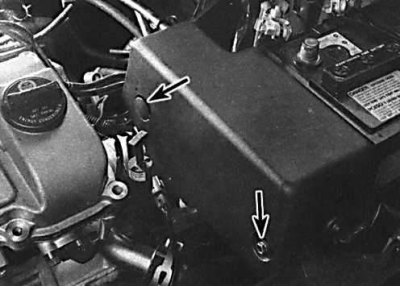 |  |
3. On models with cruise control, remove the cruise control actuator cover to allow easier removal of the radiator fan.
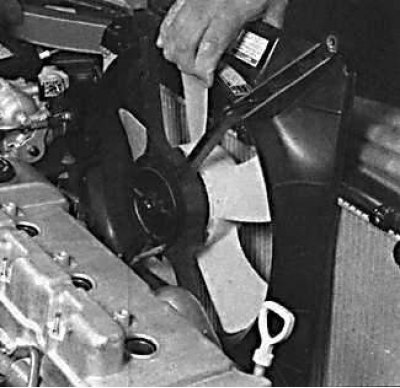
4. Remove the fan shroud bolts from the radiator and remove the fan assembly from the vehicle.
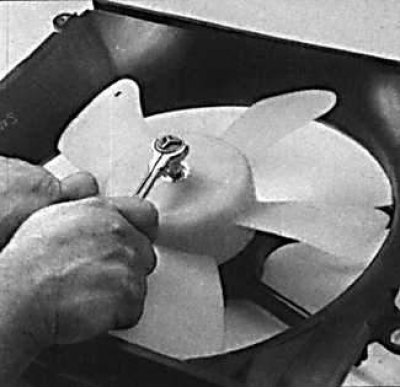 |  |
5. While holding the fan blades from turning, unscrew the mounting nut and remove the fan from the engine.
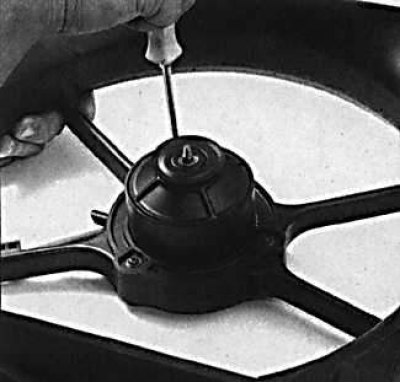
6. Remove the radiator fan motor mounting bolts from the fan shroud.
7. Installation is carried out in the reverse order of removal.