



Contents: Examination ↓ Replacement ↓
Examination
1. Apply the parking brake and place the gearshift lever in neutral. Connect the tachometer according to the manufacturer's instructions. Connect the wire from the tachometer to the IG terminal of the electrical connector (see Fig. Connecting the tachometer to the IG terminal of the data link connector located in the lower part of the engine compartment). Start the engine and warm it up to normal operating temperature. Turn on the air conditioning system.
2. Using an additional wire, short-circuit contacts TE1 and E1 of the electrical connector (see subsection 6.13.6, paragraph 2).
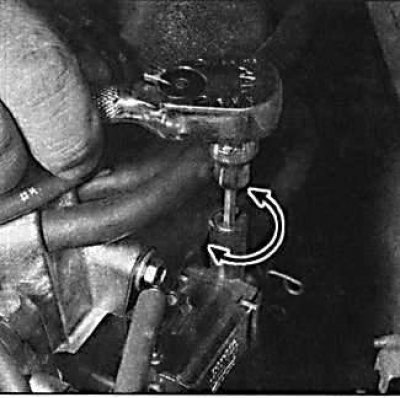
3. Check that the engine speed has increased to 1000–2000 rpm for about 3 seconds, then the idle speed has been established. After 15 seconds, check the idle speed again, which should be 100 rpm higher than the normal idle speed. If the idle speed has increased by more than 100 rpm, turn the adjusting screw to set the appropriate speed. If the idle speed has not changed or has even decreased, check the resistance of the air conditioning system idle speed valve.
4. Remove the additional shorting wire.
5. Disconnect the electrical connector from the A/C idle speed control valve.
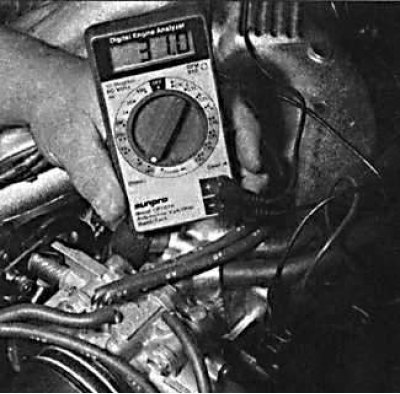
6. Measure the resistance of the idle air control valve, which should be 30-34 ohms.
7. Using additional wires, apply battery voltage to the idle mode valve contacts and blow out the valve by applying compressed air to the upper channel. When connecting the battery, air should pass through, when disconnecting the battery, air should not pass through the valve.
Replacement
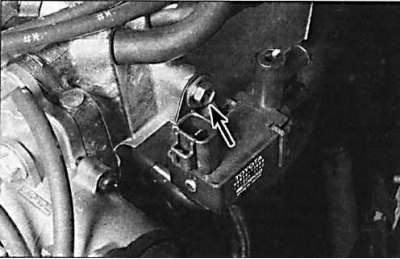
1. Unscrew the mounting screws and remove the valve together with the gasket.
2. Installation is carried out in the reverse order of removal.