



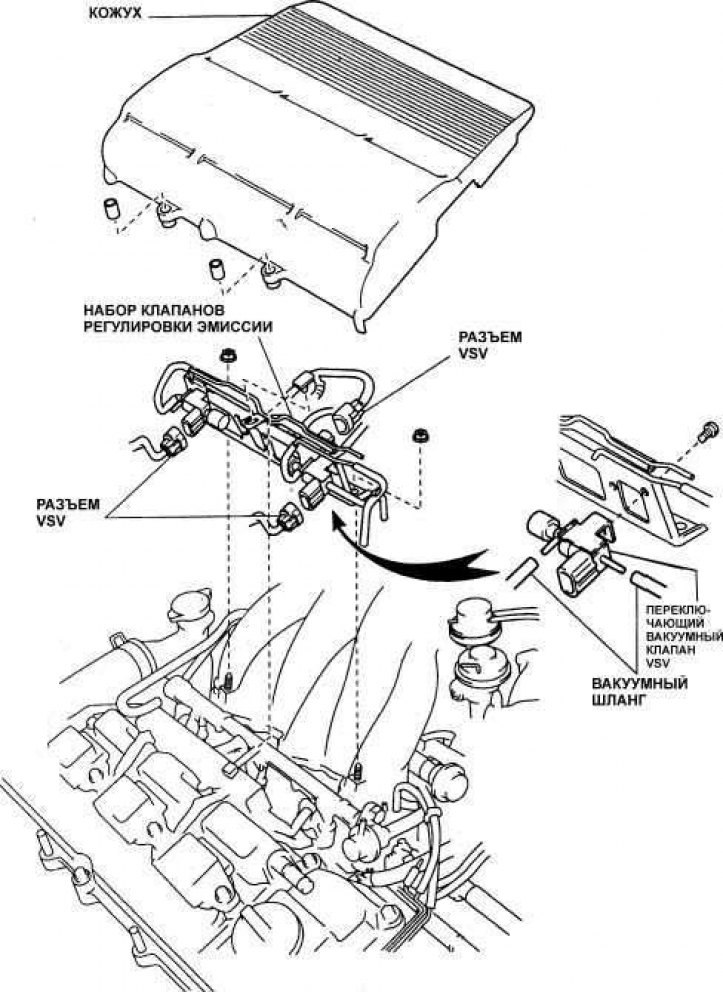
Location of the vacuum changeover valve (VSV) on the engine
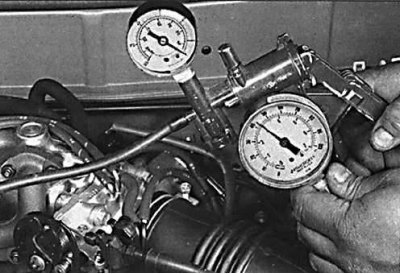 | 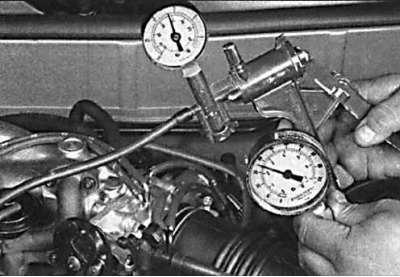 |
1. Disconnect the vacuum hose from the fuel pressure regulator and connect a hand vacuum pump with a pressure gauge in its place. Start the engine and measure the fuel pressure without vacuum applied to the pressure regulator. Use the hand vacuum pump to create a vacuum and re-measure the fuel system pressure. As the vacuum applied to the pressure regulator increases, the fuel system pressure should decrease.
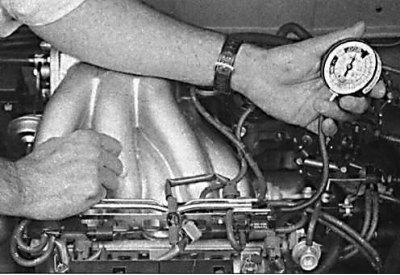
2. Reconnect the vacuum hose to the pressure regulator and check the fuel system pressure at idle speed. Disconnect the vacuum hose from the pressure regulator, the fuel system pressure should increase sharply to maximum. If the fuel system pressure at idle speed is too high, connect a pressure gauge to the vacuum hose and check the vacuum. If there is no vacuum, check the condition of the vacuum changeover valve (VSV).
The original version is published on the website: www.TOYOTAMAN.ru
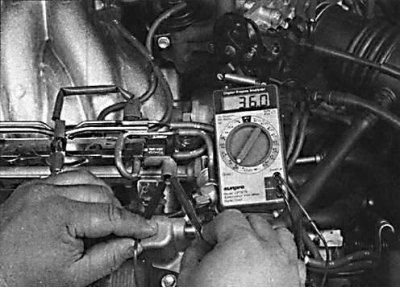
3. Using an ohmmeter, check the resistance between the terminals of the vacuum changeover valve, which should be between 30 and 40 ohms.
4. Using an ohmmeter, check that the vacuum changeover valve windings are not connected to ground.
5. If the fuel system pressure is too low, pinch the return fuel line and measure the pressure. If the pressure does not increase, the fuel pump is faulty. If the fuel system pressure increases sharply, replace the fuel pressure regulator.