



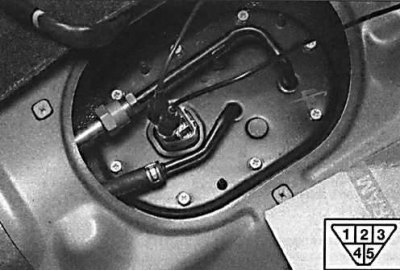
Supplying battery voltage with additional wires to check the functionality of the fuel pump on models with 1MZ-FE V6 engines since 1994.
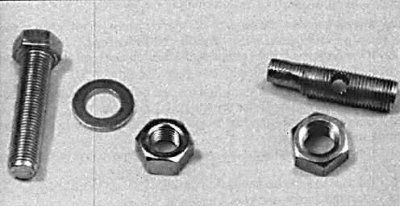
Adapters used to connect the pressure gauge to the top of the fuel filter
The pressure created by the fuel pump in the fuel line must be at least 3.3 bar.
1. Remove the cap from the fuel filler neck.
2. Check that the battery voltage is normal.
3. Relieve pressure in the fuel line.
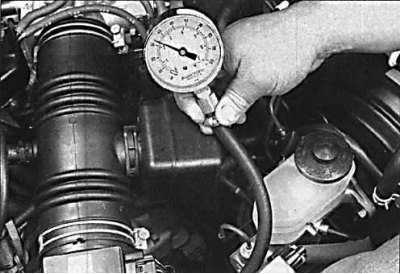
4. Using adapters, connect the pressure gauge to the top of the fuel filter (see Fig. Adapters used to connect the pressure gauge to the top of the fuel filter).
5. Place the gear shift lever in neutral and apply the handbrake.
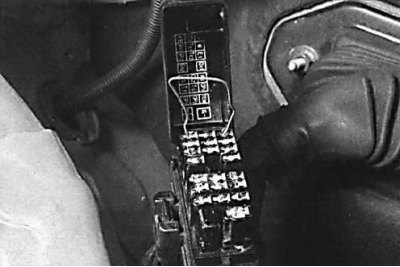
6. Connect the contacts with an additional wire +B and Fp on the control connector (see Fig. Electrical diagram of the fuel pump power supply).
On models with 1MZ-FE engine, it is necessary to supply voltage from the battery to the fuel pump via additional wires (see Fig. Supplying battery voltage with additional wires to check the functionality of the fuel pump on models with 1MZ-FE V6 engines since 1994.).
7. Turn on the ignition, but do not start the engine. Using the pressure gauge, determine the pressure created by the fuel pump in the fuel line. If the pressure is too high, check the condition of the return fuel line. If the fuel line is normal, replace the pressure regulator. If the pressure is too low, replace the pressure regulator. If the pressure does not increase, check the condition of the fuel supply line, fuel tank and fuel filter.
8. Remove the shorting wire from the test connector.
9. Start the engine.
- a) measure the fuel pressure at idle speed,
- b) check the vacuum in the hose and the fuel pressure regulator.
[The original can be read on the website: TOYOTAMAN]
10. Turn off the engine and after 5 minutes check the fuel pressure, which should be at least 1.2 bar.
11. Remove the fuel pressure gauge.