



Attention! To overhaul and check the cylinder head, you need special tools and parts that you may not have. Therefore, if you are an amateur, it will be much more economical to buy a new head than to waste time overhauling and repairing the old one.
Bulkhead
1. Remove the cylinder head, camshafts and valve lifters.
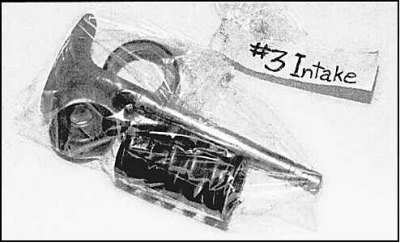
2. Before removing the valves, prepare separate numbered bags to contain the valves and their corresponding parts.
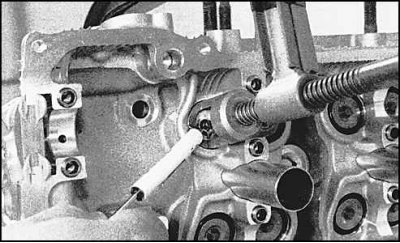
3. Compress the first valve spring and remove the retainers using a magnet. Remove the spring plate, spring and spring seat.
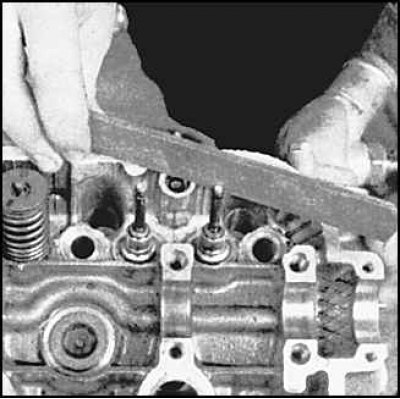
4. Remove the valve from the head. If the valve does not pass through the guide bushing, clean the edges of the end of the valve stem with sandpaper. Remove the valve stem seal from the guide bushing.
5. Perform similar procedures with the remaining valves.
6. Once you have disassembled the head, it needs to be cleaned and checked.
Cleaning
1. Clean all traces of old gaskets from the head surfaces and wipe it with solvent.
2. Clean out any deposits that have formed in the internal passages and holes of the head. If rust deposits have blocked the water passages of the head, contact a specialist.
3. Using a suitable tap and compressed air, clean the threads in the head bolt holes.
4. Brush the threads of the intake and exhaust manifold dowel pins.
5. Rinse the head in solvent and dry it.
6. Wash the valves and their components in solvent. Dry all parts.
Examination
Cylinder head
1. Inspect the head for cracks, signs of coolant leakage and other damage. If cracks are found, the head must be machined, but if the damage is too severe, the head must be replaced.
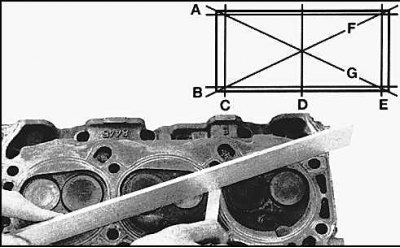
2. Using a ruler and a measuring probe, check the deformation of the mating surfaces of the head. If the deformation exceeds the permissible limits, the head must be processed in a specialized workshop.
3. Inspect the valve seats, if they are damaged, contact a specialist.
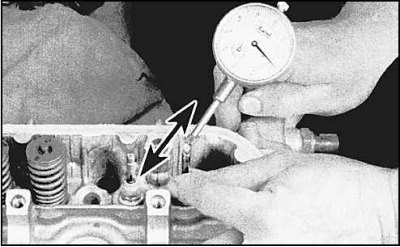
4. Measure the clearance between the valve stem and the valve guide using a measuring device. The readings on the device must be divided by two to obtain the clearance value. If the clearance exceeds the permissible limits, the valve guide must be replaced.
Valves
Attention! All work related to valve maintenance requires special knowledge and special equipment, and therefore must be left to a specialist.
Checking valve wear
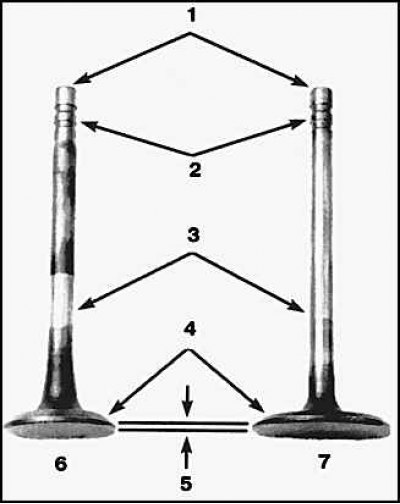
1. Valve stop; 2. Spring retainer grooves; 3. Valve stem; 4. Valve chamfer; 5. Valve edge; 6. Exhaust valve; 7. Inlet valve
1. Inspect the valve faces for wear, deformation, cracks, burnt areas and other damage. Check the valve stems for worn areas and cracks. Check if the stems are bent. If any damage is found, the valves must be treated in a specialized workshop.
[The information was taken from a web portal: ToyotaMan]
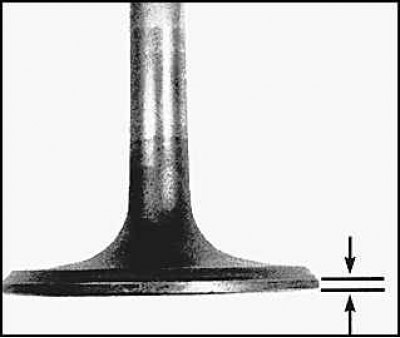
2. Measure the valve edge width. If the obtained value is less than the permissible limits, the valve must be replaced.
Valve elements
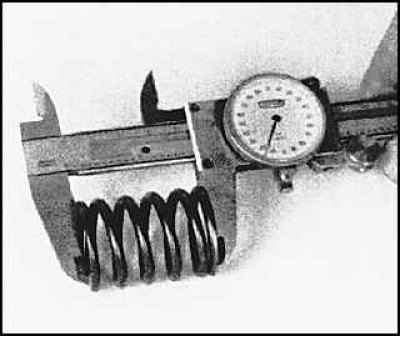
1. Inspect the valve springs for wear and damage. Measure the length of the springs. If any spring is shorter than the specification limit, replace it.
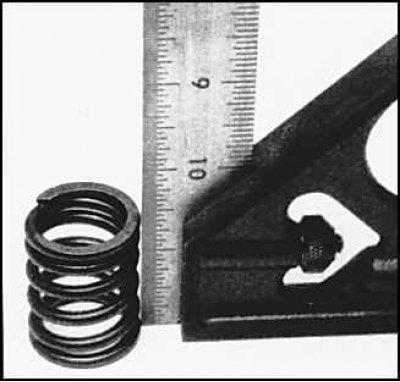
2. Check that the springs are straight. Replace deformed springs if necessary.
Assembly
1. Lubricate the valve guides and stems with engine oil and insert the valves into the cylinder head.
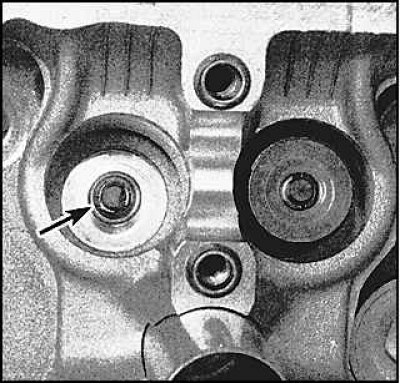
2. Lubricate the stem seals with oil and install them in their places. The stem seals of the intake and exhaust valves are different from each other. The exhaust valve seals have protrusions on the top.
3. Install the spring seats, springs and spring plates.
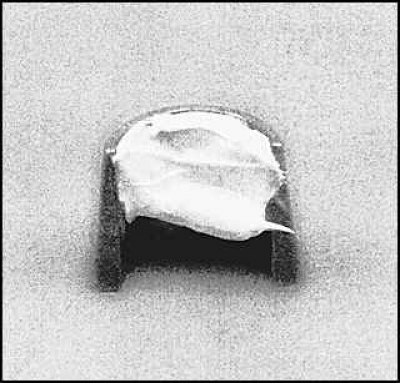
4. Compress the springs and install the clamps, apply sealant to the clamps if necessary.