



Contents: Removal ↓ Examination ↓
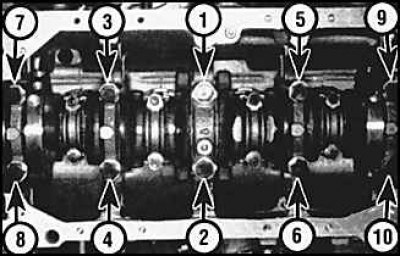
Main Bearing Cap Bolt Tightening Sequence (6-cylinder engines)
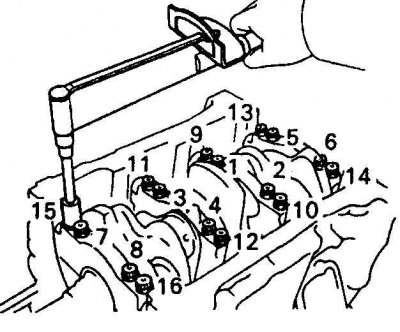
Tightening sequence of side bolts of main bearing caps (6-cylinder engines)
Removal
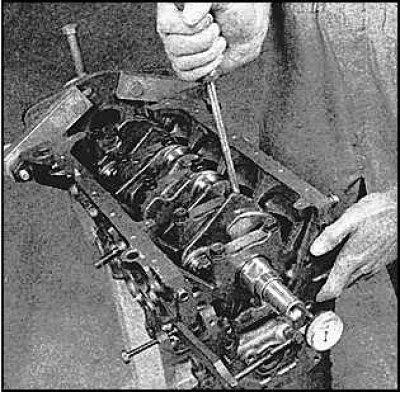 | 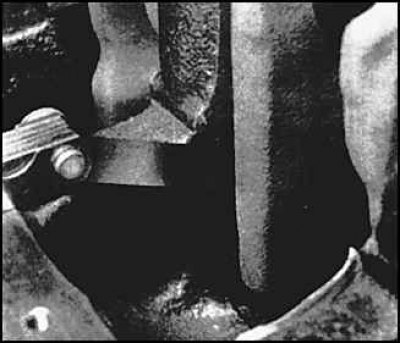 |
1. Before removing the crankshaft, measure its free play using a special device (drawing on the left) or using a feeler gauge near the thrust bearing (drawing on the right). If the clearance is greater than required, inspect the thrust bearing half rings for wear; if the half rings are not worn, new ones must be installed to adjust the clearance.
2. The main bearing caps should be numbered in ascending order from the front to the rear, if not, number them. There is usually an arrow on the caps that points toward the front of the engine. Loosen the cap bolts in several steps, a quarter turn at a time.
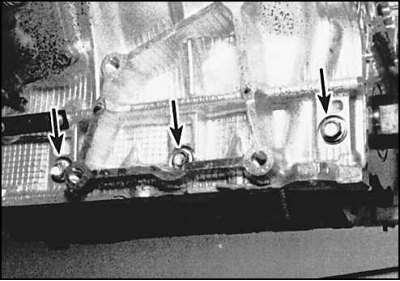
3. On six-cylinder engines, the cap bolts (arrows) are located on the sides of the cylinder block. Remove these bolts first in the reverse order to that shown in the figure (see Fig. Tightening sequence of the main bearing cap bolts (6-cylinder engines)).
4. Then unscrew the remaining cap bolts in the reverse tightening sequence (see Fig. Tightening sequence of the side bolts of the main bearing caps (6-cylinder engines)).
5. Remove the covers and take out the bearing shells.
6. Remove the crankshaft.
Examination
1. Clean the crankshaft with solvent and dry it with compressed air.
2. Inspect the crankshaft bearings for wear, scratches, corrosion or cracks.
3. Remove burrs around the oil holes and clean the holes with solvent.
4. Inspect the crankshaft for cracks or other damage.
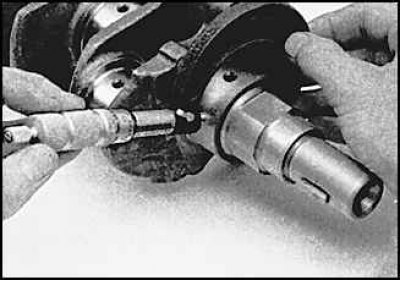
5. Measure the diameters of the main and connecting rod bearings. To detect taper and ovality, measure the diameter of each bearing at several points. If necessary, the crankshaft should be processed in a specialized workshop.
6. Check the crankshaft oil seal journals for signs of wear or damage. If the seals have worn through the grooves on the journals, the new seals will leak oil.