



Contents: Replacing brake pads ↓ Removal the caliper ↓ Disassembling the caliper ↓ Checking and repairing rear brakes ↓ Assembling the caliper ↓ Installing the caliper ↓
Replacing brake pads
1. Remove the rear wheel and temporarily secure the brake disc with wheel nuts.
2. Check the thickness of the brake pad linings through the inspection hole in the caliper.
- Minimum thickness - 1.0 mm
Replace the pads if necessary.
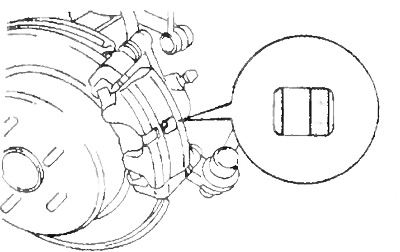
3. Raise the caliper.
a) Unscrew the mounting bolt.
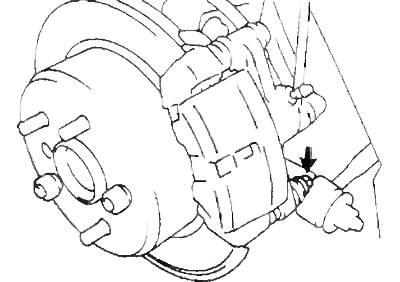
b) Raise the caliper and secure it.
Note: Do not disconnect the brake hose from the caliper.
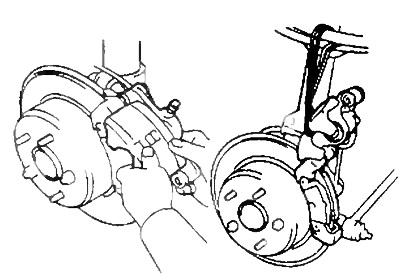
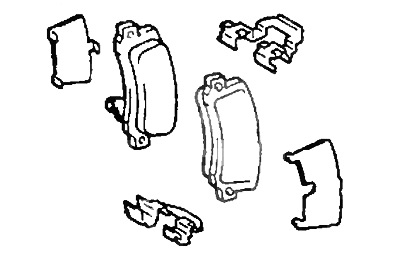
4. Remove the following parts:
- two brake pads,
- two anti-squeak pads.
- two retaining plate inserts.
5. Check the thickness and runout of the disc (see "Checking and repairing the rear brakes").
6. Install the two retaining plate inserts.
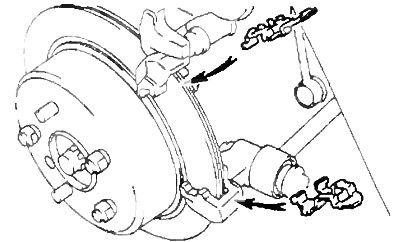
7. Install new pads.
Note: Do not install old anti-squeak pads.
a) Install anti-squeak pads on the brake pads.
b) Install the inner brake pads.
Caution: Do not allow oil or grease to come into contact with the working surfaces of the pads and disc.
8. Install the caliper.
a) Remove a small amount of brake fluid from the reservoir.
b) Push the piston into the cylinder using a wooden block.
Note: If the piston does not move well, loosen the bleed screw and push the piston in if there is a small leak of brake fluid.
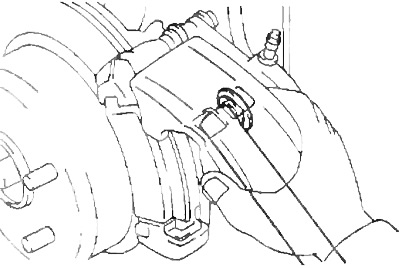
c) Install the caliper.
d) While holding the guide pin, tighten the bolt.
- Tightening torque - 20 Nm
9. Install the rear wheel.
- Tightening torque - 105 Nm
10. Check the fluid level in the reservoir and top up if necessary.
11. Press the brake pedal several times to seat the pads.
Removal the caliper
1. Disconnect the brake hose.
a) Unscrew the union bolt, remove the two gaskets and disconnect the brake hose.
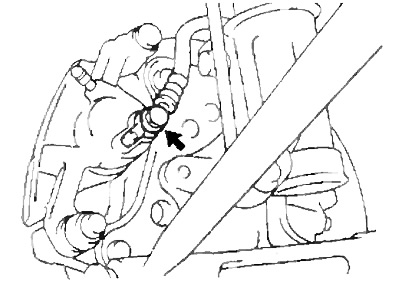
b) Drain the brake fluid into a suitable container.
2. Remove the caliper.
a) Unscrew the mounting bolt.
b) Remove the caliper from the bracket.
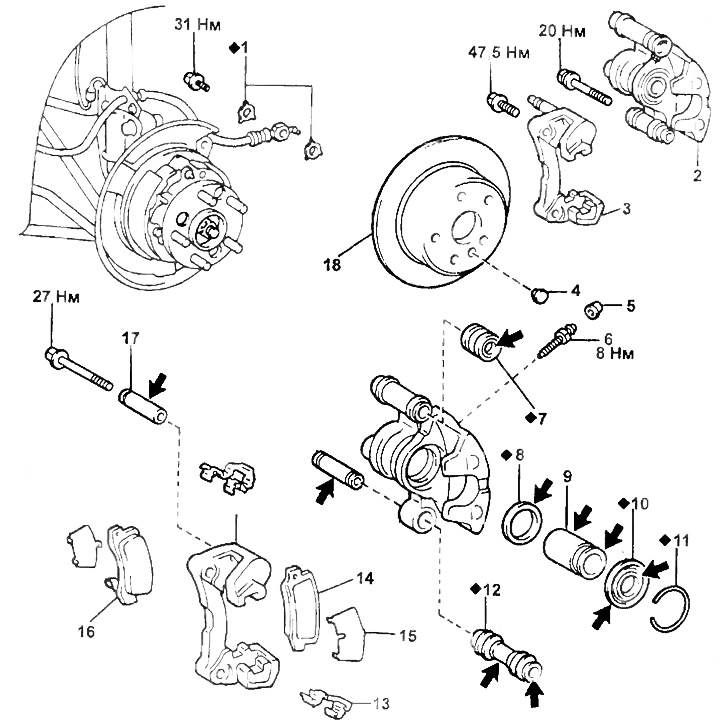
Rear disc brakes.
1 - gasket,
2 - support,
3 - caliper bracket,
4 - plug,
5 - cap,
6 - brake disc,
7 - dust cover,
8 - cuff,
9 - piston,
10 - case,
11 - spring ring,
12 - dust cover,
13 - retaining plate insert,
14 - outer brake shoe,
15 - anti-squeak gasket,
16 - inner brake shoe,
17 - guide pin,
18 - brake disc.
3. Remove the brake pads.
4. Loosen the mounting bolts and remove the caliper bracket.
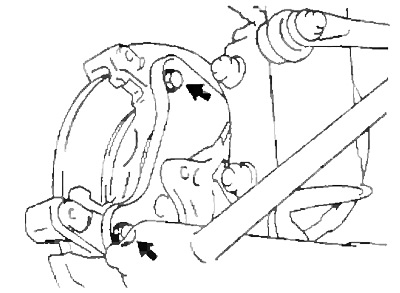
Disassembling the caliper
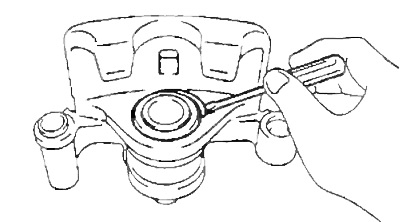
1. Using a screwdriver, remove the brake cylinder boot spring ring and boot.
2. Remove the piston.
a) Place a rag between the piston and the cylinder.
b) Using compressed air, remove the piston from the cylinder.
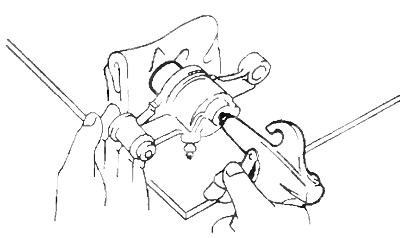
Caution: Do not place your fingers in front of the piston when using compressed air.
3. Using a screwdriver, remove the piston seal.
Checking and repairing rear brakes
1. Using a ruler, measure the thickness of the brake shoe linings.
- Standard thickness - 10.0 mm
- Minimum thickness - 1.0 mm
If the brake pad thickness is less than the minimum or uneven wear of the pads is detected, replace the brake pads.
2. Using a caliper, measure the thickness of the brake disc.
- Standard thickness - 9.0 mm
- Minimum thickness - 8.0 mm
If the disc thickness is less than the minimum allowable, replace the disc.
3. Measure the runout of the brake disc at a distance of 10 mm from the outer edge.
- Maximum runout - 0.15 mm
Note: Before measuring brake disc runout, make sure the rear wheel bearing axial clearance meets specifications.
4. Replace the brake disc if necessary.
a) Remove the caliper bracket.
b) Loosen the wheel nuts and remove the disc.
c) Install the new brake disc and temporarily secure it with wheel nuts.
d) Install the caliper bracket and tighten the mounting bolts.
- Tightening torque - 47 Nm
Assembling the caliper
1. Apply grease to the surfaces indicated by arrows in the assembly drawing.
2. Install the piston seal and piston into the cylinder.
3. Install the cover and spring ring.
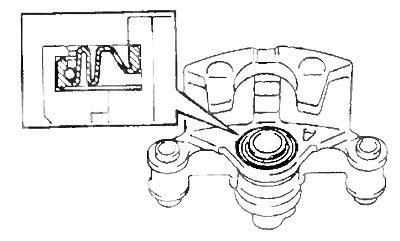
4. Install the bleed nipple.
- Tightening torque - 8.5 Nm
Installing the caliper
1. Install the brake pads.
Caution: Do not allow oil or grease to come into contact with the working surfaces of the pads and disc.
2. Install the caliper and tighten the mounting bolt.
- Tightening torque - 20 Nm
3. Connect the brake hose.
Install the brake hose with two new gaskets.
- Tightening torque - 30 Nm
4. Fill the reservoir with brake fluid and bleed the brake system.
5. Check for leaks.