



Rear Drum Brake Parts
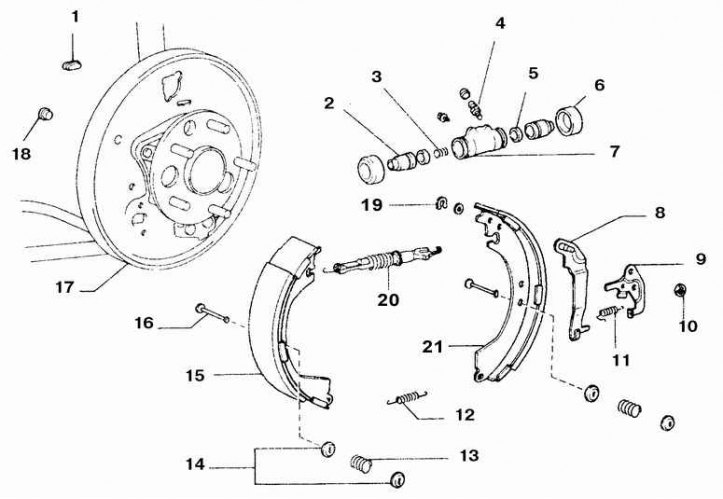
1. Plug; 2. Piston; 3. Spring; 4. Air bleed nipple; 5. Piston seal; 6. Outer piston seal; 7. Wheel cylinder; 8. Parking brake shoe drive lever; 9. Automatic adjustment lever; clearance between the pads and drums; 10. Retaining ring; 11. Automatic adjustment lever spring; 12. Lower tension spring; 13. Shoe pressure spring; 14. Cups; 15. Front shoe; 16. Axis; 17. Brake shield; 18. Inspection hole plug; 19. Split washer; 20. Regulator; 21. Rear shoe
Replacement
Attention! The pads are changed only as a set for one axle.
Together with the shoes, the tension springs are also changed, which, subjected to periodic thermal loads, gradually lose elasticity and do not provide sufficient removal of the shoe from the drum. As a result, the drum touches the shoes, causing their premature wear.
1. Loosen the wheel nuts, lift the rear of the car. Remove the wheels.
2. Release the parking brake.
3. Remove the wheel. If the pads are not going to be changed, mark them so that they can be installed in their original places during assembly.
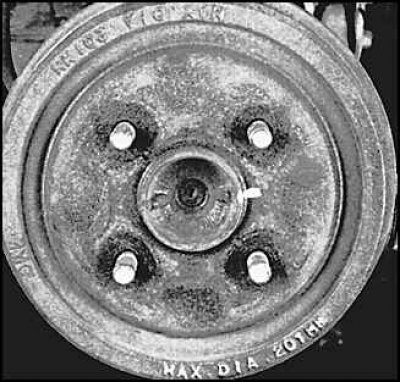
4. Mark the position of the drum on the hub to avoid disturbing the balance during assembly.
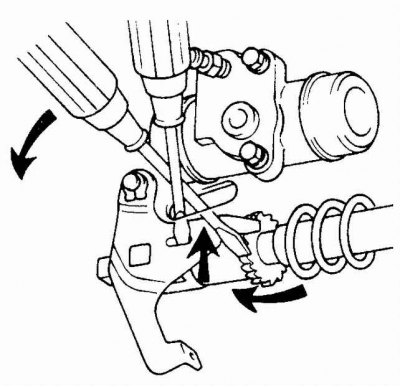
Attention! If the drum cannot be removed, then bring the shoes together. To do this, remove the plug from the brake shield and rotate the toothed flywheel of the regulator with a screwdriver, moving the lever away from the toothed flywheel with another thin screwdriver.
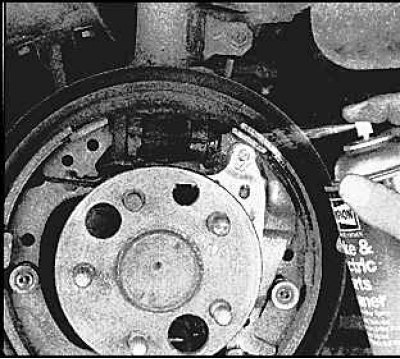
5. Clean the brake parts.
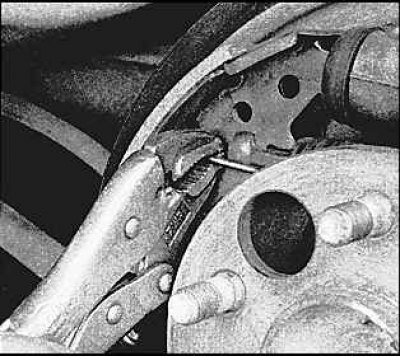
6. Remove the tension spring.
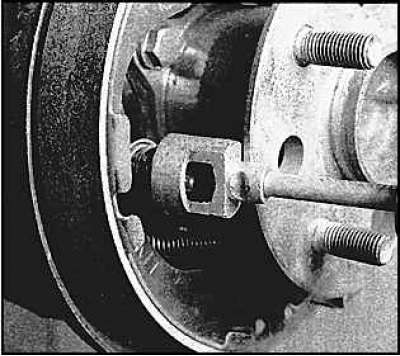
7. Remove the brake shoe pressure springs by pressing on the cup and turning it 90°.
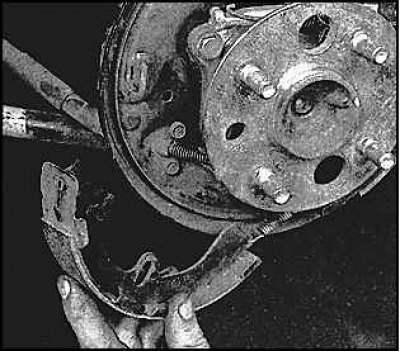
8. Remove the front shoe, unhook the lower spring.
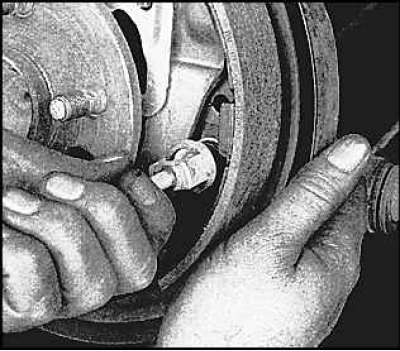
9. Remove the rear shoe pressure spring.
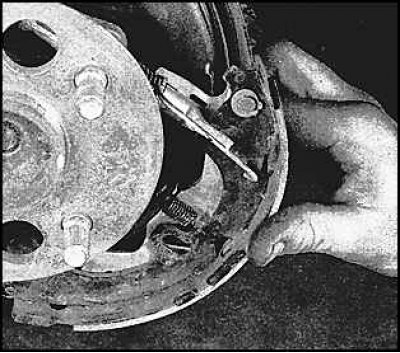
10. Remove the rear shoe and adjuster from the brake shield.
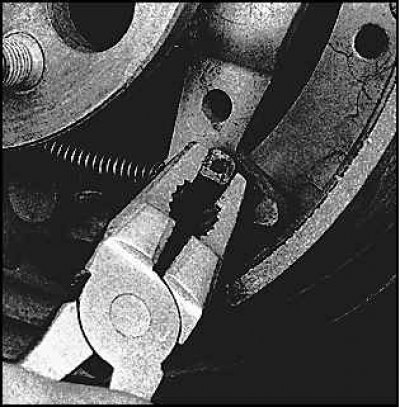
11. Use pliers to remove the parking brake cable from the lever.
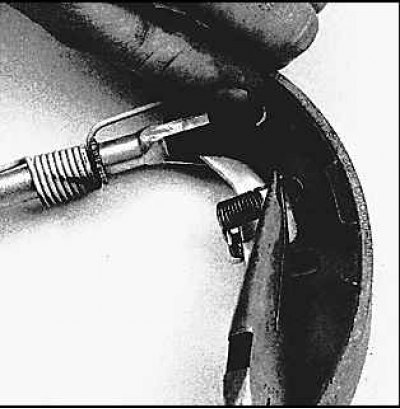
12. Remove the regulator lever spring.
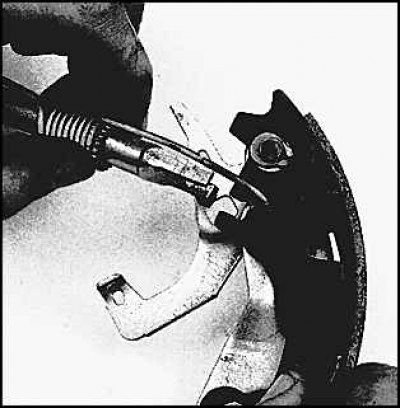
13. Unhook the return spring from the shoe and remove the regulator.
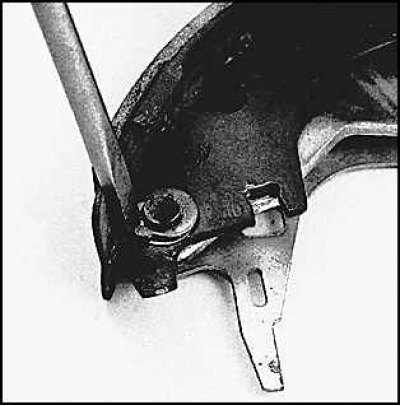
14. Remove the split washer and remove the parking brake and adjuster levers.
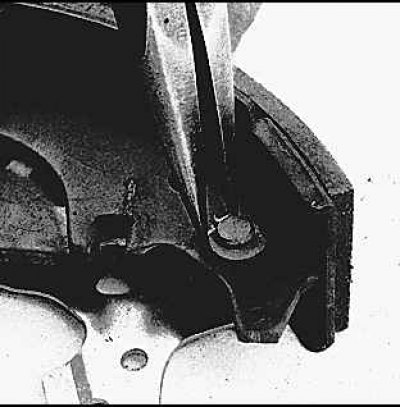
15. Install the parking brake and adjuster levers onto the new shoe, install the split washer and compress it.
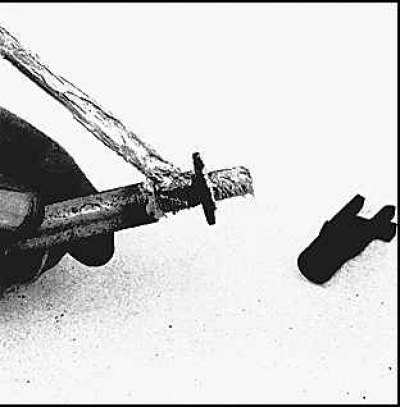
16. Lubricate the friction surfaces of the regulator with high-melting grease. The regulator is screwed on after installing the drum on new shoes.
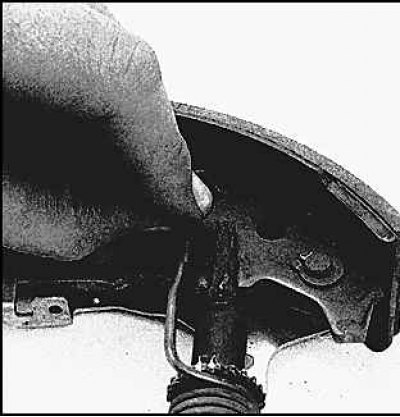
17. Install the regulator on the rear shoe (the regulator fork should fit into the groove on the block) and hook the spring into the hole in the shoe.
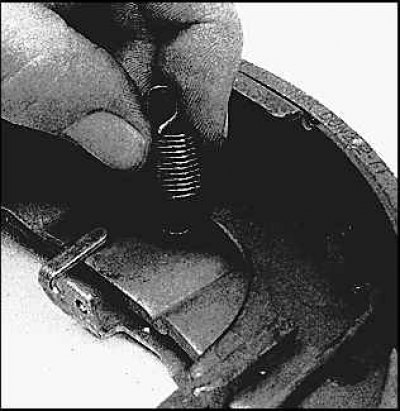
18. Install the regulator spring.
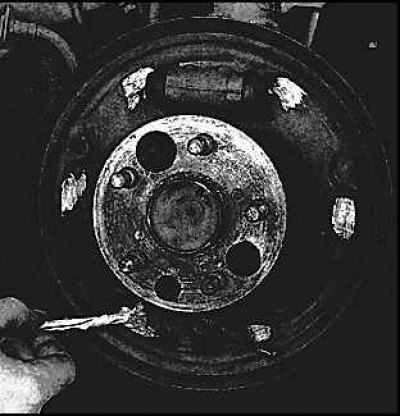
19. Lubricate the contact areas of the pads with high-melting grease.
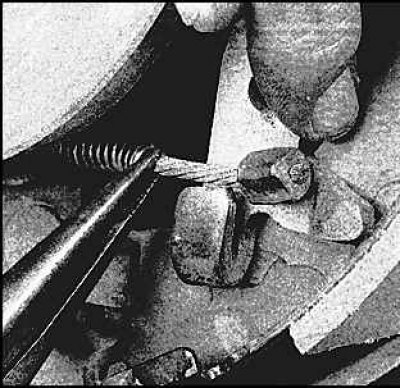
20. Wind up the parking brake cable spring and, holding it with pliers, place the cable on the bent part of the brake shoe drive lever.
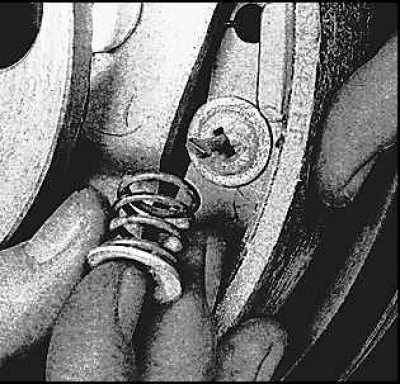
21. Install the rear shoe, put on the cup, pressure spring and secure with the outer cup, turning the cup on the axis at an angle of 90°.
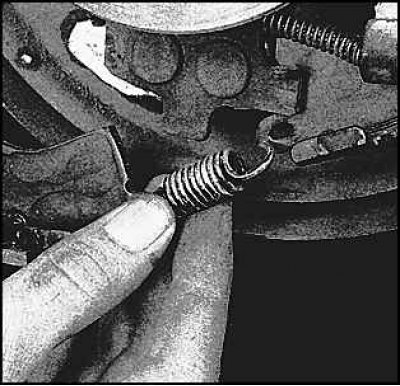
22. Hook the lower tension spring onto the pad eyes, install the front pad, pressure spring and cups.
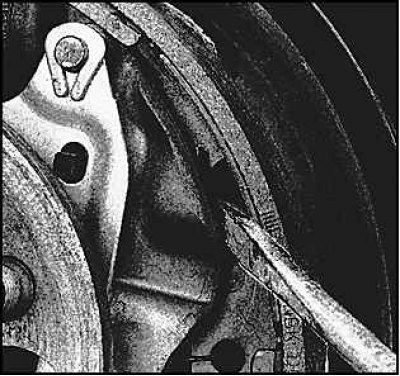
23. Move the brake shoe actuator lever forward and make sure that the adjuster spring does not become disengaged from the rear shoe.
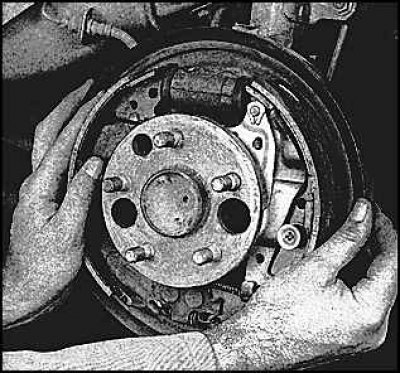
24. Check the reliability of the rear brake pads by rocking them from side to side and towards you.
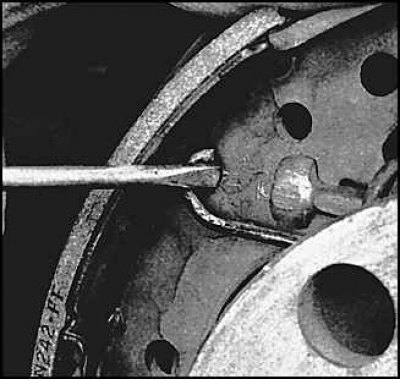
25. Use a screwdriver to tighten the upper tension spring and hook it into the hole in the shoe.
26. Before installation, clean the drum and check the surface condition. Check the ovality of the drum, if there is severe damage, grind the drum, sand small rough spots with sandpaper.
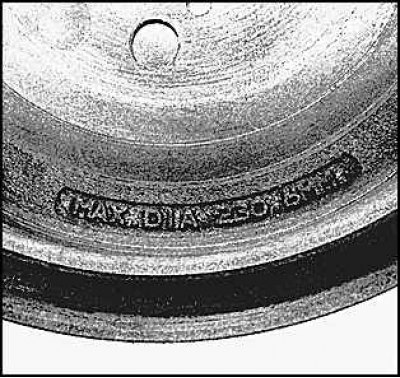
Attention! When replacing the pads, it is recommended to grind the drum, regardless of its condition, to remove any possible ovality. If after turning the inner diameter of the drum is greater than the maximum, replace the drum. The maximum diameter of the drum is cast on its inner surface.
27. Install the drum.
28. Install the wheel and lower the car, tighten the wheel nuts.
29. Perform several braking operations, moving forward and in reverse, using the parking brake, to establish the gap between the shoes and drums.
30. Check the operation of the brakes before leaving.