



Contents: General check ↓ Pressure check ↓ Checking the fuel pump electrical…↓ Checking the Main Fuel System Relay…↓
Fuel pump electrical circuit
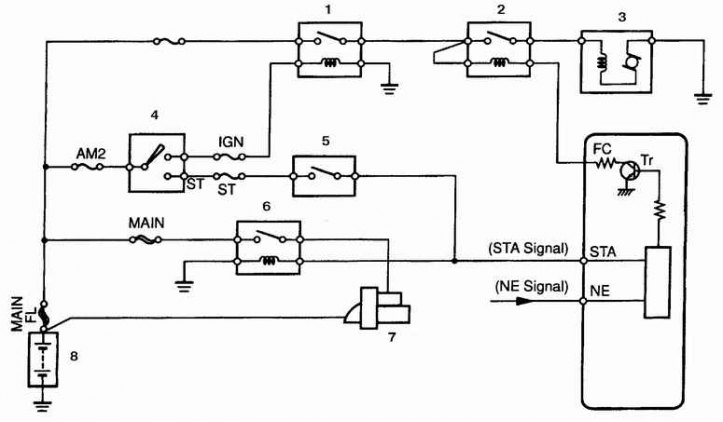
1. Main relay of the fuel system EPI; 2. Fuel pump relay (circuit breaker); 3. Fuel pump; 4. Ignition switch; 5. Parking and neutral position switch; 6. Starter relay; 7. Starter; 8. Battery
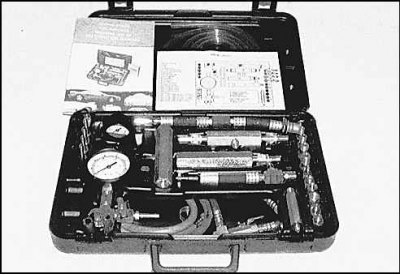
A set of tools for testing the fuel system
General check
1. Check that there is sufficient fuel in the fuel tank.
2. Check if the fuel pump is working. Turn on the ignition and listen to the fuel filler neck, you should hear a short buzzing sound. If the pump does not work, check the electrical circuit of the pump.
Pressure check
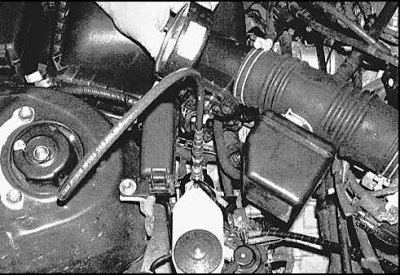
1. Release the pressure in the fuel system. Disconnect the tube from the fuel filter and connect the pressure gauge to the tube and to the fuel filter using an adapter.
2. Turn the ignition key to the ON position (the engine is not running, the air conditioning system is turned off). The fuel pump should turn on for approximately two seconds. The pressure in the system should increase and remain at one level. The pressure should not fall below the minimum specified in the technical specifications (see subsection 6.2.).
3. Start the engine and warm it up to normal temperature. Record the meter readings and compare them with the specifications.
4. If the fuel pressure does not meet technical requirements:
- pressure too high - check fuel pressure regulator, replace regulator if necessary;
- pressure is too low - replace the fuel filter. If the pressure is still low, check if the injector or injectors are leaking. Check the fuel pump for proper operation.
Checking the fuel pump electrical circuit
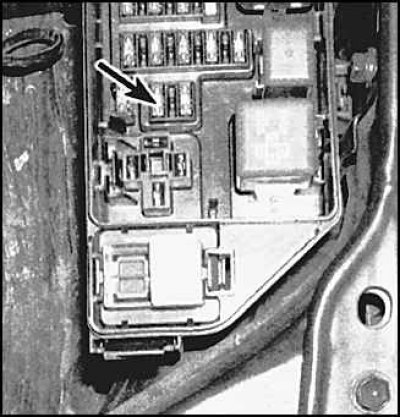
1. If the pump does not operate, check the IGN and EFI fuses located in the engine compartment fuse box. Replace the fuses if necessary and retest the pump. If the pump still does not operate, check the pump circuit for a short circuit.
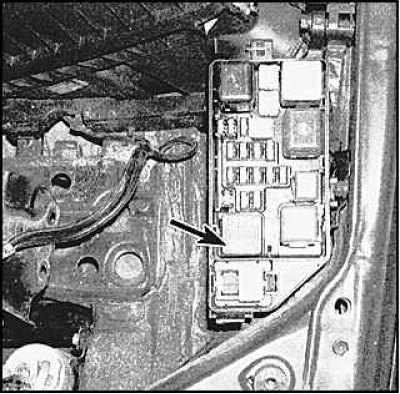 | 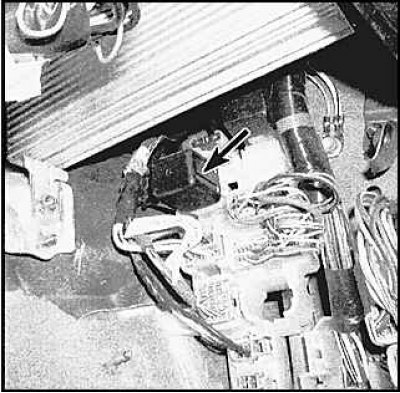 |
2. If the pump still does not work, remove the EFI relay and check for battery voltage at the relay socket terminals. One terminal should have voltage at all times, and the other terminal should have voltage when the ignition key is turned to the ON position. If there is no voltage at the terminals, check the wiring from the relay box to the battery. If there is voltage at the socket terminals, check the relay itself. The main EFI fuel system relay is located in the fuse and relay box in the engine compartment (indicated by the arrow in the figure on the left). The fuel pump relay is located in the relay and fuse box in the passenger compartment of the vehicle on the passenger side (indicated by the arrow in the picture on the right, Avalon models).
3. If the relays are OK and the pump still does not work, check to see if there is power going to the pump. If there is power going to the pump, then the pump is bad and needs to be replaced.
Checking the Main Fuel System Relay (EFI)
Toyota relay
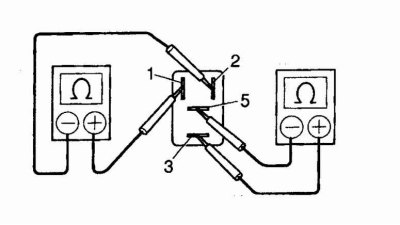
1. Ohmmeter; 2. The circuit is open; 3. Ohmmeter; 4. The circuit is closed
Nippondenso relay
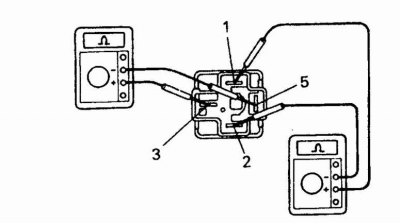
1. Ohmmeter; 2. The circuit is open; 3. Ohmmeter; 4. The circuit is closed
Bosch relay
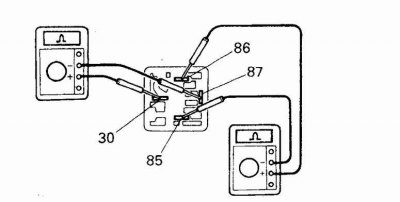
1. The circuit is closed; 2. Ohmmeter; 3. Ohmmeter; 4. The circuit is open
Remove the relay and connect the tester to contacts 1 and 2 (toyota relay) or 85 and 86 (bosch relay). The circuit between these contacts must be closed, otherwise replace the relay. The circuit between contacts 3 and 5 or 30 and 87 (bosch relay) must be open.
Toyota relay
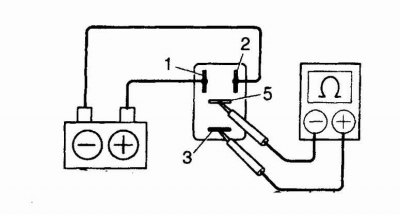
1. Ohmmeter; 2. The circuit is closed; 3. Battery
When battery voltage is applied to terminals 1 and 2, the circuit between terminals 3 and 5 should be closed. Otherwise, replace the relay.
Nippondenso relay
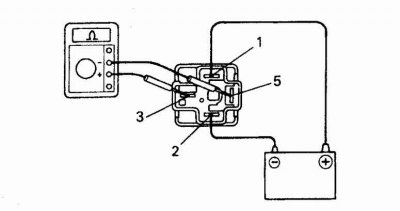
1. Battery; 2. Ohmmeter
When battery voltage is applied to terminals 1 and 2, the circuit between terminals 3 and 5 should be closed. Otherwise, replace the relay.
Bosch relay
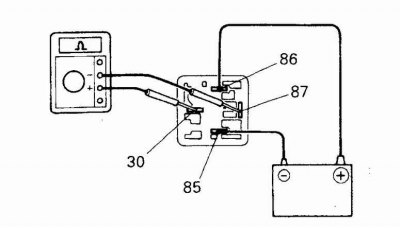
1. Battery; 2. Ohmmeter; 3. The circuit is closed
When battery voltage is applied to terminals 85 and 86, the circuit between terminals 87 and 30 should be closed. Otherwise, replace the relay.