Contents: Checking the operation of the 4WS…↓ Checking the operation of the 4WS…↓ Troubleshooting ↓ Reading fault codes ↓ Clear diagnostic codes ↓ Setting the rear wheels in the…↓ Checking 4WS system components ↓
Note: For operating features of 4WS vehicles, see the chapter "Operating instructions".
Checking the operation of the 4WS system
1. Place the rear wheel on the swivel discs.
2. Jack up the front of the car and place it on stands.
3. Apply the parking brake.
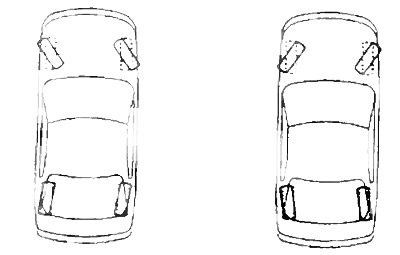
4. Check the turning directions of the rear wheels.
(Check operation at "low" speed) Turn the steering wheel to make sure that the rear wheels turn in the opposite direction to the front wheels.
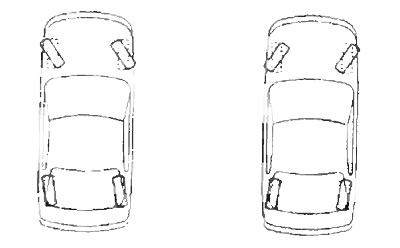
(Checking operation at "high" speed)
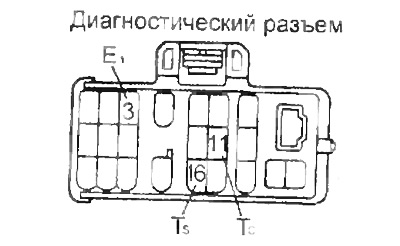
a) Close the terminals "E₁"- "TS", "E₁" -"TC" and turn on the ignition.
Caution: Do not mix up the diagnostic connector pins when connecting.
b) Turn the steering wheel to make sure that the rear and front wheels turn in the same direction.
Checking the operation of the 4WS indicator lamp
Turn on the ignition. The lamp should light for two seconds and then go out.
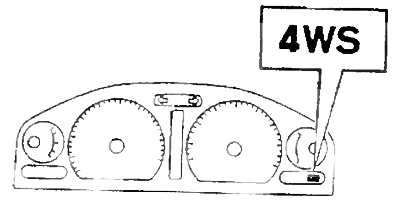
Troubleshooting
1. Check the reliability of the connectors connection to the 4WS drive control unit.
2. Make sure that the voltage at the battery terminals with the engine off is 10-14 V.
3. Check the 4WS control system components.
4. Checking the system operation in protected mode.
If a malfunction occurs in the 4WS system, it switches to protected mode and the 4WS lamp lights up.
Note: When the ignition is turned off, the fault codes are reset.
Reading fault codes
1. Make sure that the voltage at the battery terminals with the engine off is 10-14 V.
2. Reading fault codes.
a) Short-circuit the terminals "TC" - "E₁" diagnostic connector.
Be careful not to mix up the terminals when connecting.
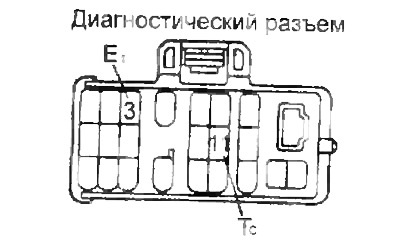
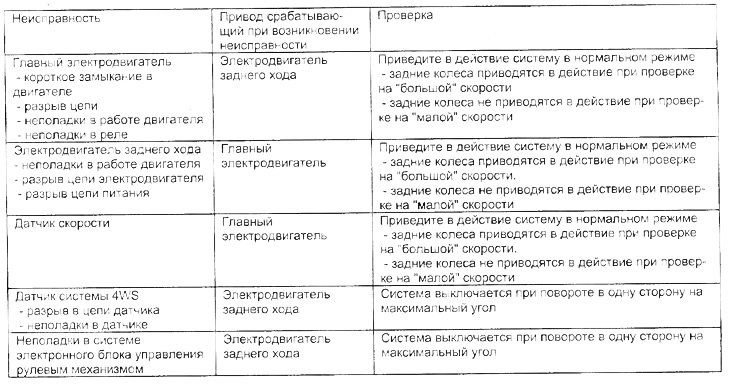
Table. System operation when malfunctions occur
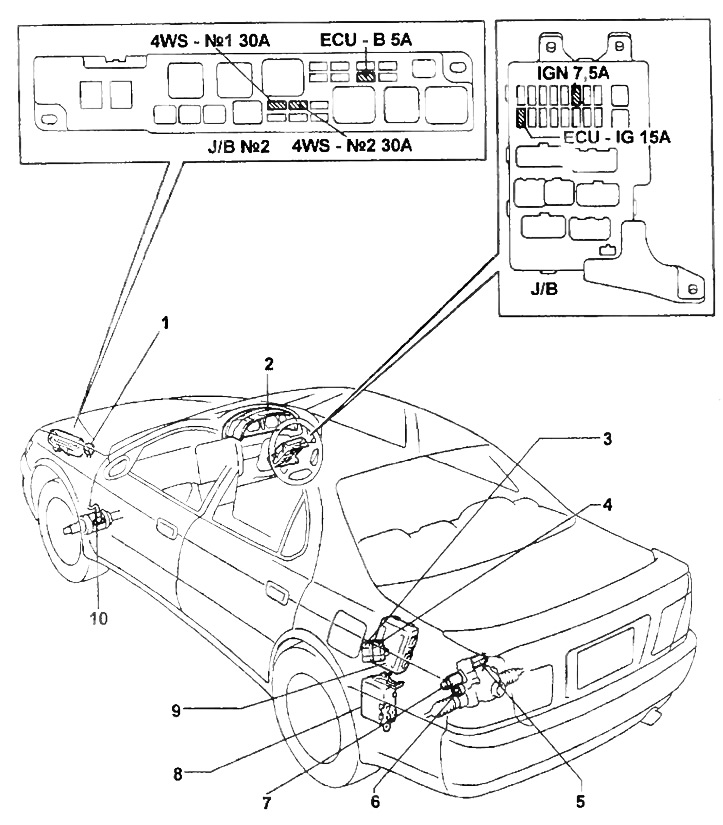
Location of 4WS system elements.
1 - diagnostic connector,
2 - speed sensor (instrument cluster),
3 - 4WS main motor relay,
4 - 4WS reverse motor relay,
5 - reverse electric motor,
6 - 4WS system sensor,
7 - main electric motor,
8 - electronic control unit 4WS,
9 - 4WS drive control unit,
10 - speed sensor.
b) Turn on the ignition.
c) Read the fault codes by the number of flashes of the 4WS indicator lamp.
Note:
- If there is no fault, the 4WS indicator lamp will flash at 0.25 second intervals.
- The fault code consists of two digits, the first of which is determined by the initial series of flashes of the 4WS indicator lamp, then after a pause of 1.5 seconds, a second series of flashes follows, which corresponds to the second digit of the code.
- If there are two or more fault codes, the lowest code will be displayed first, followed by the remaining codes in ascending order. There will be a 2.5 second pause between codes.
- After all fault codes have been displayed, there is a 4 second pause, then the display of fault codes is repeated.
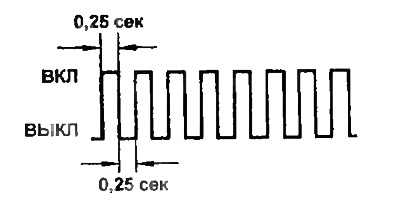 | 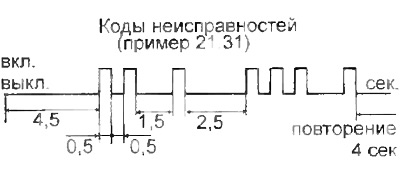 |
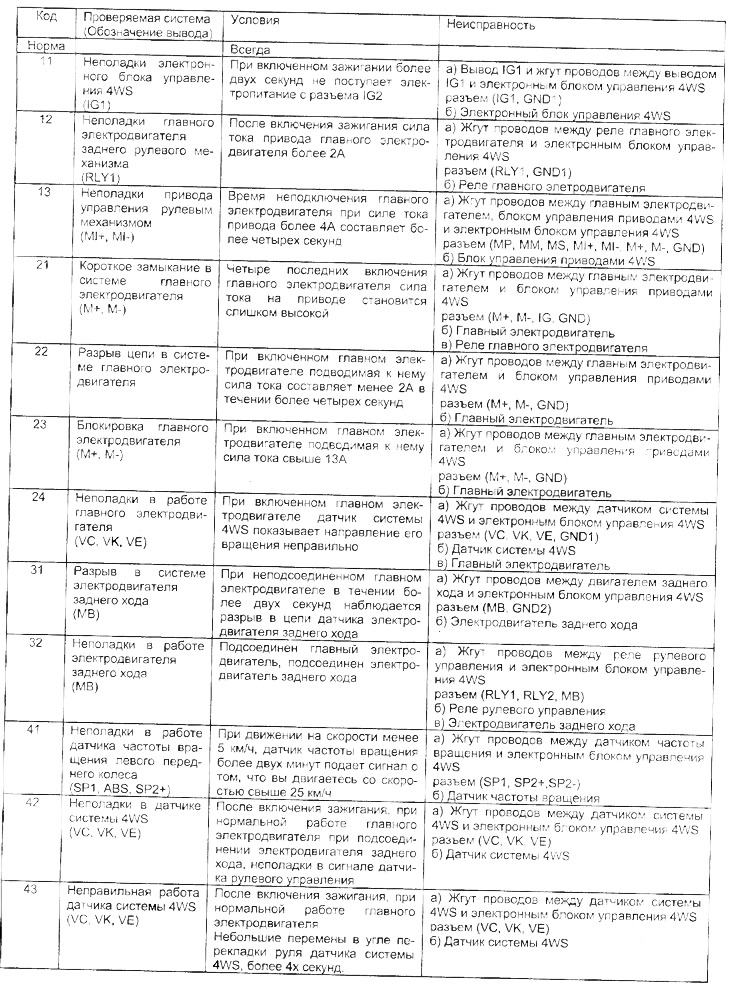
Table. Error codes
Clear diagnostic codes
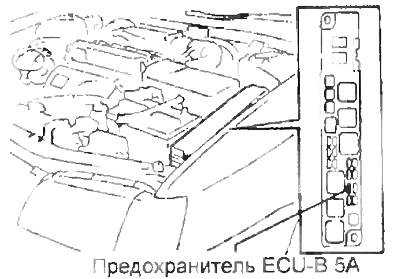
1. After troubleshooting, remove the ECU-B 5A fuse for more than 10 seconds, then install it back.
2. Make sure that no fault code is displayed.
Setting the rear wheels in the direction of travel in a straight line
Installation by rotating the reverse motor in the opposite direction
Note: Installation is performed with the ignition off.
1. Remove the trunk mat.
2. Remove the side trim of the trunk.
3. Disconnect the reverse motor connector.
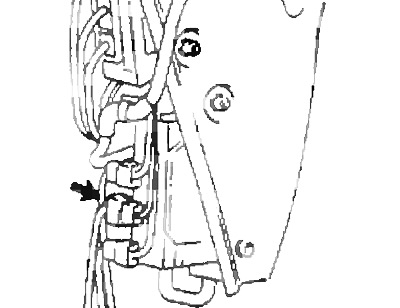
4. Set the rear wheels in the direction of travel straight ahead.
a) Turn the steering wheel to the extreme position.
b) Apply voltage from the battery to the reverse motor connector as shown in the figure.
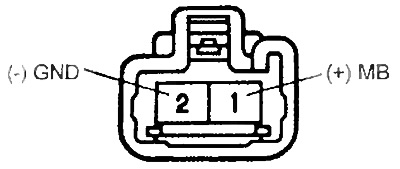
Caution: Do not remove the terminals from the connector.
c) Stop the movement of the electric motor when the rear wheels are straight.
Note:
- If you have applied voltage, but within five seconds the rear wheels do not start to turn, then install using a special tool (see below).
- After installation, do not leave the battery connected.
- Do not apply voltage higher than battery voltage to the reverse motor connector.
5. Connect the reverse motor connector
6. Install the trunk side trim.
7. Install the trunk mat.
Installation using a special tool
1. Unscrew the three bolts and remove the wiring cover.
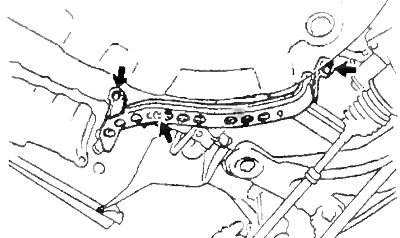
2. Loosen the bolts and remove the electric steering gear control assembly. Remove the seal.
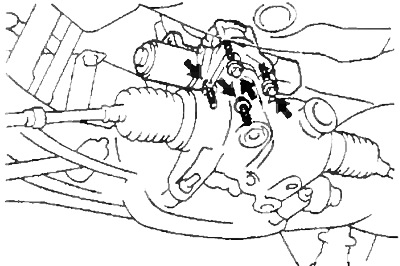
3. Using the special tool, turn the rear steering gear worm counterclockwise until the rear wheels are in the straight-ahead direction.
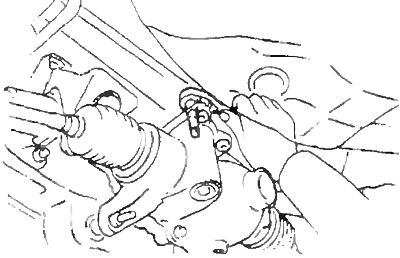
4. Install the electric drive assembly.
a) Install a new seal on the electric steering gear drive
Note: Pre-clean the surfaces of the electric drive and rear steering gear that come into contact with the seal.
b) Install the electric drive assembly and tighten the four bolts.
- Tightening torque - 5 Nm
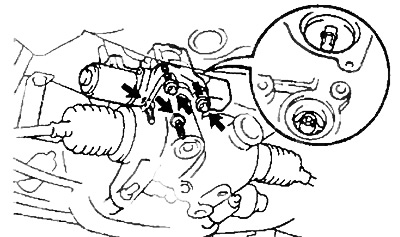
Note: There is a gap between the drive and the mechanism due to the seal.
5. Install the wiring cover.
When troubleshooting, please note:
- If it is necessary to disconnect one of the connectors during repair, first disconnect the connector of the main motor and reverse motor steering relay.
- The main motor and reverse motor steering relay connector is connected last, and after it is connected, the 4WS system is checked.
Checking 4WS system components
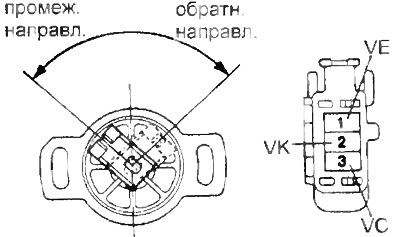
1. Check the 4WS system sensor.
a) Measure the resistance between the terminals "VC" - "VE" of the sensor.
- Resistance - 5.25-9.75 kOhm
b) When you operate the sensor lever, make sure that the resistance between terminals "VK" - "VE" changes.
2. Check the speedometer (see the relevant section of the chapter "Electrical equipment").
3. Check the front left wheel speed sensor (see the relevant section of the chapter "Brake system").
4. Check the electric motor relays.
a) Make sure there is conductivity between the terminals:
- Main Motor - IG1 - PLY 1
- Reverse Motor - IG2 - RLY2
b) Make sure there is no conductivity between the terminals:
- Main electric motor - +B1 - IG
- Reverse motor - +B2 - MIG
c) Apply voltage to the terminals: (main electric motor - "IG1" - "RLY2", reverse electric motor - "IG2" - "RLY2") and make sure there is conductivity between the terminals:
- Main electric motor - +B1 - IG
- Reverse motor - +B2 - MIG
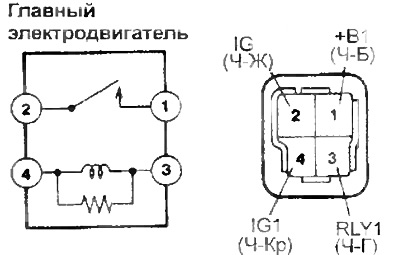 | 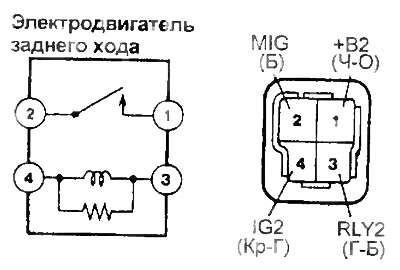 |
Note: the colors of the wires are shown in brackets in the figure (for decoding, see the chapter "Electrical equipment diagrams").
5. Check the main motor of the 4WS system.
Note: Do not disconnect the main motor from the rear steering gear.
a) Apply voltage to the terminals of the main electric motor connector and make sure that it operates smoothly.
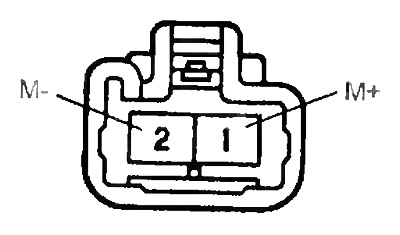
b) Reverse the polarity and make sure the motor rotates in the opposite direction.
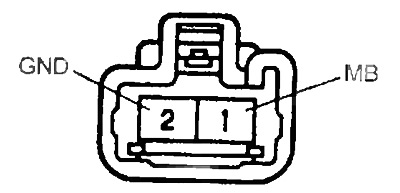
6. Check the reverse electric motor. Apply "+" of the storage battery to the "MB" terminal, and apply "+" of the storage battery to the "GND" terminal
Make sure the motor shaft rotates smoothly to the left when viewed from its end.
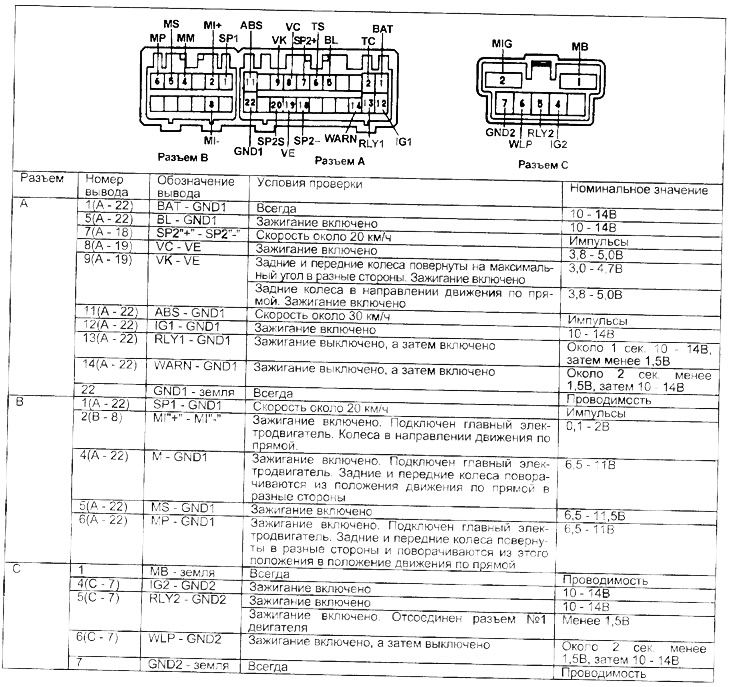
7. Check the 4WS electronic control unit.
Using a tester, measure the voltage and conductivity between the terminals of the 4WS electronic control unit connector. Note: the test is performed with the connectors connected to the control unit from the back side.
Before taking measurements, check the power supply of the electronic unit and its ground.
- When the ignition is on, the voltage is 10 - 14V
- When the ignition is off, the resistance between the ground and the body is less than 5 Ohm
Table. Checking the connectors of the 4WS electronic control unit