



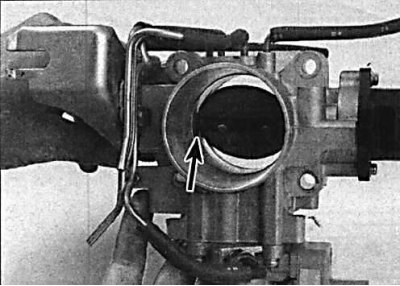
Possible carbon deposits inside the throttle body
If a fault has occurred in the fuel system, first check that all electrical connectors are securely connected and protected from corrosion. Also check the cleanliness of the air filter, the condition and gap of the spark plugs, the correct adjustment of the valve clearances, the compression in the engine cylinders, the setting of the ignition timing angle and the cleanliness of the air supply hoses to the engine.
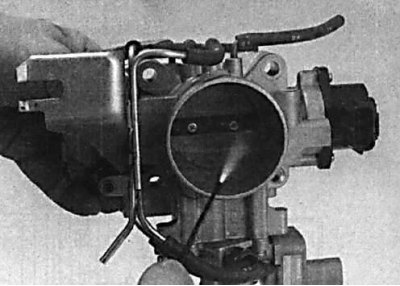
1. Remove the air intake tube from the throttle body and check for carbon deposits inside the throttle body (see Fig. Possible carbon deposits inside the throttle body). If necessary, remove carbon deposits using an aerosol solvent.
[The information was taken from a web portal www.ToyotaMan.ru]
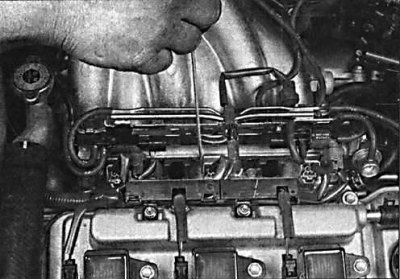
2. Using a stethoscope, check the operation of the fuel injectors for the presence of clicking sounds when the injector operates.
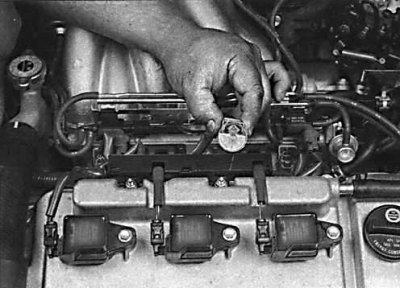
3. If you suspect that the fuel injector is not working, connect an LED tester to the fuel injector terminals and check that the LED tester blinks while the engine is running.
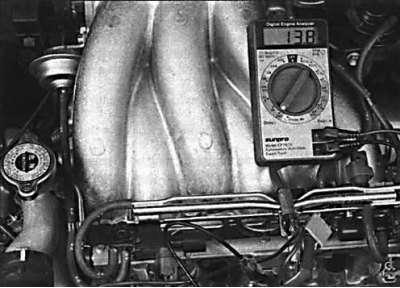
4. Remove the electrical connector from the fuel injector and check the resistance of the fuel injector, which should be 13.4-14.2 ohms.
5. If the initial actions do not help to identify a malfunction in the fuel system, then it is necessary to check and repair the fuel system at a service station.