Company Honda Company Ford Company Skoda Company Kia Company Mazda Company Mercedes Company Renault
English Русский
Български
Беларускі
Український
Српски
Hrvatski
Română
Polski
Slovenský
Magyar
Bookmark Articles Sitemap Contacts
ToyotaMan.ru


Camry Corolla Corona Carina Land Cruiser Highlander 4Runner RAV4 Others
Camry XV30 (2001-2006) Camry XV20 (1996-2001) Camry XV10 (1991-1996) Camry Vista V40 (1994-1998)

Engine Cylinder Block — Cleaning and Checking [Toyota Camry XV10]

  • Main
  • Camry
  • XV10 (1991-1996)
  • Power unit
  • Overhaul of engines
  • Engine Cylinder Block — Cleaning and Checking
0
Contents: Cleaning ↓ Examination ↓ Cylinder honing ↓

Cleaning


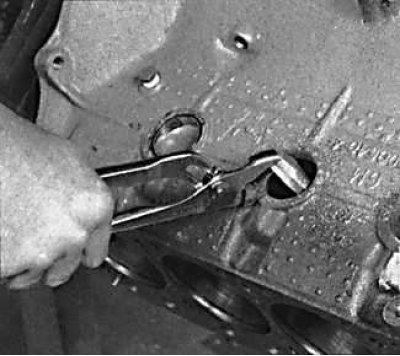
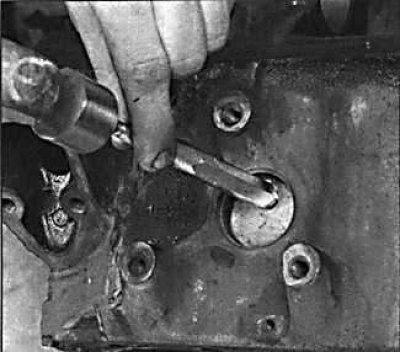
1. Remove all components and electrical sensors from the cylinder block. For complete cleaning, remove the service plugs. To remove the service plug, use a punch to turn the service plug in the socket and...


2....using pliers, remove it from the cylinder block.

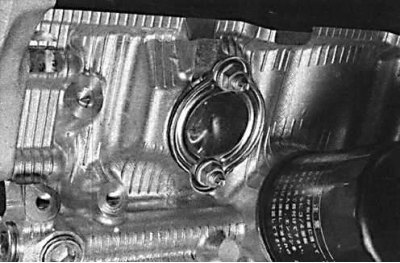
3. You can also drill a small hole in the plug and screw a self-tapping screw into the hole to remove the technological plug. Pull the screw head to remove the technological plug. On the 1MZ-FE engine, the technological plugs are attached to the cylinder block with nuts.

4. Remove all traces of gaskets from the mating surfaces of the engine block.
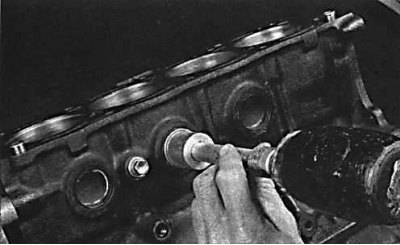


5. Remove all oil line plugs. Use new plugs when installing.


6. Clean the dirtiest areas with steam.

7. Clean all oil holes and oil lines. Flush all internal passages with warm water until the water runs clear. It is necessary to completely dry the cylinder block and lubricate all mating surfaces with a thin layer of oil to prevent corrosion. Also lubricate the engine cylinders. If compressed air is available, use it to speed up the drying process and blow out all oil holes and lines.
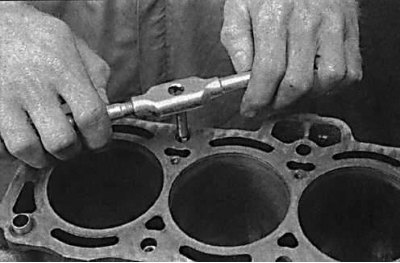


8. Thoroughly clean all threaded holes using a tap with the appropriate thread size, then blow out the holes with compressed air.

(The material is republished from an online website ToyotaMan)

9. Install the plugs into the oil line in the engine block and tighten them securely.

10. If the engine is not to be reassembled immediately, cover the cylinder block with a large plastic bag to protect it from contamination.

Examination
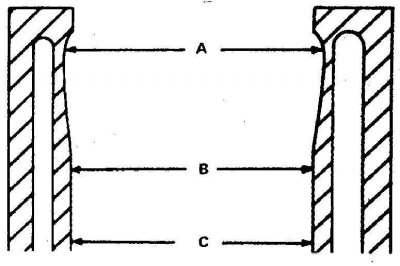


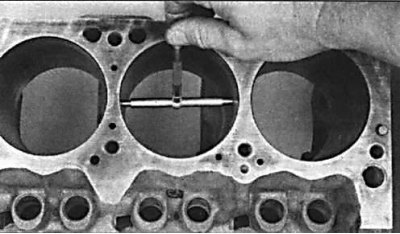
The measurement locations for the liner diameter of each cylinder are at the top (A), center (B) and base (C)


1. Visually inspect the cylinder block for corrosion. Check the integrity of the threads in the threaded holes.

2. Check the engine cylinder bore for wear by looking for a step at the top of the cylinder.


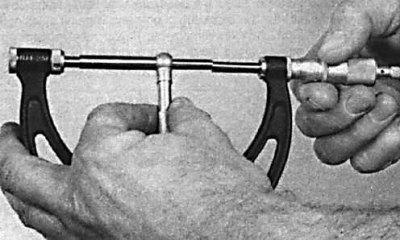
3. If you have a measuring tool, measure the bore diameter of each cylinder at the top (under the wear step) in the center and at the base parallel to the crankshaft axis.

4. Then make the same measurements perpendicular to the crankshaft axis and compare them with the technical data. Repeat the measurement procedure on the remaining cylinder liners.
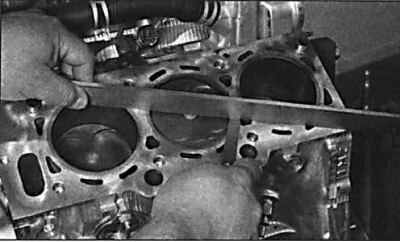


5. Using a steel ruler and a feeler gauge blade, check the flatness of the mating surface of the engine block.

Cylinder honing


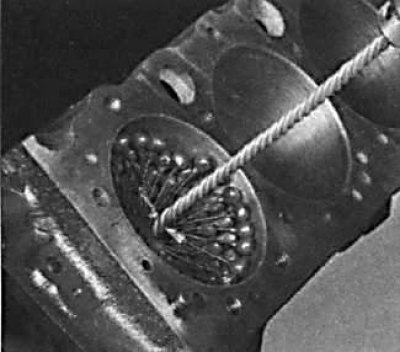
Honing of cylinder walls creates the most favorable conditions for the operation of piston rings. The most widely used honing tool is one with spring-loaded bars. A honing tool in the form of a round wire brush is also widely used. In addition, some kerosene, rags, and an electric drill are required for honing.


1. Install the main bearing caps and tighten the mounting bolts to the specified torque.


2. Attach the honing tool to the electric drill and insert it into the cylinder.
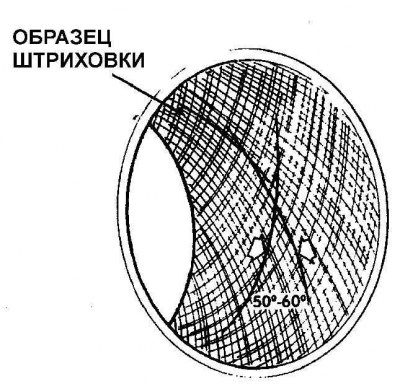


3. Apply a thin layer of kerosene to the cylinder walls, turn on the electric drill and move the honing tool up and down until a regular intersecting pattern is formed on the walls. Ideally, the lines should intersect at an angle of 60°. Make sure that the walls are wetted with a thin layer of kerosene during the honing process.

4. Do not remove the honing tool from the cylinder block while the electric drill is on. Moreover, make several strokes of the honing tool while the drill is off and only then remove it from the cylinder block.


5. Hone the remaining cylinders in the same manner.

6. Thoroughly rinse the cylinder block from any remaining abrasive tool.

7. Dry the cylinder block and lubricate the surfaces with a thin layer of oil.
This article is available at: russian, bulgarian, belarusian, ukrainian, serbian, croatian, romanian, polish, slovak, hungarian
The article material has been checked: Mitrofanova Elena
Share information:
◀ Previous
Camry XV10: Overhaul of engines
Next ▶

Removal the crankshaft
Removal pistons with connecting rods
Cylinder head assembly
Cleaning and inspection of the cylinder head
Disassembling the cylinder head
Pistons and connecting rods — check
Crankshaft — Check
Inspection and selection of main and connecting rod bearings
Checking the balancer assembly play (engine 5S-FE)
Sequence of engine assembly during major repairs
Similar articles on other Toyota models

➥ Cleaning and checking the cylinder block Toyota Cruiser 60/80 (1980-1997, petrol)
➥ Cylinder Block — Cleaning and Checking Toyota 4Runner N120 (1989-1995)
➥ Checking the cylinder block for deformation Toyota Corolla Verso 3 (2004-2009)
➥ Checking, cleaning and repairing cylinder head parts Toyota Corona T190 (1992-1997)
➥ Checking, cleaning and repairing cylinder head parts Toyota Carina T190 (1992-1996)
➥ Cylinder block — cleaning and inspection Toyota RAV 4 XA20 (2000-2005)
Link in different formats to this article
Comments and feedback from visitors
No comments yet


Add two numbers 50 + 29


Camry XV30 (2001-2006) 
  • User manual
  • Vehicle description
  • Keys, locks and alarms
  • Governing bodies
  • Salon equipment
  • Driving and operation
  • Maintenance
  • Power unit
  • 4-cylinder engine
  • Control system (I4)
  • Engine overhaul (I4)
  • 6-cylinder engine
  • Control system (V6)
  • Engine overhaul (V6)
  • Transmission
  • Clutch
  • Mechanical gearbox
  • Automatic gearbox
  • Drive mechanism
  • Chassis, running gear
  • Wheels and tires
  • Car suspension
  • Steering
  • Brake system
  • Body and interior
  • Exterior (external elements)
  • Doors, locks and windows
  • Air conditioning and heater
  • Electrical equipment
  • Equipment and devices
  • Power devices
  • Electrical circuits
Camry XV20 (1996-2001) 
  • General information
  • Controls and instruments
  • Driving and operation
  • Daily care
  • Maintenance
  • Power unit
  • 4-cylinder engine
  • 6-cylinder engine
  • Engine overhaul
  • Engine electrical equipment
  • Cooling system
  • Heating and ventilation
  • Fuel system
  • Exhaust system
  • Transmission
  • Mechanical gearbox
  • Automatic gearbox
  • Clutch
  • Chassis, running gear
  • Suspension and axle shafts
  • Steering
  • Brake system
  • Body and interior
  • Exterior (external elements)
  • Interior (internal elements)
  • Doors, locks and windows
  • Electrical equipment
  • Equipment and devices
  • Electrical circuits
Camry XV10 (1991-1996) 
  • General information
  • User manual
  • Maintenance
  • Power unit
  • 4-cylinder engine
  • 6-cylinder engine
  • Overhaul of engines
  • Cooling and heating
  • Fuel system
  • Engine electrical equipment
  • Control system
  • Transmission
  • Mechanical gearbox
  • Automatic gearbox
  • Clutch and drive shafts
  • Chassis, running gear
  • Brake system
  • Car suspension
  • Steering
  • Body and interior
  • Exterior (external elements)
  • Interior (internal elements)
  • Doors, locks and windows
  • Electrical equipment
  • Equipment and devices
  • Headlights and lighting
  • Electrical circuits
Camry Vista V40 (1994-1998) 
  • General information
  • User manual
  • Maintenance
  • Power unit
  • Petrol engines
  • Diesel engines
  • Engine overhaul
  • Cooling and lubrication system
  • Fuel system (diesel)
  • Fuel injection (petrol)
  • Engine electrical equipment
  • Transmission
  • Clutch and cardan
  • Automatic gearbox
  • Chassis, running gear
  • Front suspension
  • Rear suspension
  • Steering
  • Brake system
  • Body and interior
  • Body elements
  • Air conditioning and heater
  • SRS security system
  • Electrical equipment
  • Equipment and devices
  • Electrical circuits
ToyotaMan.ru © 2018–2026 • Mobile version • Interesting about Toyota • Administration • Sitemap: EN BG BY UA RS HR RO PL SK HU • Search system • Bookmark
Camry Vista-V40 • Camry XV10 • Camry XV20 • Camry XV30 • Corolla Verso-AR10 • Corolla E80 • Corona T190 • Carina T170 • Carina T190 • Land Cruiser J70 (diesel) • Land Cruiser J60 (petrol) • Land Cruiser J100 • Highlander XU20 (petrol) • 4Runner N120 • RAV4 XA10 • RAV4 XA20 • Duet M100 • Dyna Y50 •
We require cookies to enable some interactive features. Is that ok with you?